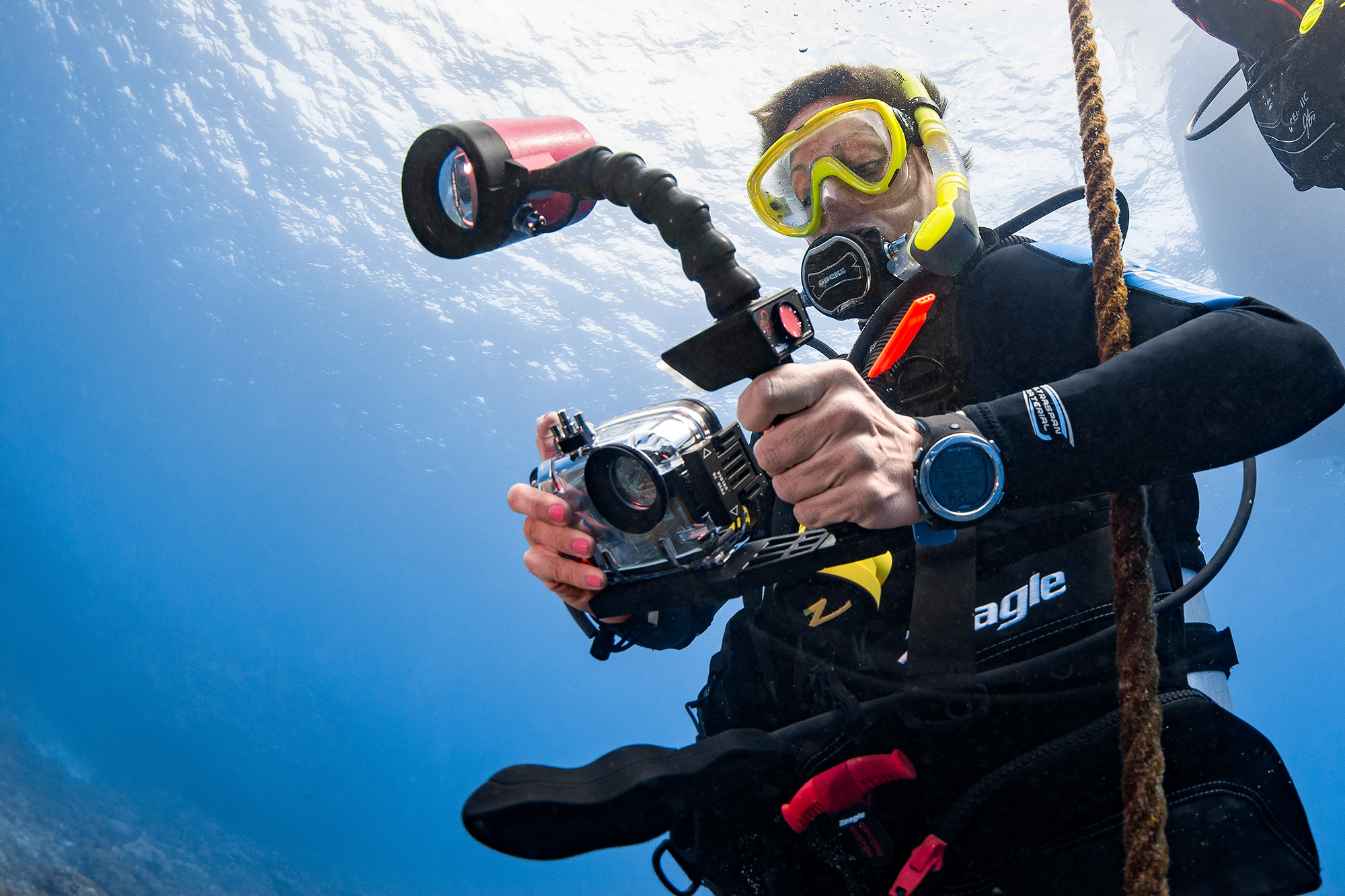

According to photo industry history, the early 2000s were the glory years for point-and-shoot cameras. Combining digital technology with small size and easy picture taking, by 2010, more than 100 million compact point-and-shoot cameras were sold annually worldwide. Divers loved these cameras as much as everyone else (maybe more), with housing manufacturers like Ikelite, Aquatica, Seacam, Light & Motion, Sea & Sea and more enabling us to take popular compacts diving with us. During this period, the popular PADI Digital Underwater Photographer course debuted, with the compact digital camera one of its central topics.
But in 2007, Apple released the iPhone. At first, camera manufacturers dismissed it because its camera quality was low compared to popular compacts, and other cellphones with cameras had not done much for picture-taking. So at first, they didn’t foresee how much always having a high connectivity camera with you would change things. But three years later, things were very different – the iPhone’s camera was on par with traditional compacts, and Android smartphones had joined the fray. People didn’t need or even want compact cameras anymore, it seemed, and by 2020, compact camera sales were only about 5% of 2010’s. Some predicted that soon, compact cameras would be completely gone.
The Predictions Were Wrong
Smartphones crushed the compact camera market, but they didn’t kill it. By 2012, industry analysts saw the shift coming, and camera manufacturers pivoted, emphasizing DSLRs and developing upper end camera systems for serious shooters. Camera housing manufacturers followed suit, but continued supporting snap-shooting divers by quickly introducing underwater housings for smartphones.
And today, for those of us who want more than a smartphone camera without being “hardcore” shooters, compacts – and underwater housings for them – are making a comeback – albeit in far smaller numbers, though they now outsell DSLRs (probably, in part, due to the rise of mirrorless professional/serious amateur cameras). But the majority of today’s compacts differ substantially from the popular 2000s models.
Although there are still low-end versions, most of today’s popular compact cameras tend to be more expensive, costing more than US $7000 at the extreme (but most in the US $500 to $1500 range). Leveraging the R&D camera manufacturers put into DSLRs and mirrorless pro cameras, today’s compacts hit what smartphone cameras still miss – large image sensors for superior resolution stills and video as well as optical (not digital) zoom with superior lenses. These compacts also make cameras into cameras again – an intentional shooting experience without distractions like emails, SMS texting or actual phone calls. As one analysis puts it, the smartphone didn’t kill compacts – it made them stronger.
For Divers
The survival of high-end compact cameras opens a window for Ocean Torchbearers who see the merits of higher quality imaging without getting into interchangeable lens DSLRs and mirrorless camera imaging (but there’s a need for that, if you’re into it!). While housed smartphones will work, compacts offer more, for example, when imaging species for the Global Shark & Ray Census, documenting litter in a PADI AWARE Dive Against Debris® survey or participating in your local PADI operator’s PADI AWARE event.
If upgrading your underwater shooting from your phone to a “real” camera interests you, get started. Contact your PADI Dive Center or Resort about housing options (always choose your camera and housing together, because not all cameras have housings available), the PADI Digital Underwater Photographer course and PADI AWARE events/projects that will benefit from your pictures and video.
Seek adventure. Save the ocean.
Dr. Drew Richardson
PADI President & CEO