Not long ago, several posts on Tik Tok and other social media passed around the idea that when whales get old, they stop swimming, sink and drown. This actually isn’t true, but it raises the question: What does happen when apex species like whales and sharks, or “nonaging” species like sea turtles, get old?

What Really Happens to Whales
As reported by Greenmatters.com, like you and me and virtually all other mammals, whales’ bodies degrade as they grow old (senescence), but in the wild, animals rarely die due to age. Rather, as they become weaker and less physically able, they eventually succumb to predation or disease. Although whales can drown – it has happened when tangled in fishing gear – there’s not much evidence (albeit also not much research) to suggest that senior-aged whales simply give up and let themselves drown. (An interesting aside – the bowhead whale is thought to be one of the longest-living mammals.)
When whales die in the open sea, the result is a whale fall, which is a biologically significant marine habitat. As detailed by London’s National History Museum, after sinking to the deep sea floor, the whale carcass becomes a habitat that feeds scavengers for up to 50 years, breaking down and consuming everything, including the bones. It is thought that whale falls are the significant primary nutrients and habitat sources for deep ocean species.
Aging Sharks
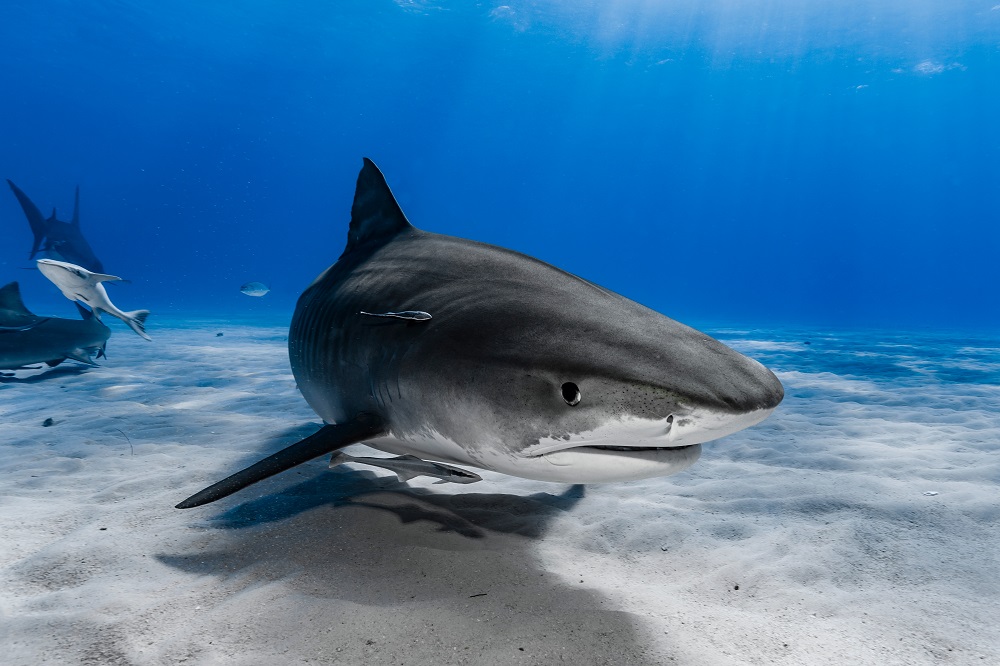
As a group, sharks age slowly, with some types, like the Greenland shark, estimated to live hundreds of years (though former methods of estimating shark age are now in question). When they get old, like whales, they’re thought to die due to disease or predation, but their aging process is complex. An article at AnimalsAroundTheGlobe.com describes the process at length, but includes these significant and interesting details:
- With age, some sharks change how they hunt to offset loss of speed and stamina. Some species scavenge more and hunt healthy prey less.
- Amid social shark species, old sharks benefit by sharing in on the prey of younger sharks.
- With age, some species reduce how far they range looking for food, and they relocate to areas where prey and food sources are more concentrated.
- Like many fish, some species show substantially increased reproduction later in life. This is significant because compared to most fish, most sharks reproduce much more slowly due to significantly smaller offspring numbers and less frequency.
- If they are not preyed upon, the most common cause of death is starvation when they can no longer hunt or scavenge sufficiently to survive.
Sea Turtles
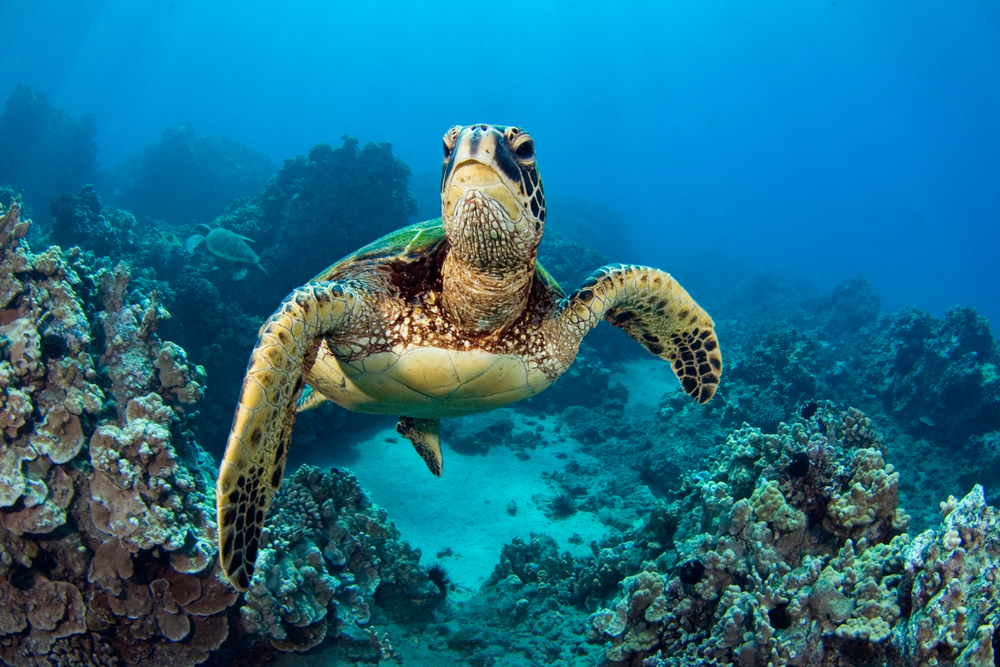
Sea turtles experience senescence, but very slowly compared to humans. Exactly how long they live is an estimate because presently, there’s no known way to determine sea turtle age. Some reports go into the hundreds of years, though 30 to 150 years seems to be a good approximation. Although sea turtles can, in theory, die of old age (they have relatively few predators), today their biggest threats as they age seem to be getting hit by boats, drowning in fishing gear, starvation caused plastic consumption and fibropapillomatosis, which is a tumor disease linked to types pollution. Significantly, as sea turtles age, research suggests that their reproductive rate does not decline, so older turtles contribute to species’ populations until or nearly until they die. Just as important in preserving sea turtles is protecting their nesting habitats from coastal over development, plant life loss, light at night (disorients the hatchlings) and egg poaching.
Ocean Health Considerations
Much as senior citizens are important contributors to human society, elderly whales, sharks and sea turtles are important contributors to healthy marine environments. As Ocean Torchbearers™ advocating and acting for a positive ocean-future, this is something to pay attention to.
- Fishing tends to over-catch older fish, many species of which (including sharks) reproduce more when they’re older. Research suggests that for such species, maximum landing sizes – i.e. that fish larger than a certain size must be returned to the ocean so they can reproduce – may be helpful in maintaining fish populations.
- Whale falls are important to the deep sea environment, but loss of whales due to whaling, fishing equipment fatalities and vessel collisions (now thought to be the leading cause of whale deaths) has diminished them, adding another reason why we need to keep saving the whales.
- As fibropapillomatosis tumors grow, they compromise sea turtle health by impeding swimming and blocking vision. There’s no cure, but institutions like the Brevard Zoo and Clearwater Marine Aquarium (both in Florida) are taking a lead in surgically removing tumors and returning the animals to the wild.
- To help protect and manage shark and ray populations, scientists need more data. You can help provide these crucial data as a citizen scientist by taking part in PADI AWARE’s Global Shark & Ray Census.
American comedian Groucho Marx once joked, “Getting older is no problem. You just have to live long enough.” One of our objectives as Ocean Torchbearers is to help as many whales, sharks and sea turtles – and other apex species – as we can to live long enough to get old.
Seek adventure. Save the ocean.
Dr. Drew Richardson
PADI President & CEO
PS – See your PADI Resort or Dive Center to take part in and stay connected to local PADI AWARE events and initiatives.