Dolphins have captivated humans for millennia, from their roles in Greek mythology to their place in the modern, natural world. For most divers, a face-to-face encounter remains the ultimate goal. It is a rare chance to connect with one of the ocean’s most iconic and clever animals.
Observing and interacting with a wild dolphin will leave you with an experience that you will remember for the rest of your life. This is why divers travel all over the planet to meet these incredible creatures.
Here are the top 13 places in the world to swim, snorkel or dive with dolphins.
Click to display the embedded YouTube video
1. The Bahamas
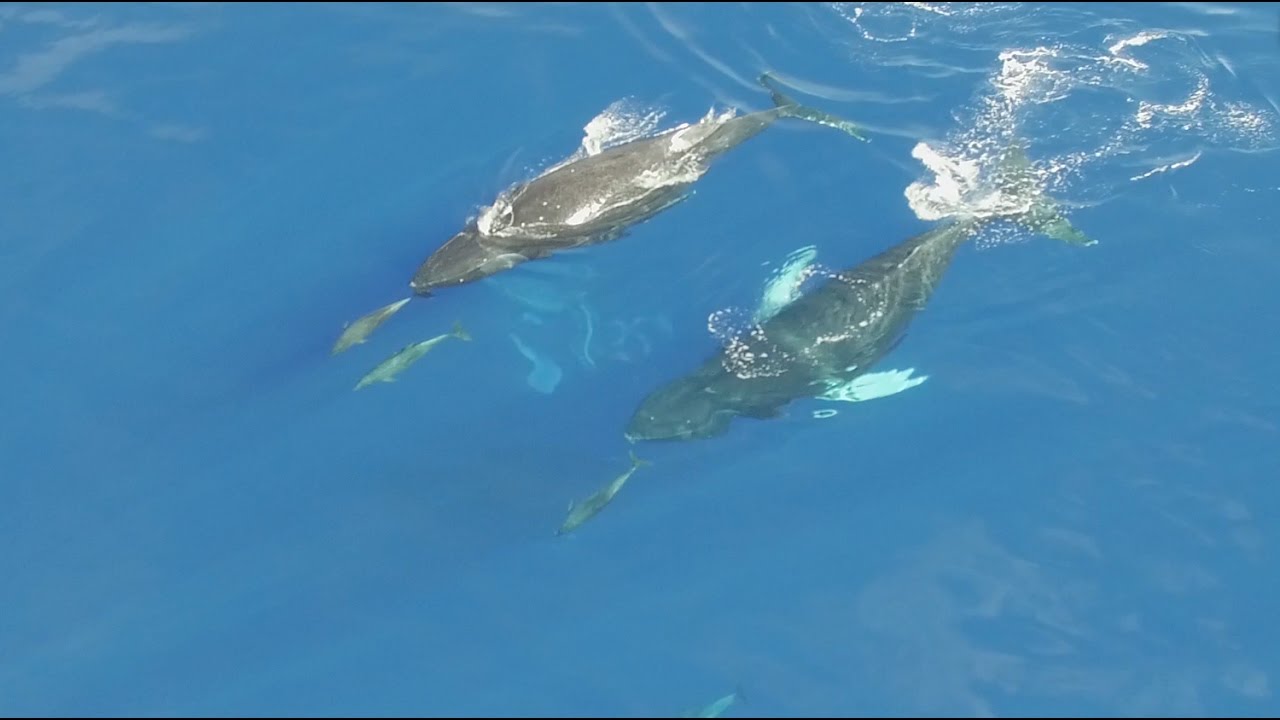
The Bahamas is located between Florida, Cuba and the Turks and Caicos in the West Atlantic Ocean. The archipelago is made up of atolls and coral cays with hundreds of different islands around them. The crystal-clear, shallow waters of the Bahamas offer ample opportunities for dolphin encounters, with dolphins often seen near Bimini, Grand Bahama, and in lots of secret coves known only to tour operators! So head to Grand Bahama, located just 56 miles (90 kilometers) east of Palm Beach, Florida, for warm waters and almost guaranteed encounters with several resident pods of dolphins all year round.
When To Go: Year-round
Type of Dolphins: Spotted, spinner, striped and bottlenose dolphins
Other Wildlife: Bull, tiger and oceanic whitetip sharks (later in the year)
2. The Galápagos Islands, Ecuador
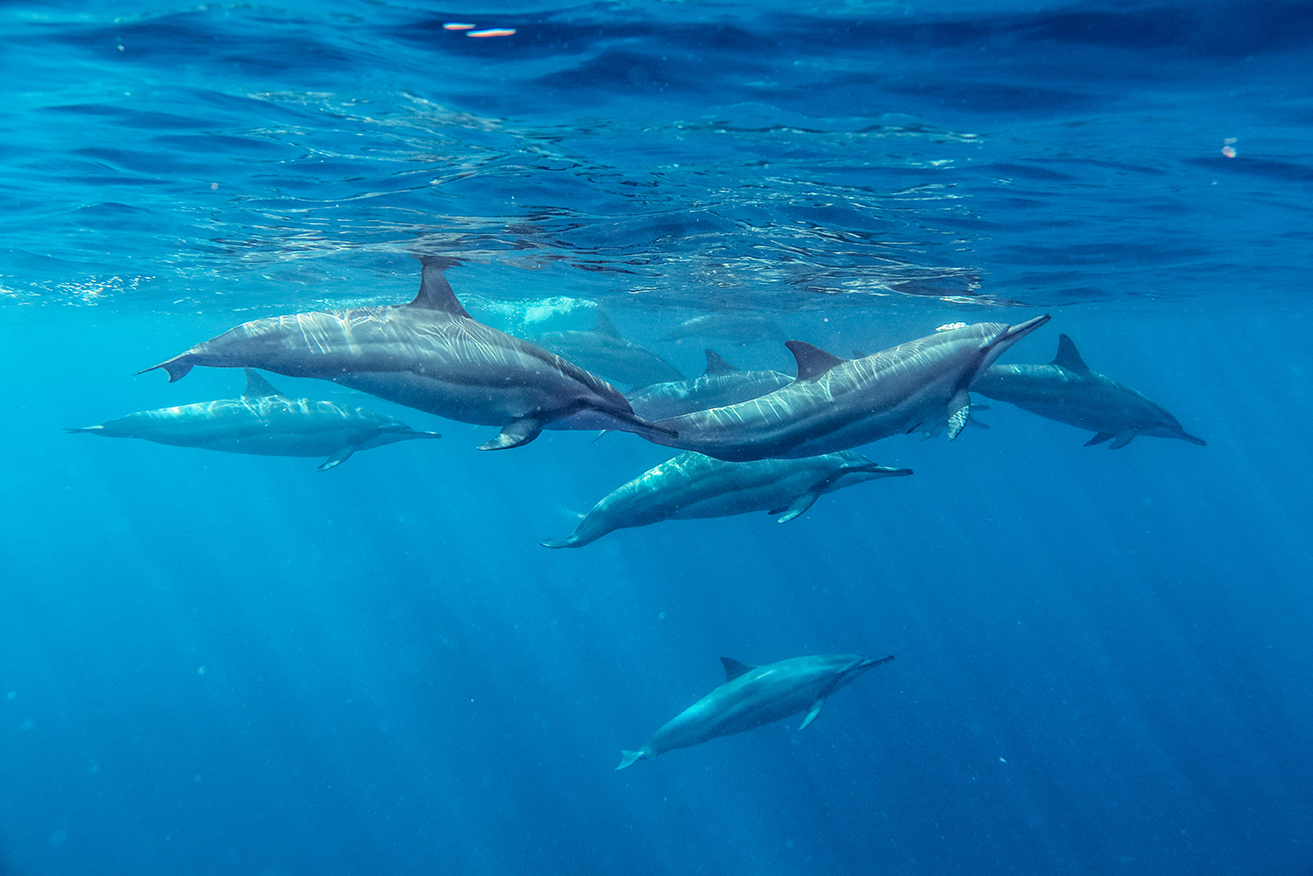
This UNESCO World Heritage Site is at the top of many divers’ bucket lists. The Galápagos Islands are located 600 miles (1000km) west of the coast of Ecuador. The island of Isabella is a short hour and a half flight from the coastal city of Guayaquil, but despite this easy access, the Galápagos still feels very remote and wild. Most of the very best dive spots in the Galápagos, such as Darwin and Wolf Islands, are only accessible by a week-long diving cruise. Alongside whales, sharks and other large marine animals, dolphins are often spotted from the boat and below the surface. Bottlenose and common dolphins are permanent residents, while other species migrate through the islands. Spinner dolphins in particular can be found in large groups at Fernandina Island.
When To Go: Year-round
Type of Dolphins: Bottlenose, common, Risso’s, spinner and spotted dolphins
Other Wildlife: The list is almost endless and includes whales, manta rays, marine iguanas, penguins, sea lions and many species of sharks
3. Sataya Reef & Samadai Reef, Egypt
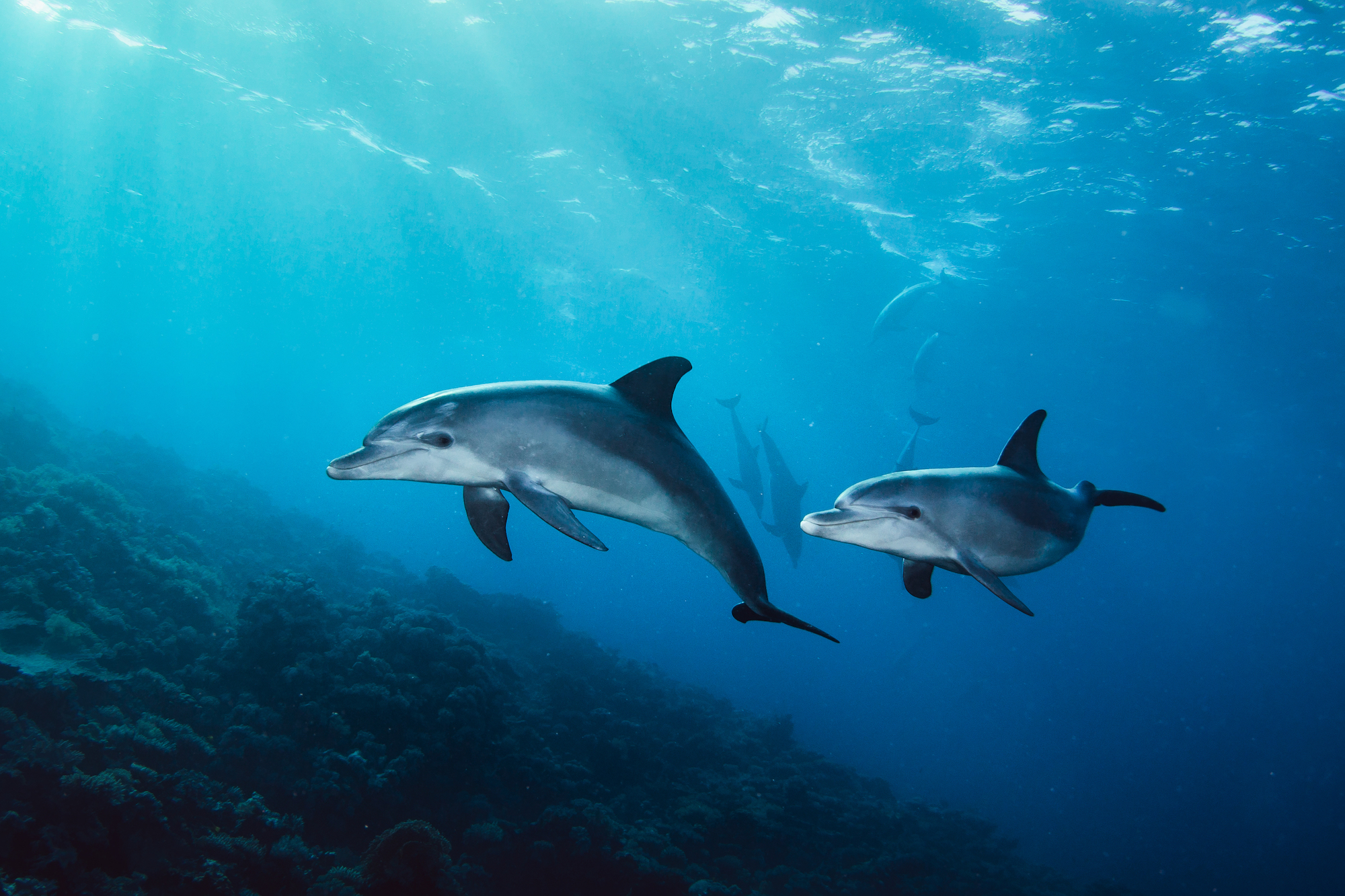
The clear visibility of Egypt’s Red Sea, with its colorful coral and fish life, are enough to satisfy any underwater enthusiast. Plus, Egypt and the Red Sea have no shortage of epic dive sites, from the famed SS Thistlegorm to the biodiverse Straits of Tiran, Brothers and Ras Muhammad National Park. Egypt’s Red Sea is home to many resident dolphin pods, including spinner, bottlenose, common and Risso’s dolphins.
Check out the renowned reefs of Marsa Alam in the southern Red Sea. Both Sataya Reef and Samadai, which is known locally as the “Dolphin House,” offer incredible opportunities to dive and snorkel with dolphins along the reef’s edge.
When To Go: Year-round, although the best time is May to July
Type of Dolphins: Mostly spinner, with occasional sightings of bottlenose, common and Risso’s dolphins
Other Wildlife: You may also encounter oceanic whitetip sharks nearby Elphinstone, as well as turtles and plenty of reef fish
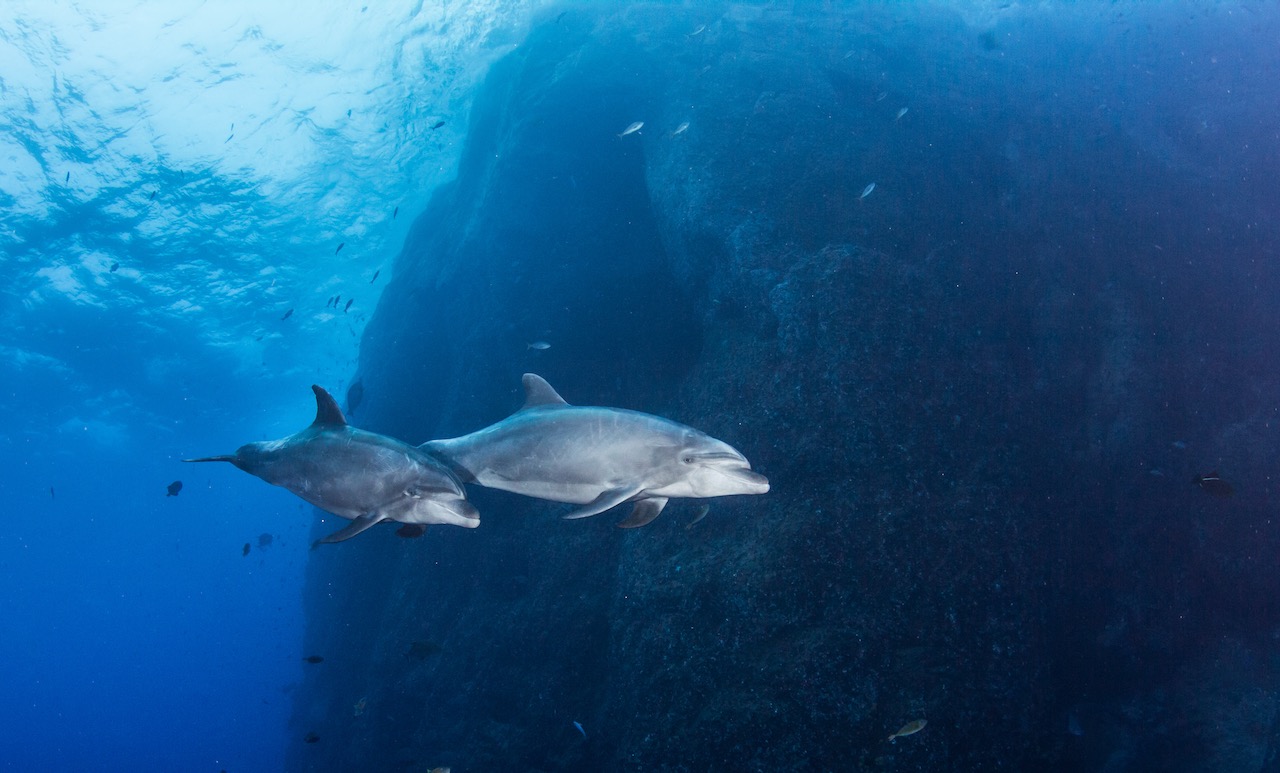
4. Socorro Island, Mexico
Nicknamed “The Mexican Galapagos,” the Revillagigedo Archipelago (aka Socorro) is one of the world’s best dive destinations with some seriously impressive large animals. Here, you can experience the giants of the ocean, like manta rays and whale sharks! Alongside these impressive marine animals, dolphin encounters are a regular occurrence during the high season.
When To Go: January to March best chances for dolphins, yet the season runs from November to May
Type of Dolphins: Bottlenose dolphins
Other Wildlife: Regular encounters with whale sharks, manta rays and up to 10 species of sharks, including hammerheads
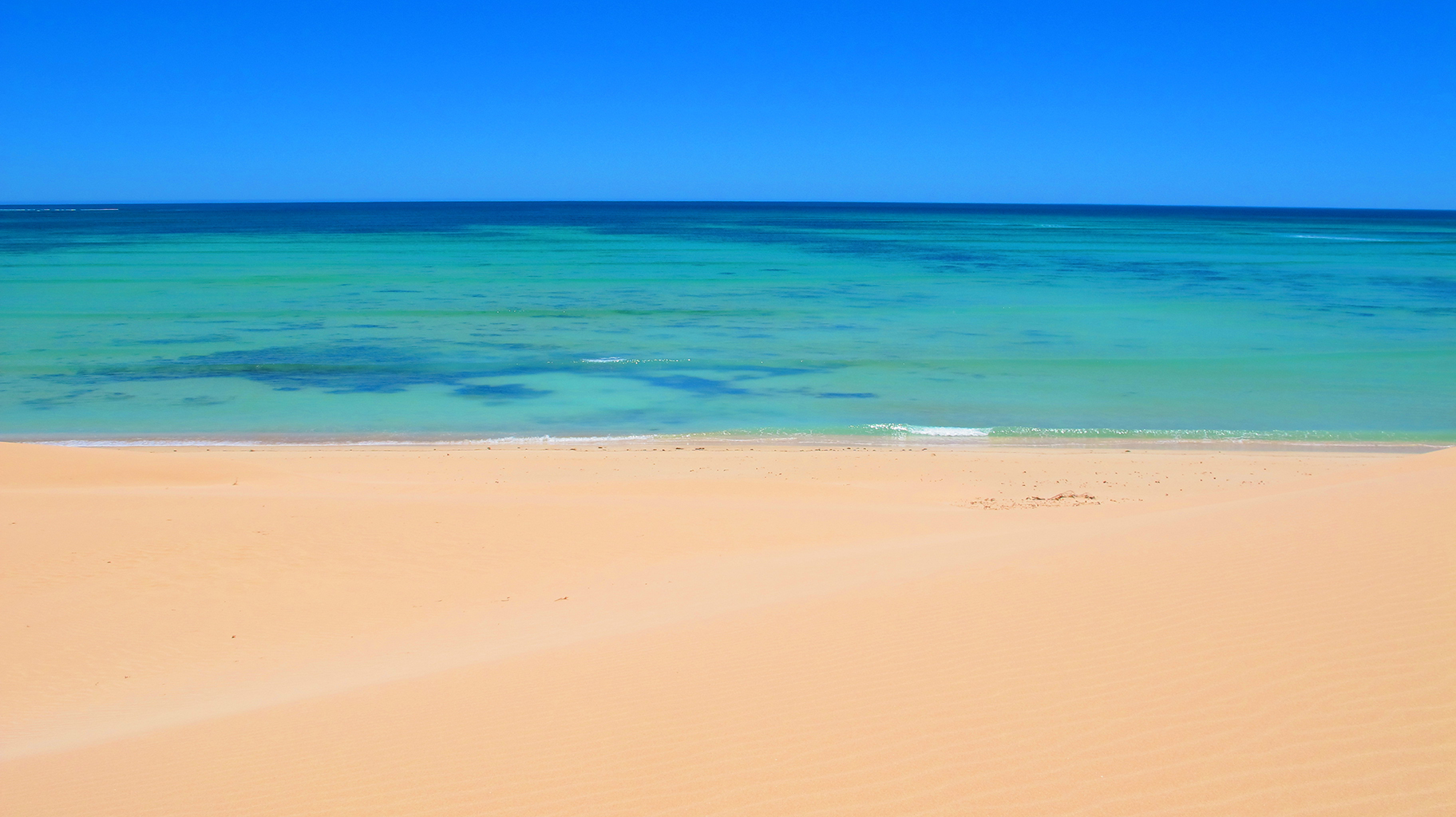
5. Ningaloo Reef, Australia
Ningaloo Reef in Western Australia is world-famous for sightings of whale sharks and manta rays. But this small, beautiful reef is fast becoming one of the best places in the world to encounter dolphins.
Common and Indo-Pacific bottlenose dolphins cruise past Rockingham’s bays and islands, while large pods of common dolphins can be found in the Port Stephens-Great Lakes Marine Park. With an idyllic location, awesome marine life and great weather, it is a little slice of paradise that is well worth visiting.
When To Go: Year-round
Type of Dolphins: Common, bottlenose and Indo-Pacific bottlenose dolphins
Other Wildlife: You can also encounter whale sharks, whales and sharks
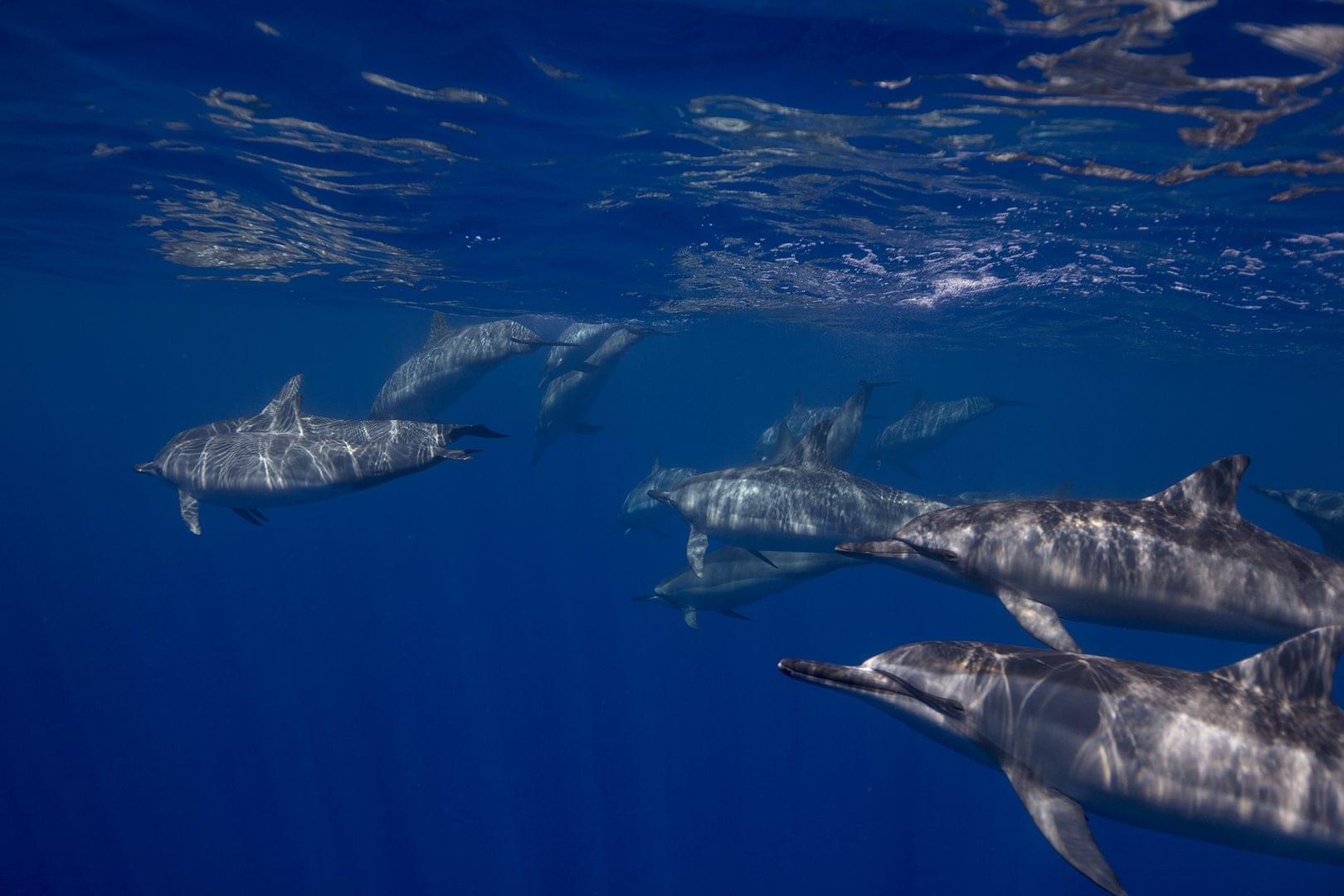
6. The Sardine Run, South Africa
The Sardine Run gained worldwide fame with the release of Blue Planet, in which everyone witnessed the billions of sardines migrating up the eastern coast of South Africa. Shoals of up to 9 miles (15km) long attract hungry seabirds, whales and sharks. Of course, dolphins don’t hesitate to get in on the action, too.
Divers are dropped in the middle of the feeding frenzy for a chance to see some of the 18,000 dolphins that chase sardines every year. Divers not only get to see them in impressive numbers, but also witness them showing off their intelligence as they cooperate to hunt the huge shoals.
When To Go: May to July for the Sardine Run, although dolphins are present year-round
Type of Dolphins: Bottlenose and common dolphins
Other Wildlife: Great encounters with sharks, humpback whales, tunas and jacks
Click to display the embedded YouTube video
7. Hawaii
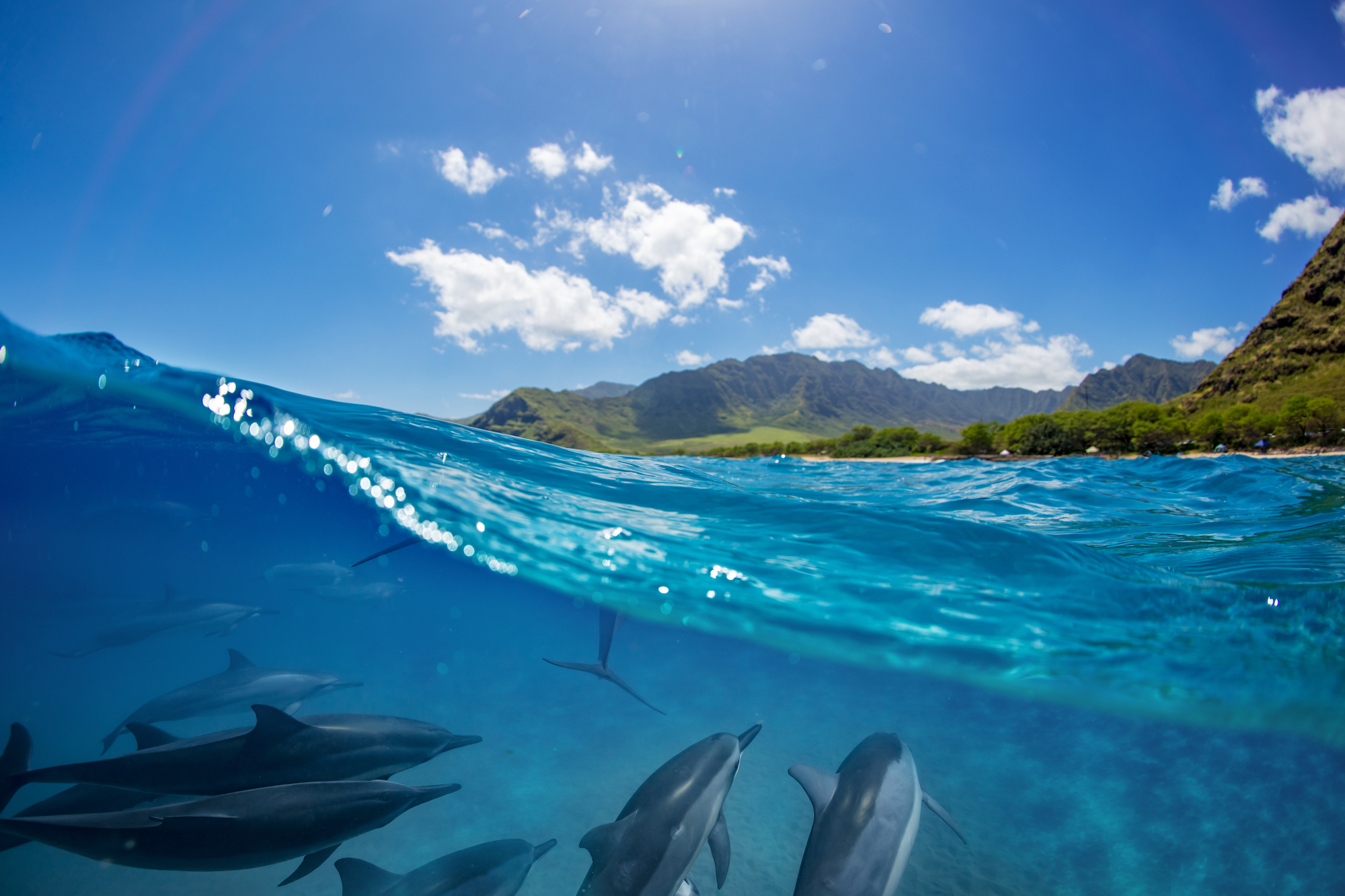
Hawaii has resident dolphin populations year-round, with spinner, bottlenose and spotted dolphins all making regular appearances.
Hawaii’s volcanic origins and isolated geographical location make for a whirlwind of scuba diving options to explore. From diving with Galápagos ‘Manō’ sharks, gazing at nesting sea turtles or incredible adventures through the natural lava tubes and rock formations, Hawaii has it all. Head to Oahu or the Big Island to spot the spinner dolphins resting and swimming slowly in shallow, sandy coves, and ask your tour operator if they participate in the government’s dolphin-SMART program to ensure responsible dolphin tourism.
When To Go: Year-round, although the winter months can bring bigger swells and choppy seas
Type of Dolphins: Spinner, spotted and bottlenose dolphins
Other Wildlife: Sharks, turtles, orca, pilot whales and manta rays
8. Kaikoura, New Zealand
From the sub-tropical reefs of the North Island to the unique topography and temperate waters of the South Island, it would take a lifetime to discover all the secrets of diving in New Zealand. Kaikoura, located on the east coast of the South Island of New Zealand, is the best place to experience Dusky dolphins. They can be found in pods from 100 to 1,000 strong in the waters around Kaikoura. You can dive or even swim and snorkel, with several tour operators offering guaranteed encounters with these magnificent creatures.
When To Go: Year-round
Type of Dolphins: Dusky dolphins
Other Wildlife: Seabirds and whales
9. Fernando de Noronha Island, Brazil
With its celebrated shipwrecks and healthy reefs, the diving in Fernando de Noronha offers a staggering variety of high-quality underwater experiences.
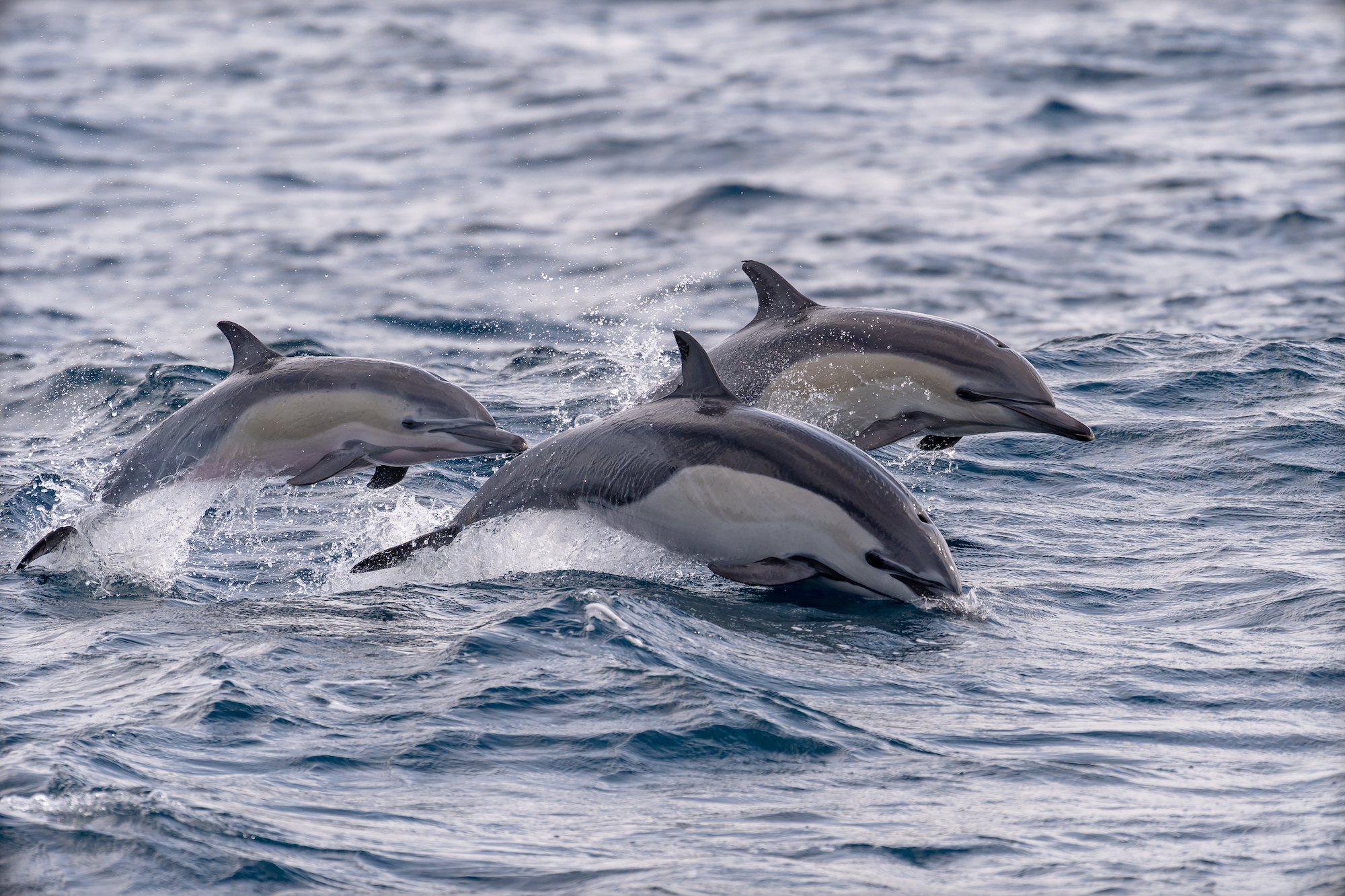
As a UNESCO World Heritage Site and Brazil’s premier diving destination, the Fernando de Noronha Marine National Park is home to 230 fish species and 15 types of coral. It is most famous for its resident population of spinner dolphins, which is one of the largest and most consistent populations in the world (up to 2700 individuals). These dolphins can be encountered regularly in the early morning as they return from a night of hunting in the open ocean to rest in the island’s calm, protected bays. Located roughly 220 miles (354km) off the Brazilian coast, the archipelago is also home to some of the most stunning and pristine beaches in the Atlantic.
When To Go: August to November on the north side of the island, January to March on the southern shore
Type of Dolphins: Spinner dolphins
Other Wildlife: Great chances to encounter turtles, whitetip reef sharks and nurse sharks
Click to display the embedded YouTube video
10. Raja Ampat, Indonesia
For lovers of biodiversity, coral and megafauna, Raja Ampat is a near-perfect destination, and luckily, it also has plenty of dolphins. The warm waters are home to spinner, spotted, common bottlenose, Indo-Pacific bottlenose and Risso’s dolphins. You’re likely to come across dolphins on your boat crossings, which gives you plenty of chances to jump in.
When To Go: October to April
Type of Dolphins: Spinner, spotted, common, Indo-Pacific bottlenose, Indo-Pacific humpback, orca, rough-toothed and Risso’s dolphins
Other Wildlife: False killer whales, pilot whales, sharks, manta rays and a high diversity of corals and reef fishes
11. The Azores, Portugal
Known as ‘Europe’s Hawaii,’ the Azores are an archipelago of nine major volcanic islands located in the Atlantic Ocean. These Portuguese islands are a haven for marine life, thanks to a very large network of marine parks and the surrounding nutrient-rich waters, which are created by deep-sea seamounts, volcanic activity and Gulf Stream currents. Although the Azores were once a whaling hotspot, the area has now transitioned into a leading hub for marine conservation and eco-tourism. Most dolphin encounters in the Azores are snorkel-based ‘drop-ins’ in the open ocean. As open ocean conditions can be choppy and the snorkel experience is in the open blue, being comfortable in these conditions is required for these trips.
When To Go: May to September for warmer, calmer waters
Type of Dolphins: Common, Atlantic spotted, bottlenose, striped and Risso’s dolphins
Other Wildlife: Cory’s shearwater, sperm whales, loggerhead turtles, blue sharks and mobula rays
12. Rangiroa, French Polynesia
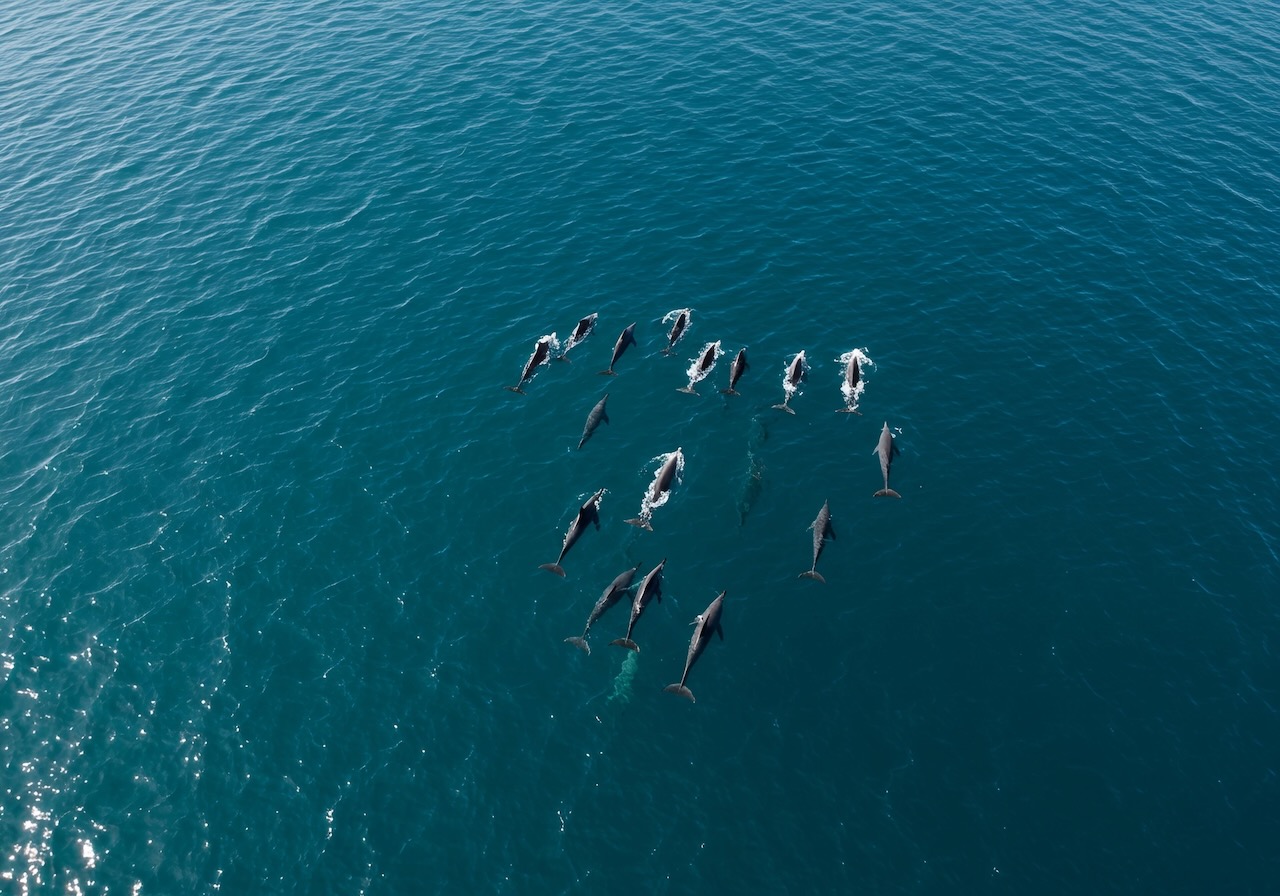
Rangiroa is located in the Tuamotu Archipelago in French Polynesia. It is one of the largest coral atolls in the world, consisting of a large lagoon encircled by a ring of coral islands and narrow passes. Dolphins are often encountered on the impressive drift dives through the Tiputa Pass. Although the resident dolphins of Tiputa Pass are known for being exceptionally social and often approach divers closely, it is important to remember to never chase or crowd them. The currents in the pass can also be extremely strong. It is therefore a dive destination best suited for experienced divers and those under professional guidance. For a sustainable visit, remember to use mineral-based, reef-safe sunscreen and to choose PADI Eco Centers that prioritize reef education and conservation.
When To Go: Dolphins can be seen year-round, but visit between May and October for optimal visibility
Type of Dolphins: Bottlenose dolphins
Other Wildlife: Barracuda, manta rays, grey reef sharks, hammerhead sharks and tropical reef fish
13. Mikura Island, Japan
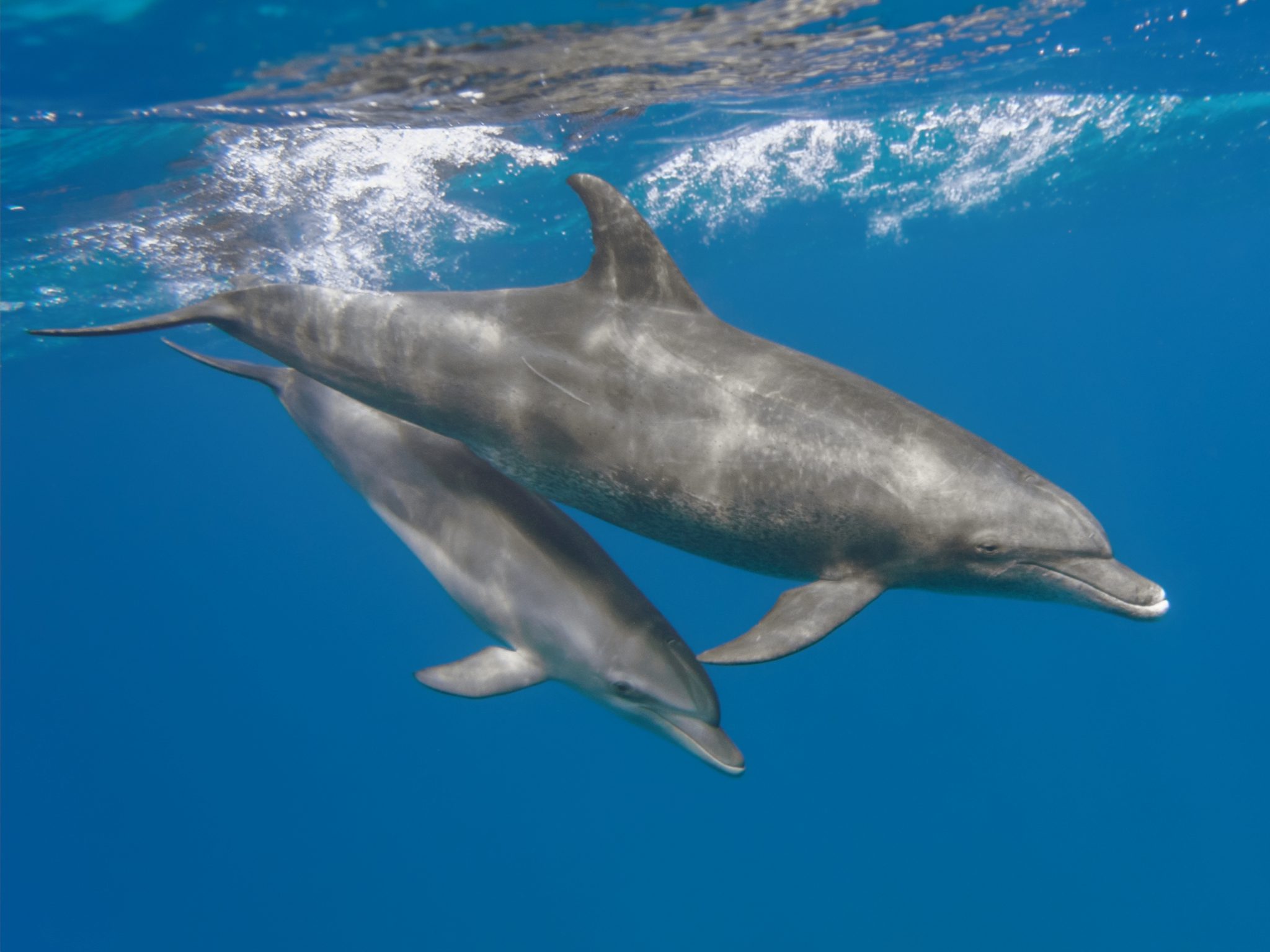
Mikura Island (Mikurajima) is a small, volcanic island and is part of the Izu Island archipelago situated 124 miles (200km) south of Tokyo, Japan. This gem is renowned for its pristine wilderness. Incredibly, the entire island is protected as part of the Fuji-Hakone-Izu National Park. While the dolphins off Mikura Island are often social and relaxed around people, the protected status of the island means snorkeling is strictly regulated to minimize disruption to their natural behavior.
When To Go: Dolphin swim tours run from April to October
Type of Dolphins: Indo-Pacific bottlenose dolphins
Other Wildlife: Green sea turtles and Japanese murrelet
Dolphin Facts
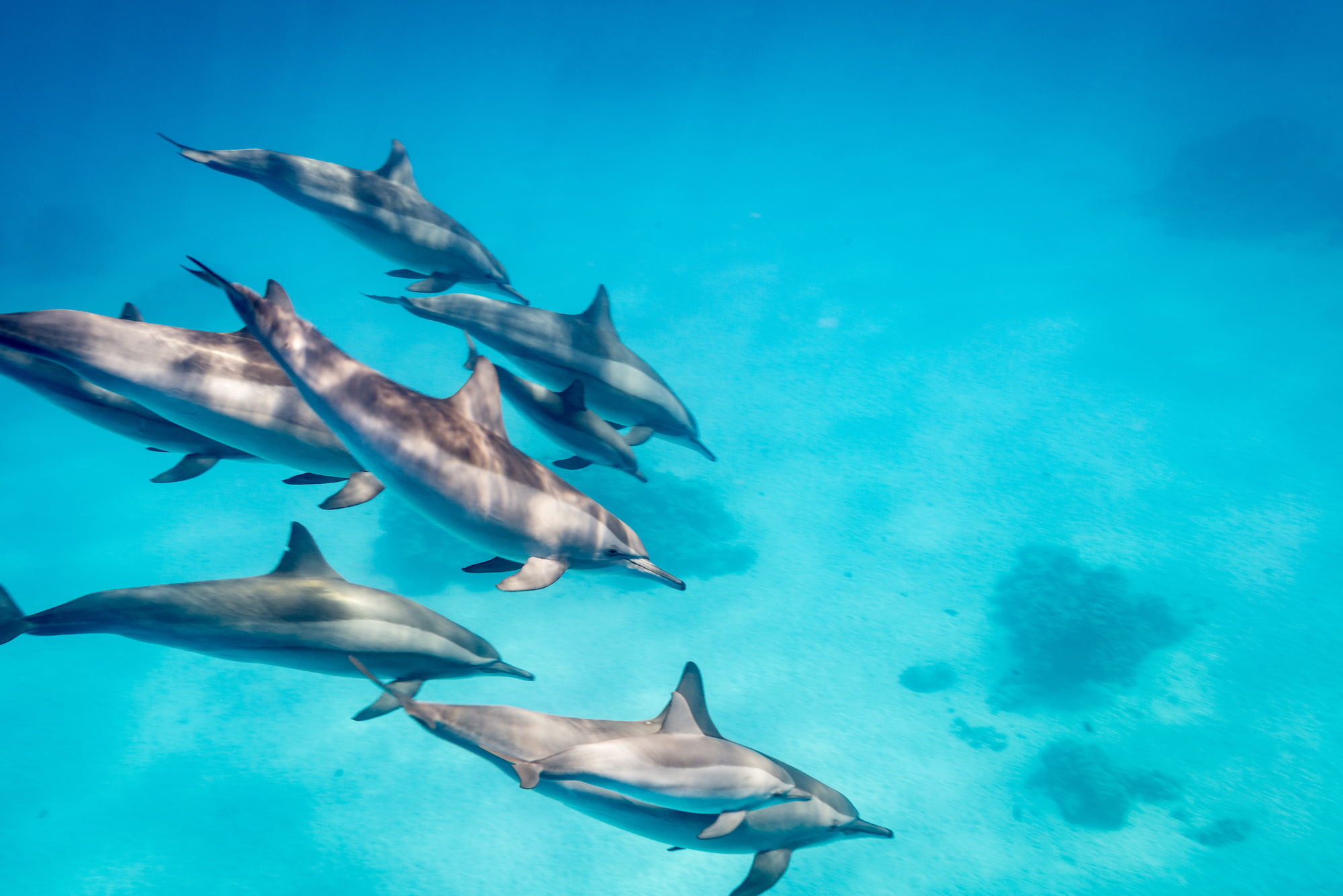
Dolphins are marine mammals belonging to the odontocete, or “toothed whale,” suborder of cetaceans. They spend their entire lives underwater, but unlike fish, they must periodically surface to breathe air through a blowhole located on the top of their heads. Beyond their aquatic adaptations, they are highly intelligent and highly social animals that rely on a sophisticated system of echolocation to navigate and hunt in the ocean.
Species
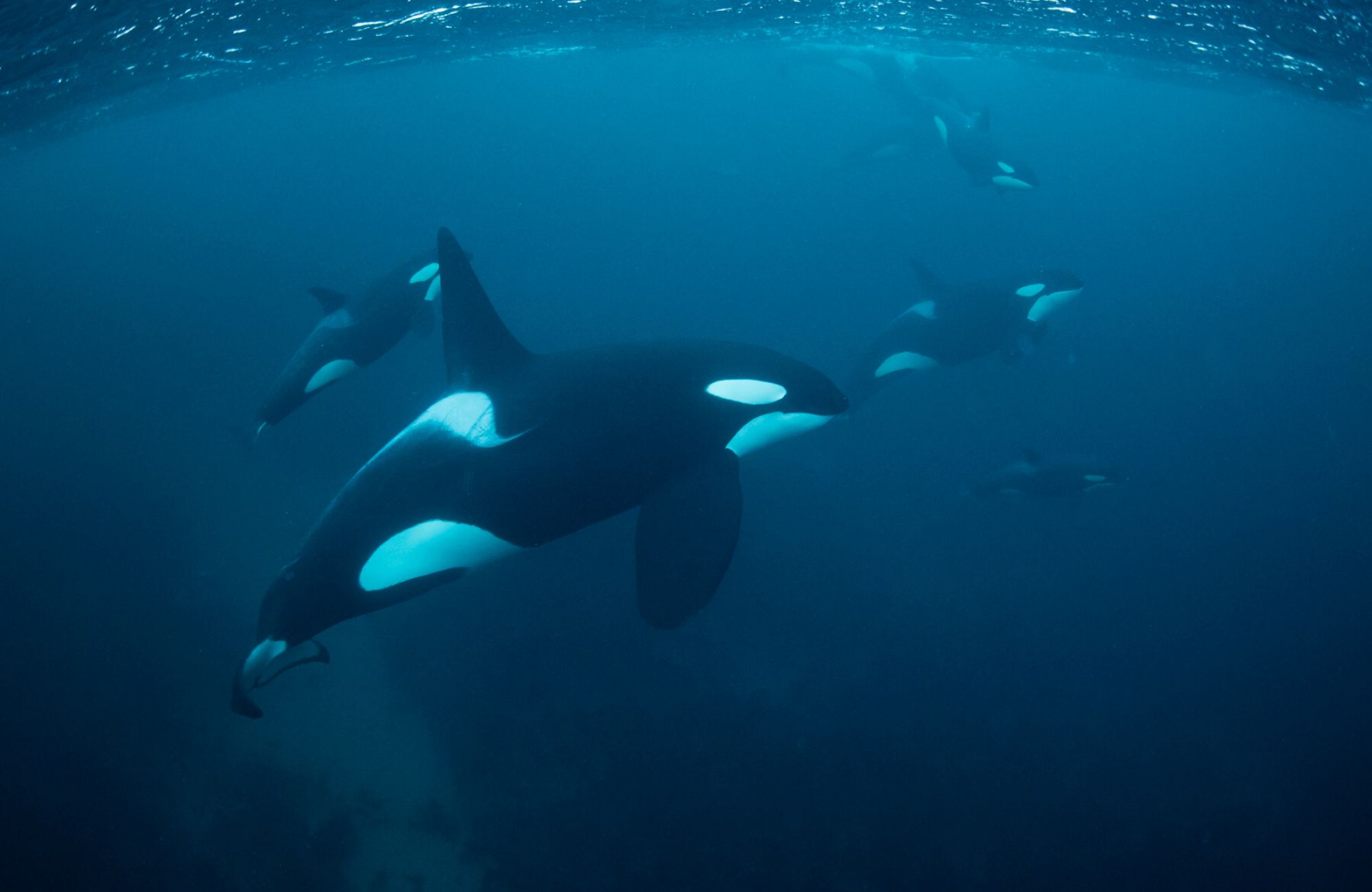
There are currently 49 recognized dolphin species in the world, which consists of 43 oceanic species and 6 river dolphin species. The biggest oceanic species is the orca (pictured above), which can reach up to 23 feet (7 meters) in length and can weigh up to 13,200 pounds (6,000kg), while Mexico’s Vaquita is the smallest cetacean in the world, growing to a maximum length of 4.9 feet (1.4 meters).
Click to display the embedded YouTube video

Diet and Hunting Strategies
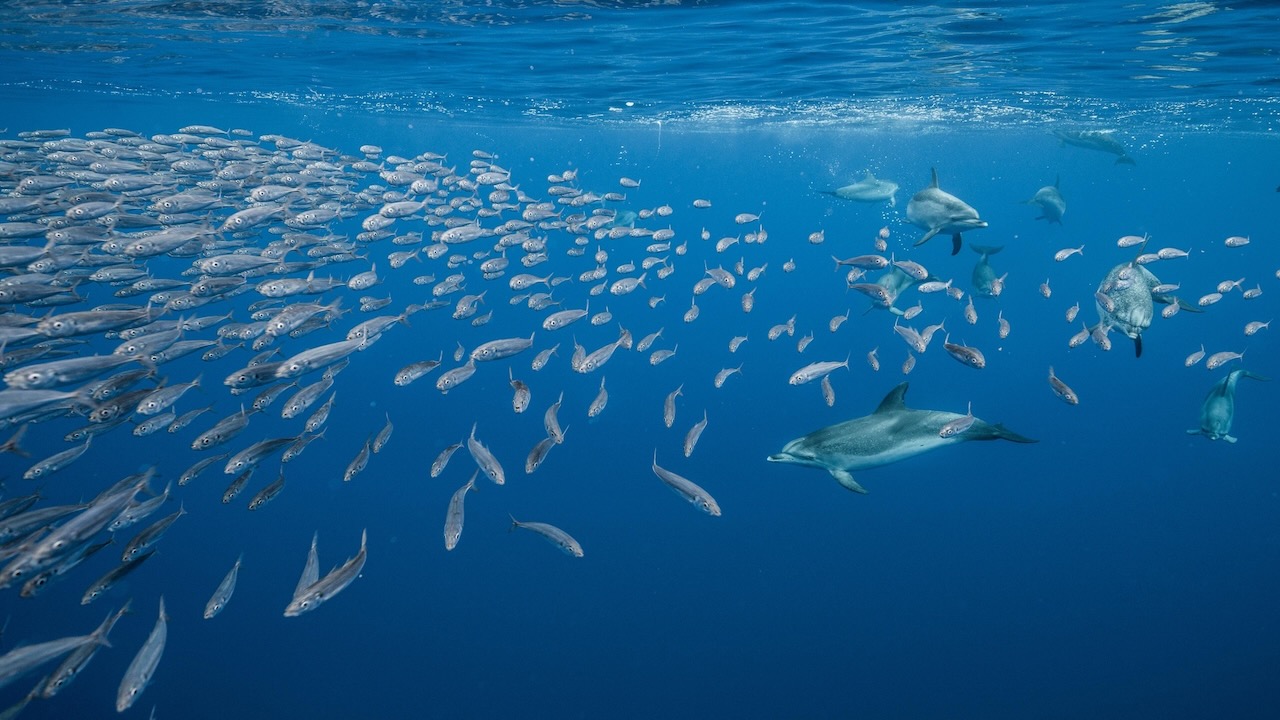
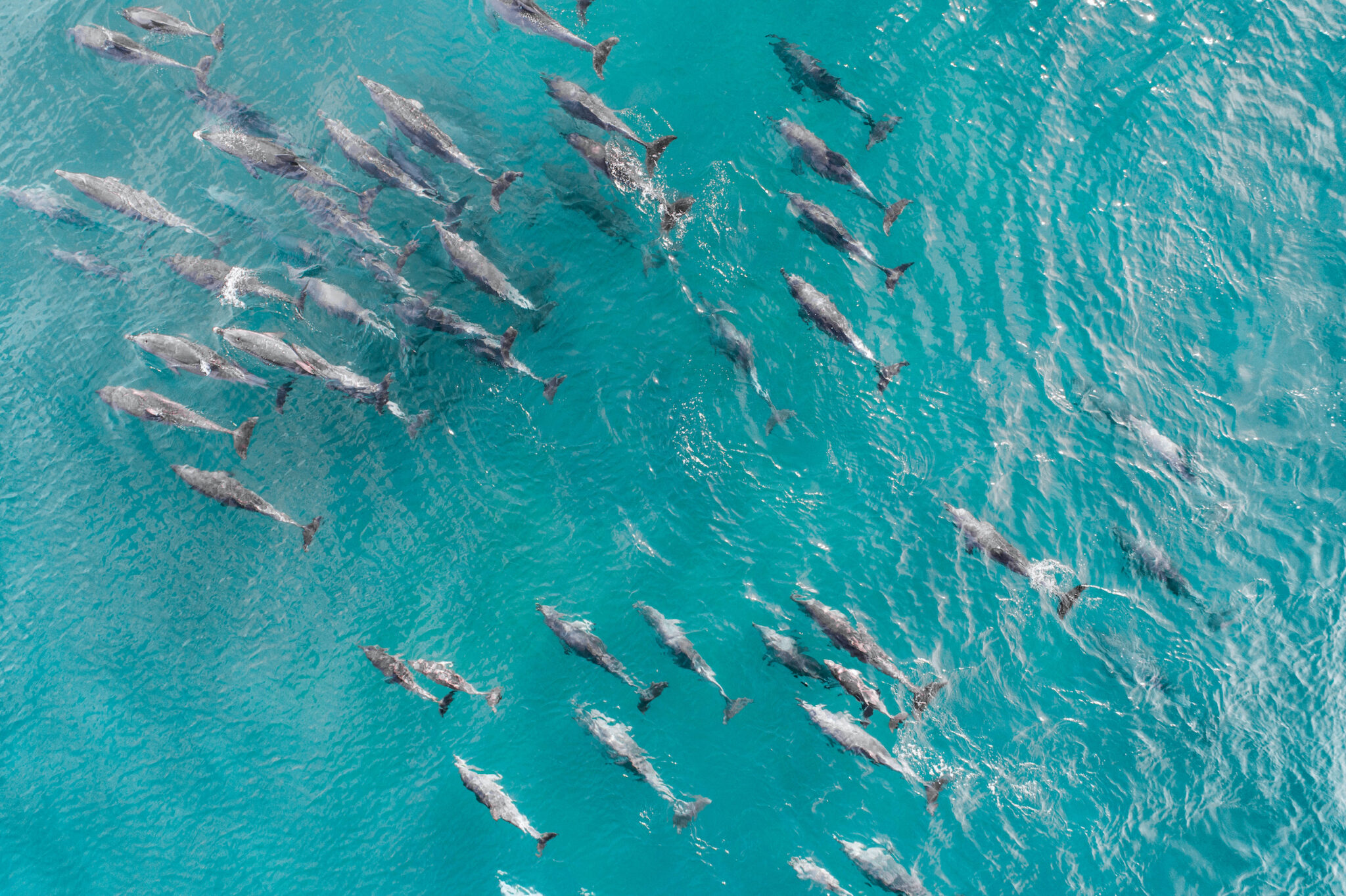
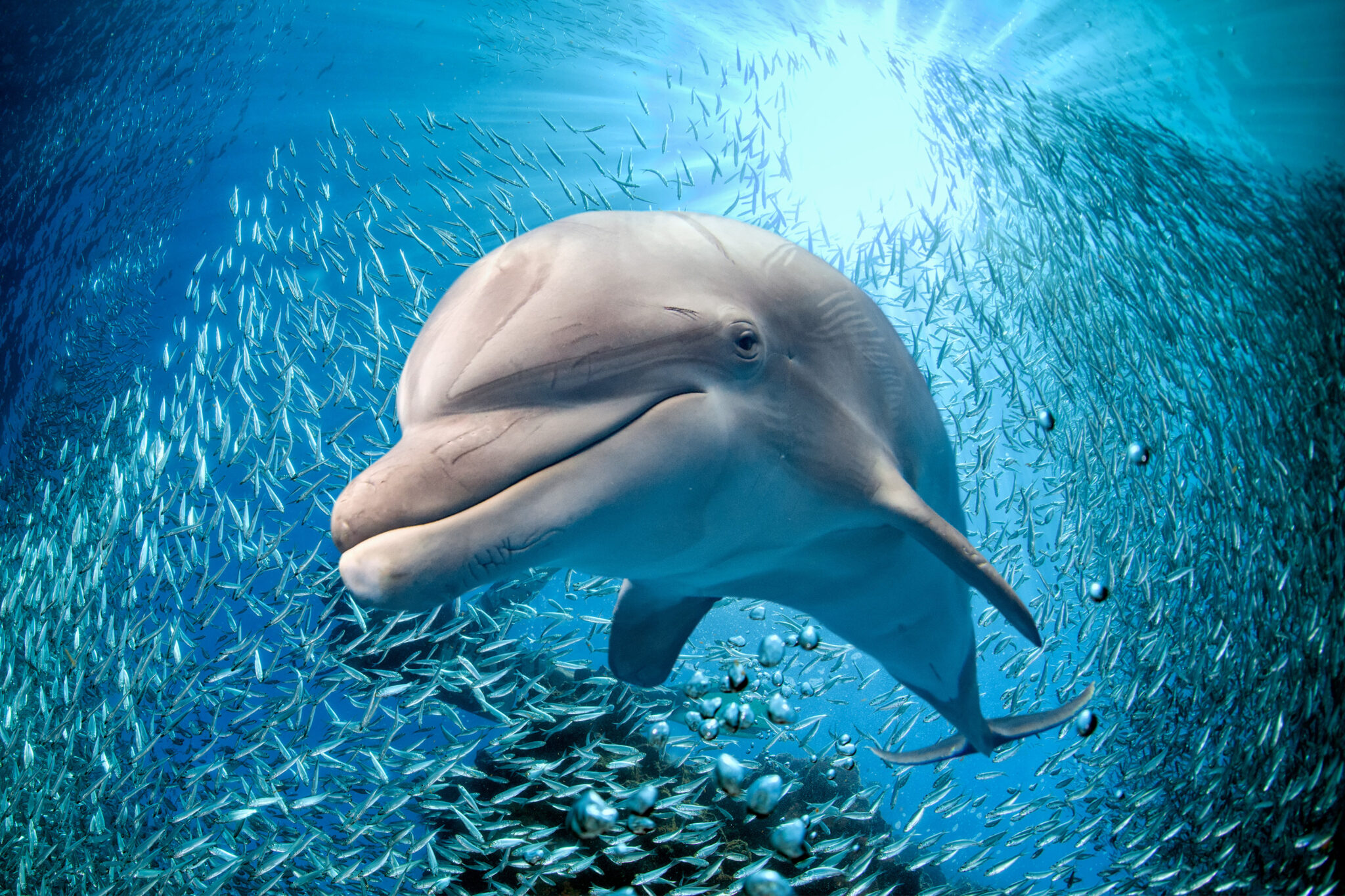
Dolphins are carnivores; they feed mainly on fish (like sardines and fusiliers) and squids. They are social animals and form groups called pods. Being very clever, they have developed various hunting techniques in which each individual has a role.
One of the many hunting strategies is called herding, which consists of surrounding a group of fish, concentrating them to a point by forming a sort of cage, and finally turning into the group of prey to eat them. Watch the video above to take a look at another spectacular hunting strategy!
Echolocation
Dolphins have developed an echolocation system, which is a kind of bio-sonar very similar to the one used by bats. They produce sound waves from their head (amplified by an organ called the melon).
These sounds waves are “frequency-modulated sounds,” because dolphins modify the tone of the sound. In other words, the sound can rise and fall over time.
Once the sound wave hits an object or a piece of prey, the wave returns, giving the dolphins an idea of the distance, shape and size of the object. Echolocation is also used for communication, defense against predators and to improve navigation.
Intelligence
Dolphins are considered to be among the most intelligent animals on the planet and have a well-developed social structure. For example, if an individual is injured or sick, they have been known to help the struggling dolphin reach the surface to breathe. Moreover, they are among the animals with the longest memory, can recognize themselves in mirrors and can use marine sponges as tools to protect their snouts while foraging.
Reproduction
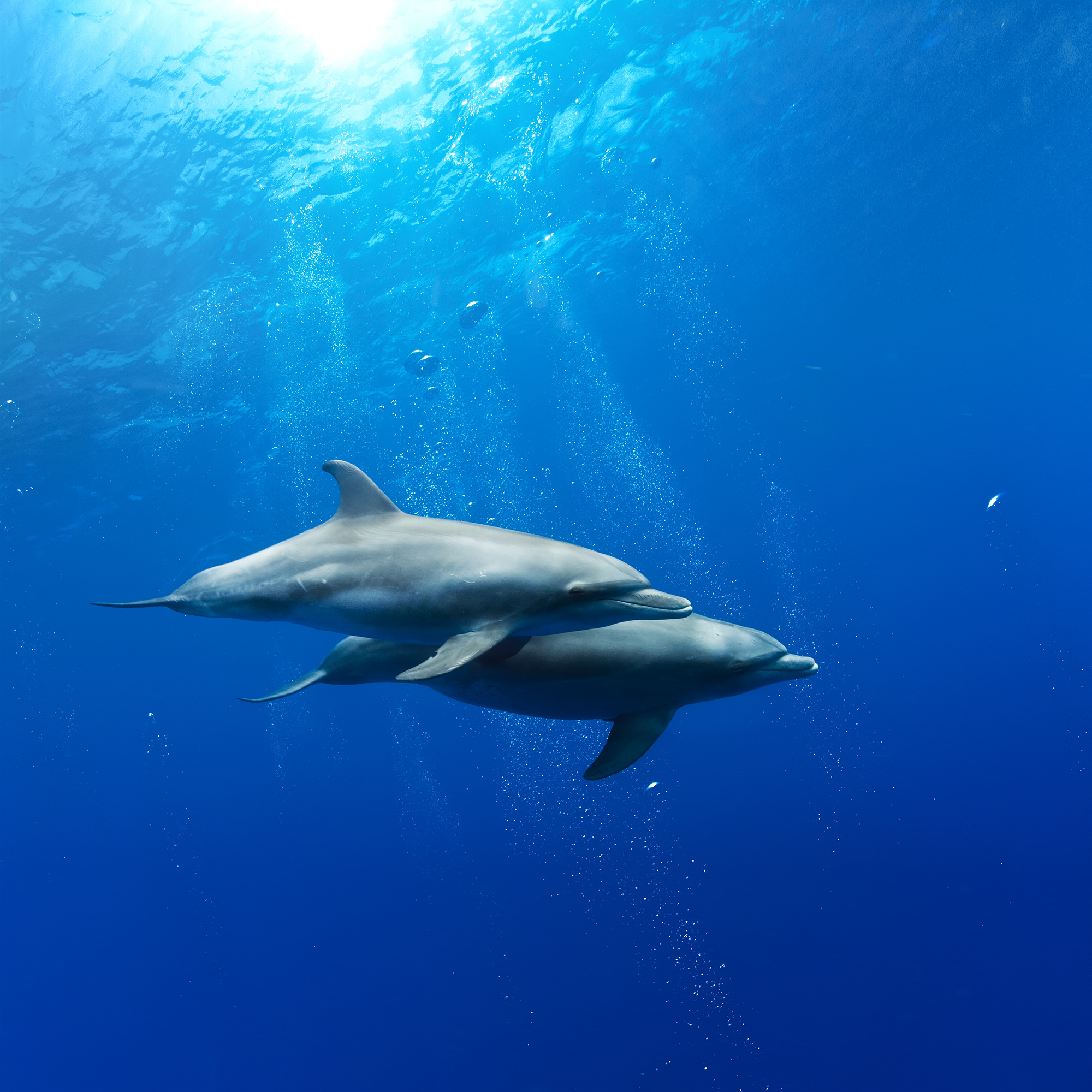
Like all mammals, dolphins reproduce through internal fertilization, which happens at sea. Females give birth to live young. Juveniles are able to swim from the moment they are born, but they are completely dependent on their mothers’ milk for up to two years and will (depending on the species) remain with their mother for up to eight years.
Dolphins in Mythology
Dolphins appear several times in Greek mythology. They were sacred to the Gods Apollo and Aphrodite, and they were also the messengers of Poseidon, the God of the Sea.
How To Interact With Dolphins
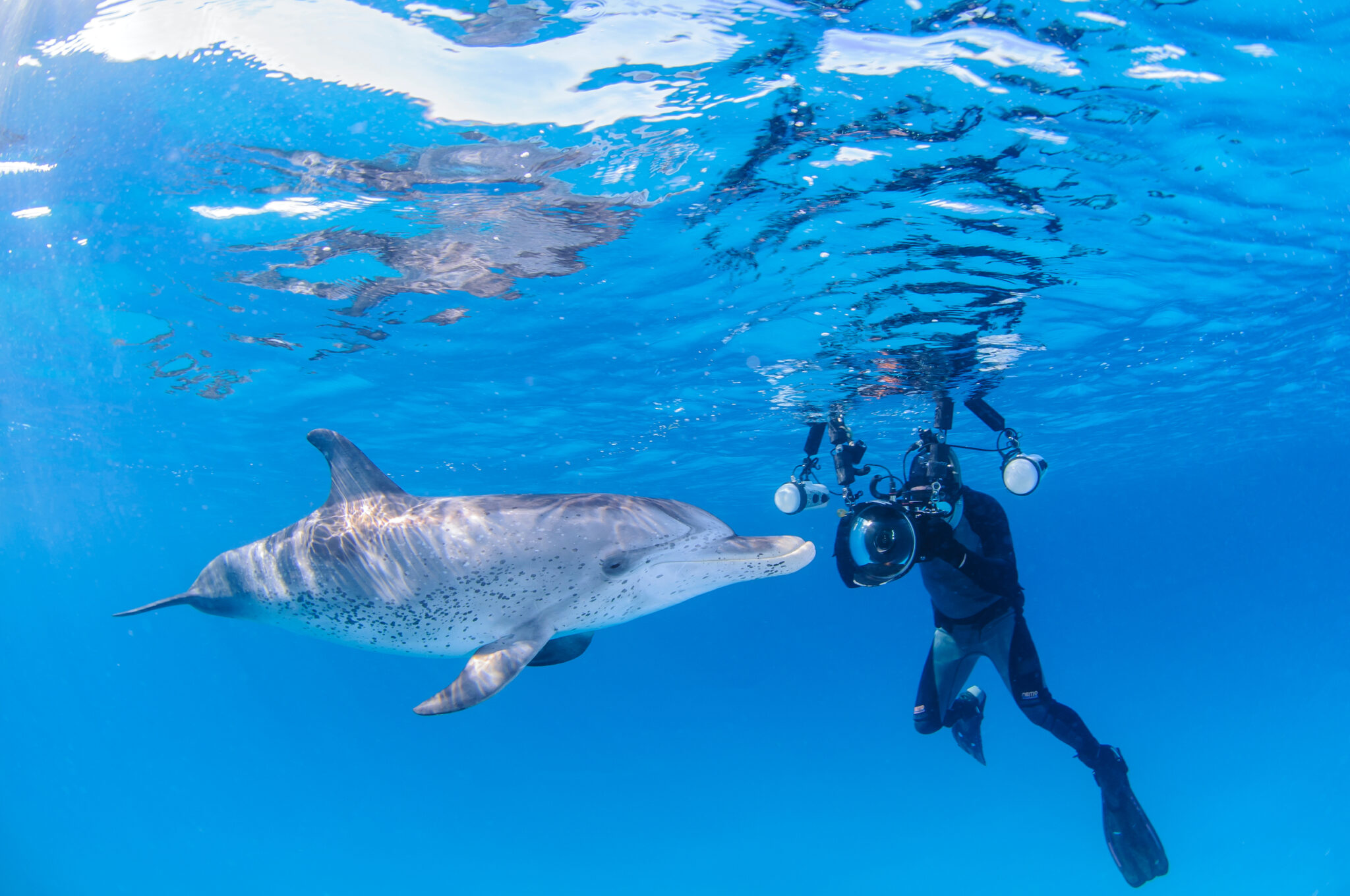
When you are in the water with dolphins, remember to respect the animals and never forget they are wild animals in their natural habitat. Interactions should always be ‘passive observation’ experiences. Avoid anything that may impact the dolphin’s natural behavior. For further information, read these Do’s and Don’ts of Marine Life Interactions.
How to ID a Dolphin
A dolphin species can be distinguished by the morphology of the body and the location where they are observed (if you have a dolphin ID book handy). Researchers establish differences from one individual to another through photos of dorsal fins, which is usually unique in shape and scars from individual to individual.
It is also possible to rely on the fluke (rarer to see) and photos of the whole body when spotted underwater. The aim of identification is to monitor population, migration and social structure.
Threats to Dolphin Populations
Sadly, several dolphin populations are in decline, with the Vaquita and various river dolphin species facing the most immediate risk of extinction. Their primary threats are similar to those of other marine life, such as whales, turtles and sharks. Accidental entanglement in fishing nets (called bycatch) prevents dolphins from surfacing to breathe, while climate change disrupts the abundance and migratory patterns of their prey. Dolphins also face habitat loss from the construction of ports, marinas and seawalls, and the accumulation of pollutants in their environment, like from agricultural run-off. In some regions, they are also hunted for consumption, despite their meat often containing dangerous levels of toxic heavy metals.
What Can You Do To Help?
- Support PADI AWARE®: Participate in Dive Against Debris® to remove ghost gear and plastics from the ocean, which are primary causes of accidental dolphin entanglement and ingestion.
- Contribute to Citizen Science: Photograph dolphin dorsal fins (like a dolphin finger prints) and submit sightings with the time, date and location to global databases, like Happywhale.
- Practice Responsible Tourism: Never chase, feed or touch wild dolphins, as this can disrupt their natural behavior.
- Choose Sustainable Seafood: Only purchase dolphin-safe or MSC-certified seafood to ensure you are supporting sustainable fishing practices with low bycatch rates.
- Wild is Better: Avoid captive swim-with-dolphin programs and only support marine facilities accredited by recognized global welfare organizations.
- Be a Marine Ambassador: Use your social media platforms to share accurate information about marine conservation and promote the protection of underwater habitats.
Q&A about Dolphins
You’ve got questions; we’ve got answers.
How do dolphins communicate?
They emit whistles. It has been discovered that every single dolphin produces a unique whistle, so this can be used to identify each animal. It’s also confirmed they can identify each other, even after 20 years!
How long do dolphins live?
Their lifespan is about 30 years. Bottlenose dolphins can live up to 40 years, and the longest living dolphin is the killer whale (orca), which can live up to 80 years.
How do dolphins suckle?
In the absence of lips, dolphin milk (similar to yogurt) is shot into the mouth of the baby through the mammary gland.
How many dolphins are killed each year?
More than 300,000 cetaceans are estimated to be killed as by-cactch every year, while up to 2,000 individuals are killed through hunting every year.
Are dolphins friendly or not?
Most of them are friendly, but being wild animals they can be aggressive (albeit rarely), especially when they think they are in danger or are particularly stressed. They are, after all, top predators.
How do dolphins sleep?
Dolphins sleep very different to us! Half of the dolphin’s brain sleeps, so they only have a conscious sleep. The other half of the dolphin’s brain is in charge of deciding when to breathe and observing the environment during sleep.
Ready To Book Your Dolphin Adventure?
Check out PADI Travel® to book the dolphin encounter of your dreams. Chat with a Scuba Travel Expert via phone, chat or email today!