Many people use the words venomous and poisonous interchangeably, often as a blanket term for anything capable of causing harm through toxins. While this works in casual conversation, biology defines these terms more precisely — meaning it may not be entirely accurate to call the sea snake you saw on your last dive “poisonous.”
Here is a simple way to remember the difference between venomous and poisonous:
- Venomous – Toxins are delivered through a bite, sting, spine or other injection method.
- Poisonous – Toxins are passively present in the body and cause harm when ingested.
Simple enough, right?
Let’s look at some examples. Test your knowledge, and see if you can figure out whether the sea creatures are venomous or poisonous.
1. Banded Sea Krait
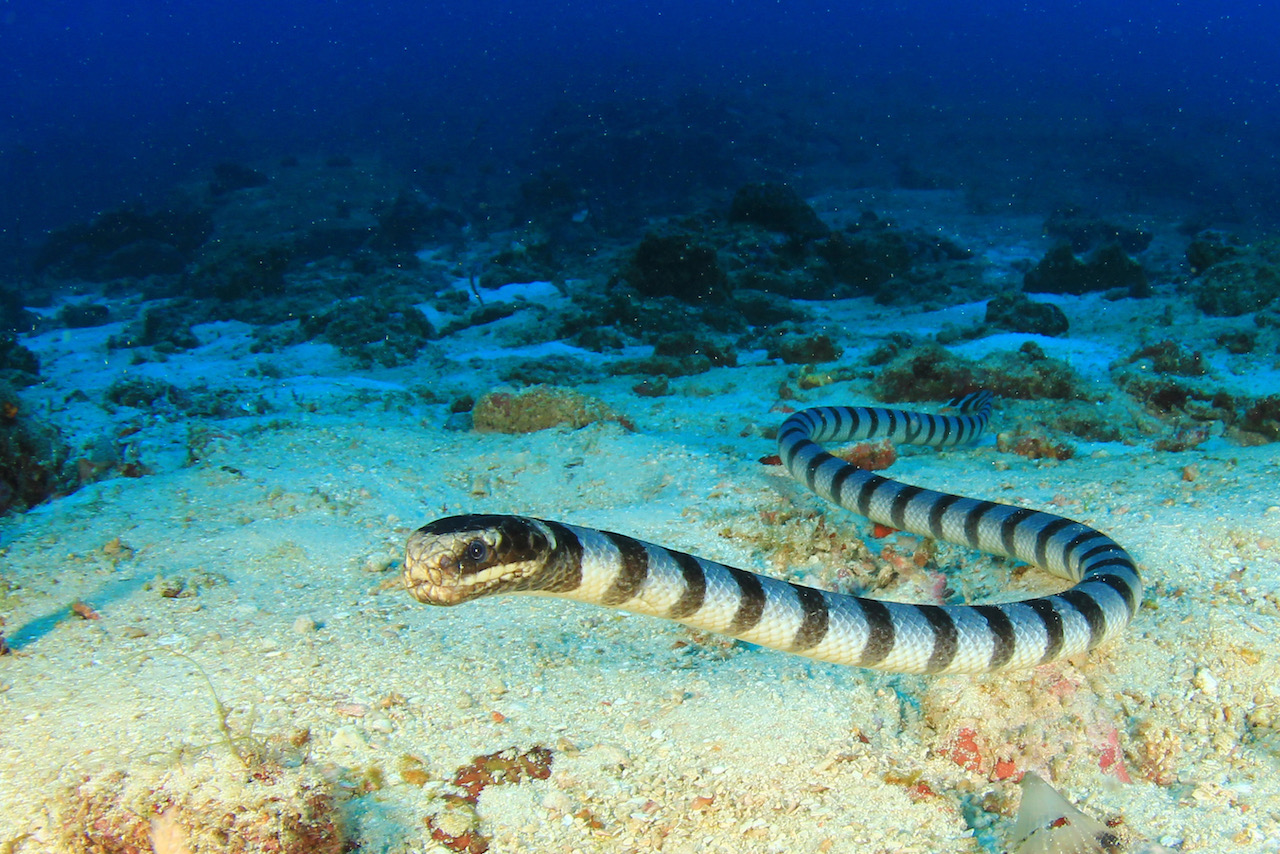
Banded sea kraits are one of the snakes you are most likely to encounter as a scuba diver. Even though they are not technically true sea snakes, these semi-terrestrial reptiles are found across the tropical Indo-Pacific region, including in the Philippines, Indonesia and Malaysia.
But are they venomous or poisonous?
Answer: Venomous
Banded sea kraits use a pair of fangs to inject toxins into their prey. This makes them venomous rather than poisonous, as they actively deliver toxins through a bite.
Sea snake bites to people are rare. All sea snakes are generally docile animals that tend to avoid confrontation, with most bites occurring only when the snake is accidentally handled or feels threatened.
2. Portuguese Man o’ War
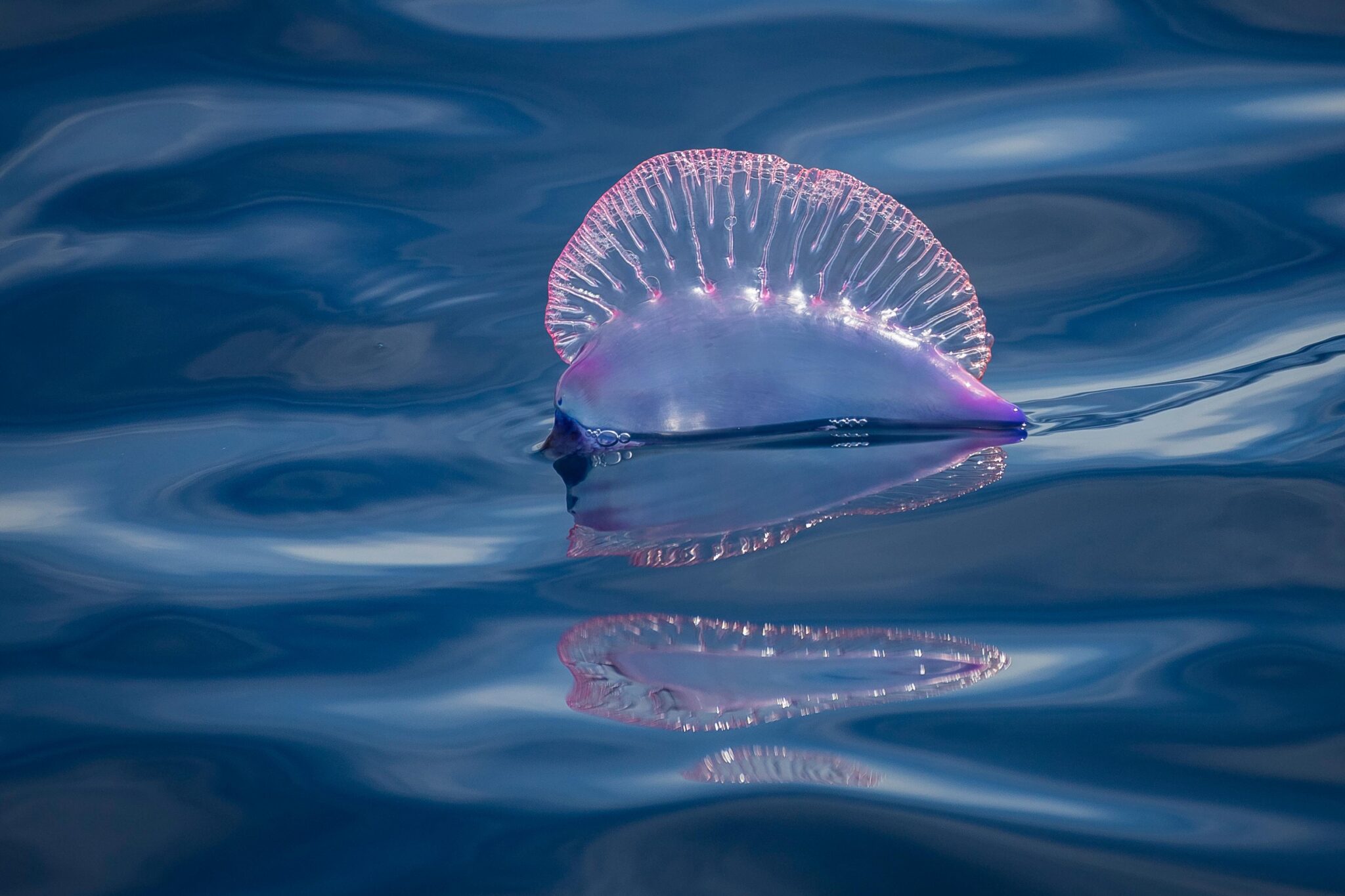
Often mistaken for a jellyfish, the Portuguese Man o’ War can be found drifting through tropical and subtropical seas around the world, carried by winds and ocean currents. Despite its jellyfish-like appearance, it is actually a siphonophore — a colony made up of many individuals working together as a single organism.
But are they venomous or poisonous?
Answer: Venomous
Portuguese Man o’ Wars are venomous because their tentacles are lined with thousands of stinging cells called nematocysts. When triggered, these cells inject toxins into their prey. This helps the colony capture food and defend itself.
Because the Portuguese man o’ war actively delivers toxins through its sting, it is venomous rather than poisonous.
Similar to sea snakes, the Portuguese man o’ war’s fearsome reputation is often overstated. Fatalities to humans are extremely rare. However, their stings can be incredibly painful.
3. Pufferfish
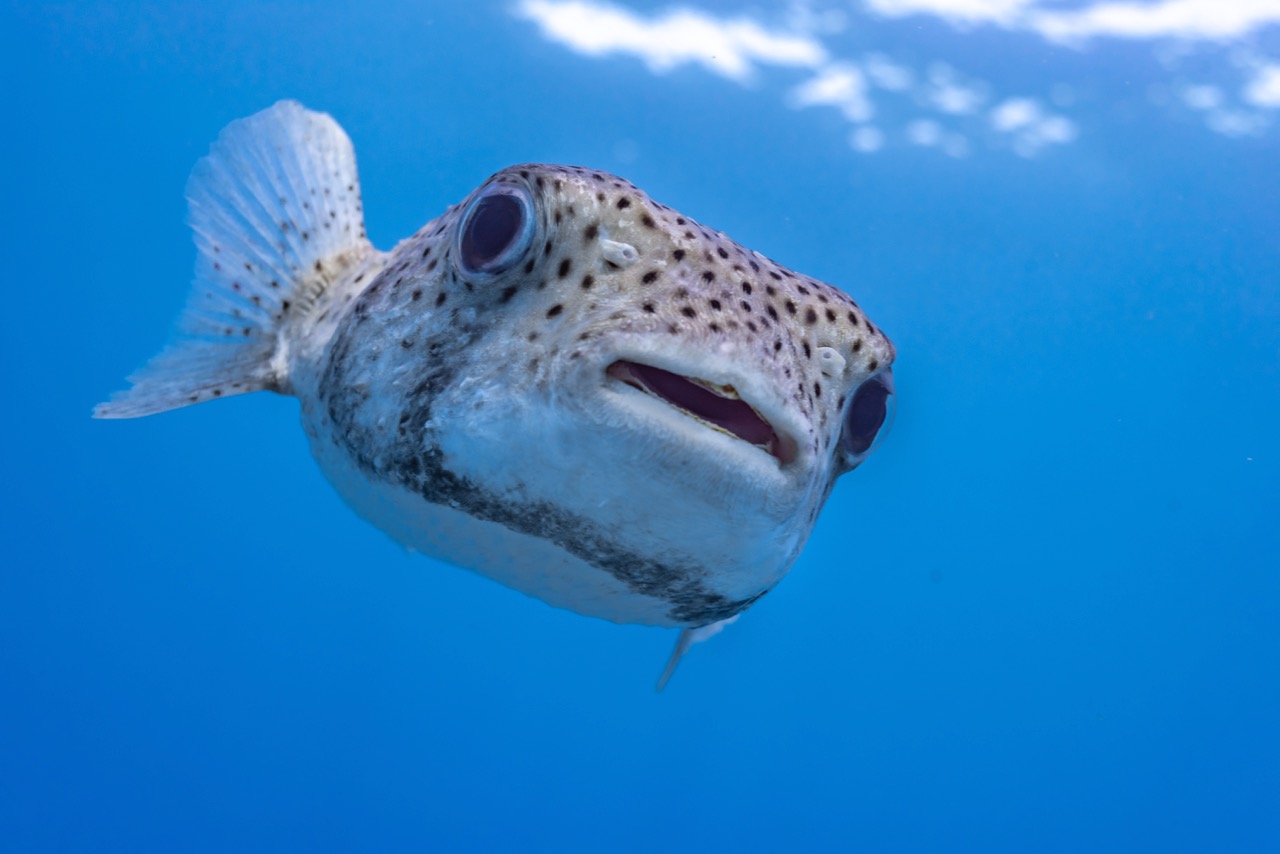
Pufferfish, also known as blowfish, are found in tropical and subtropical waters around the world. They are best known for their remarkable ability to inflate when threatened, making themselves a more difficult meal for predators. This defense is possible thanks to their highly elastic stomachs, which can rapidly fill with water (or sometimes air). Some pufferfish species also possess sharp spines that become more prominent and further deter predators when inflated.
But are they venomous or poisonous?
Answer: Poisonous
Pufferfish contain a powerful neurotoxin called tetrodotoxin. Found in the liver, ovaries, skin and intestines of many species, this toxin can be extremely dangerous when ingested.
Because the toxin is contained within the fish’s tissues rather than delivered through a bite, sting or spine, pufferfish are poisonous rather than venomous.
Despite the risks, people in Japan still enjoy pufferfish as a delicacy known as fugu.
4. Flamboyant Cuttlefish
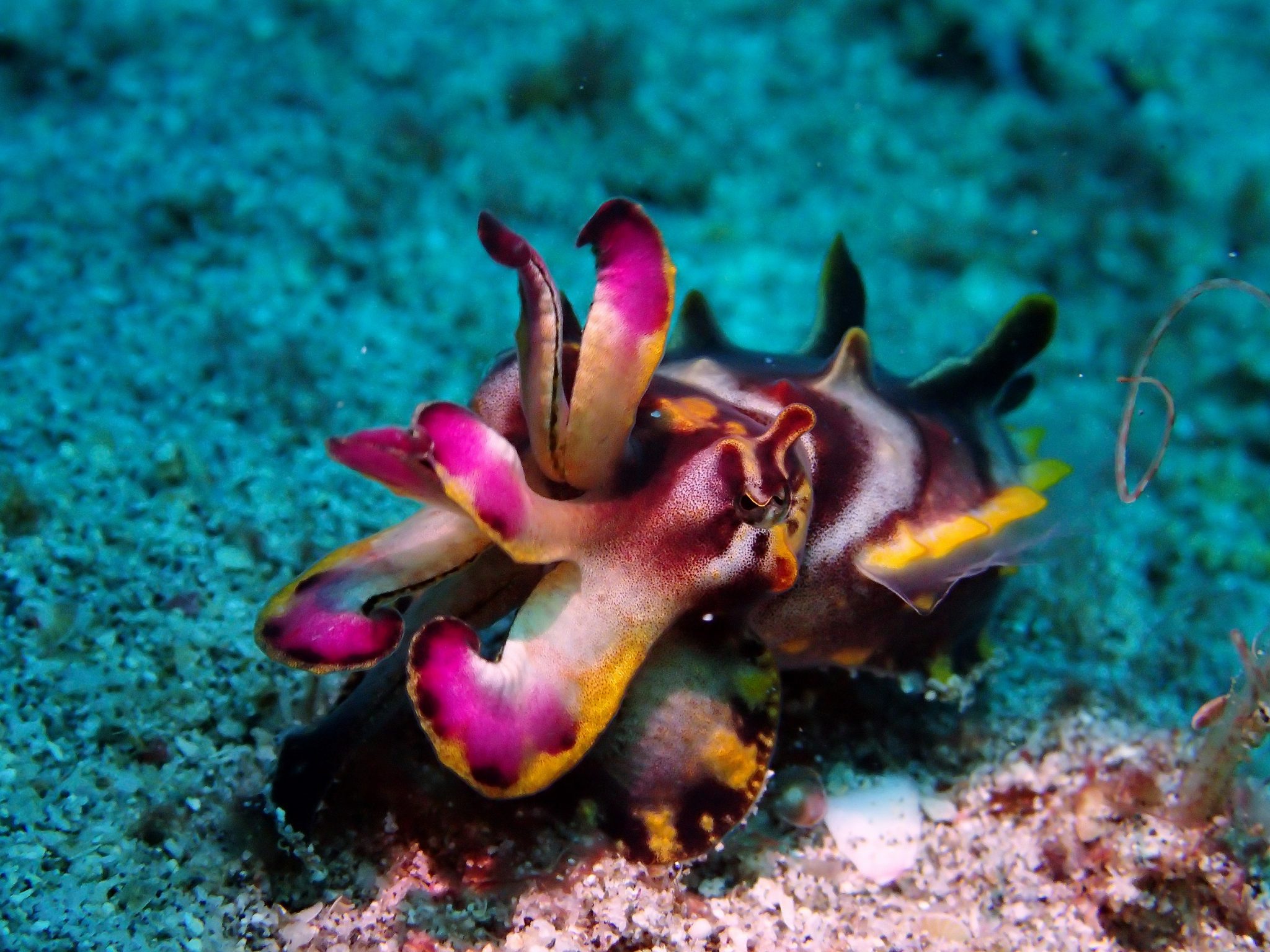
Flamboyant cuttlefish are striking cephalopods found throughout parts of the tropical Indo-Pacific, and these eye-catching animals are often high on divers’ bucket lists. The Philippines and Indonesia are two of the most popular locations for seeing them. Divers most commonly encounter them “walking” across the seafloor while they display their hypnotic colors and patterns.
But are they venomous or poisonous?
Answer: Poisonous
Flamboyant cuttlefish contain toxins within their tissues. If a predator attempts to eat one, these toxins can cause harm when ingested.
Because flamboyant cuttlefish store toxins within their bodies rather than delivering them through a bite, sting or other injection method, they are classified as poisonous.
While they may be poisonous, flamboyant cuttlefish are impressive hunters. Watch one in action here!
5. Blue-Ringed Octopus
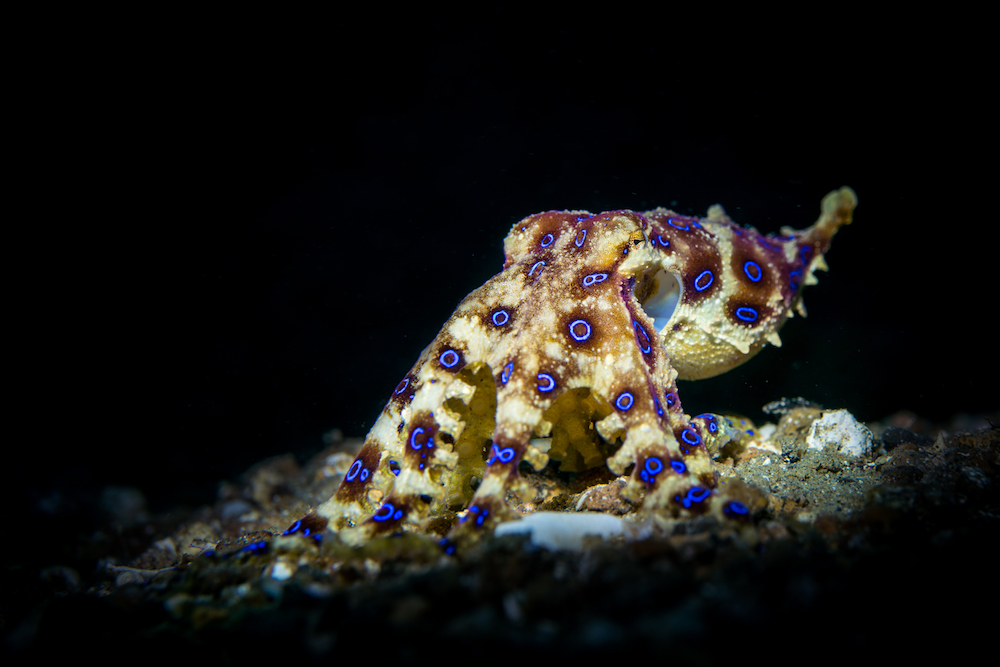
Among the most sought-after marine life encounters for scuba divers and underwater photographers, blue-ringed octopuses are small but unmistakable. This group of octopuses actually includes four species found throughout the warm coastal waters of the Indo-Pacific.
When threatened, the namesake blue rings become more vivid, serving as a warning to potential predators.
But are they venomous or poisonous?
Answer: Venomous
Blue-ringed octopuses are capable of delivering a toxin-filled bite using their beak.
Because the blue-ringed octopus actively delivers toxin through a bite, it is classified as venomous.
Despite their potentially life-threatening venom, bites are extremely rare. These animals are generally shy and avoid confrontation, and most bites occur when people accidentally handle, trap or threaten them.
6. Stonefish
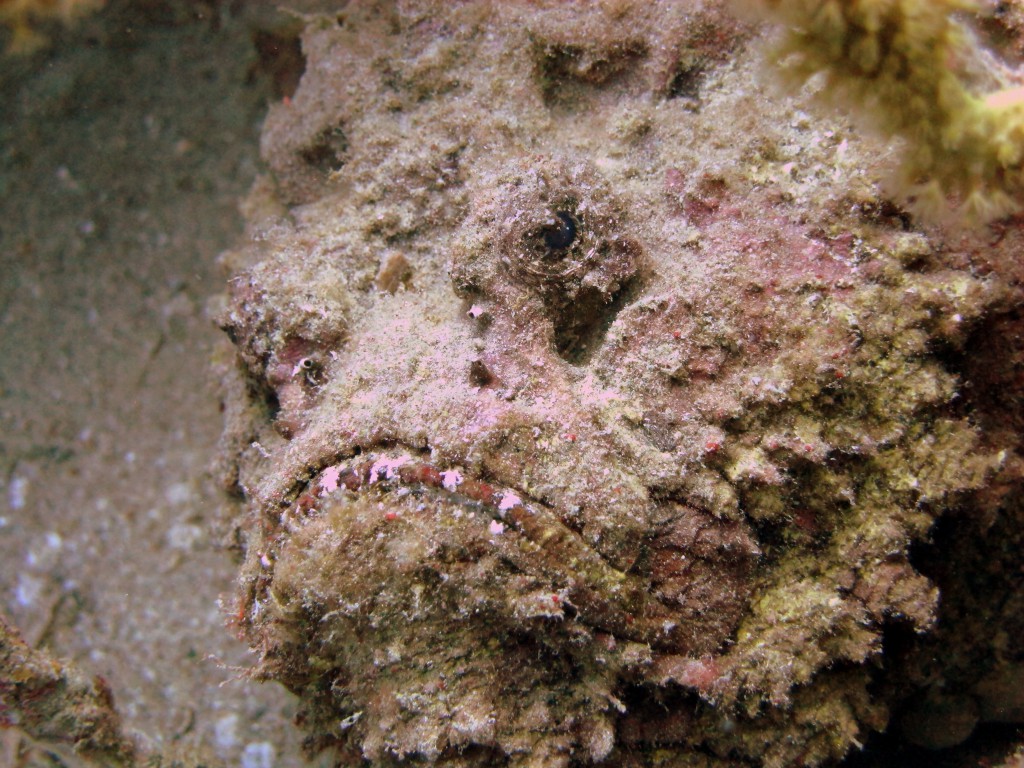
Stonefish are some of the most well-camouflaged fish in the ocean. They blend seamlessly into coral and rocky habitats, often remaining completely unnoticed, even in plain sight — a trait they use both to ambush prey and avoid predators. Their range spans the Indian and Pacific Oceans, extending into the Red Sea and along the coast of East Africa.
But are they venomous or poisonous?
Answer: Venomous
Stonefish use a series of sharp dorsal spines to deliver venom when something applies pressure. When responding to a threat, stonefish raise these spines as a defensive mechanism to deter predators. They are considered one of the most venomous fish in the ocean.
Because stonefish actively deliver toxin through a sting, they are venomous rather than poisonous.
Most human envenomations occur accidentally, when divers or swimmers unknowingly step on or make contact with a camouflaged stonefish resting on the seabed.
Take Your Awareness and Confidence to the Next Level
Being able to identify potentially harmful creatures is just one way divers can protect themselves from accidental injury. Equally important is learning how to recognize problems before they become emergencies and knowing how to react when something doesn’t go to plan.
The PADI Rescue Diver course teaches you how to anticipate problems, prevent emergencies and become a dive buddy that others can rely on.