

If you’re like most Ocean TorchbearersTM and me, recent ocean-related discoveries grab your attention. What scientists find often not only relates to us as divers, but to overall global ocean health, making their discoveries both interesting and consequential. Here are some relevant and important findings and reports issued this year.
We Know We Don’t Know
Despite centuries of research, according to the US NOAA (National Oceanic and Atmospheric Administration), most of the ocean remains unexplored. As of April 2026, they report, only just over one-fourth of it has been mapped with high-resolution sonar. Not even 0.001% of the deep ocean bottom has been seen, yet it covers about two-thirds of Earth’s surface. So, we’re still learning how much we’ve yet to learn.
Sea Level and Ocean Currents
Scientists have cautioned about rising sea level and altered sea currents due to climate change for years, with new research emerging that supports their concerns. A March 2026 published study, referenced here, reports that not only is the average sea level rising, but that due to a common procedural error, sea levels are already 20-30 centimeters/8-12 inches higher than reported in the vast majority of prior studies assessing coastal sea levels. The authors suggest that this means rising sea level effects have not only been underestimated, but that a one-meter/39-inch sea level increase, which they say is possible in less than a century, would affect as many as 132 million people. This is many more than previously thought.
Another study published in May 2026 found that the sea level rise is also accelerating. According to the report, since 1960 the rise had averaged 2.06 mm annually, but increased to almost 4 mm annually from 2005 to 2023. Their report describes several contributors. For one, as water expands, it warms, accounting for just over 40% of the rise. Melting glaciers and ice sheets add water going into the oceans, accounting for almost 54% of the increase, the report said, noting that scientists expect the rise to continue for centuries, even if greenhouse gases stabilize soon.
A University College London report says that about 12,900 years ago, the Gulf Stream shifted north from its present track. Based on ocean floor core samples, the researchers think this disrupted ecosystems adjacent to Nova Scotia as part of significant, sudden climate change and a change in the AMOC (Atlantic Meridional Overturning Circulation), which is important in redistributing heat and keeping northern European climates warmer. Other research is finding that the AMOC is slowing, possibly due to climate change, and the UCL study gives insights into altered weather patterns and other changes that may occur if the slowing continues.
More New Species
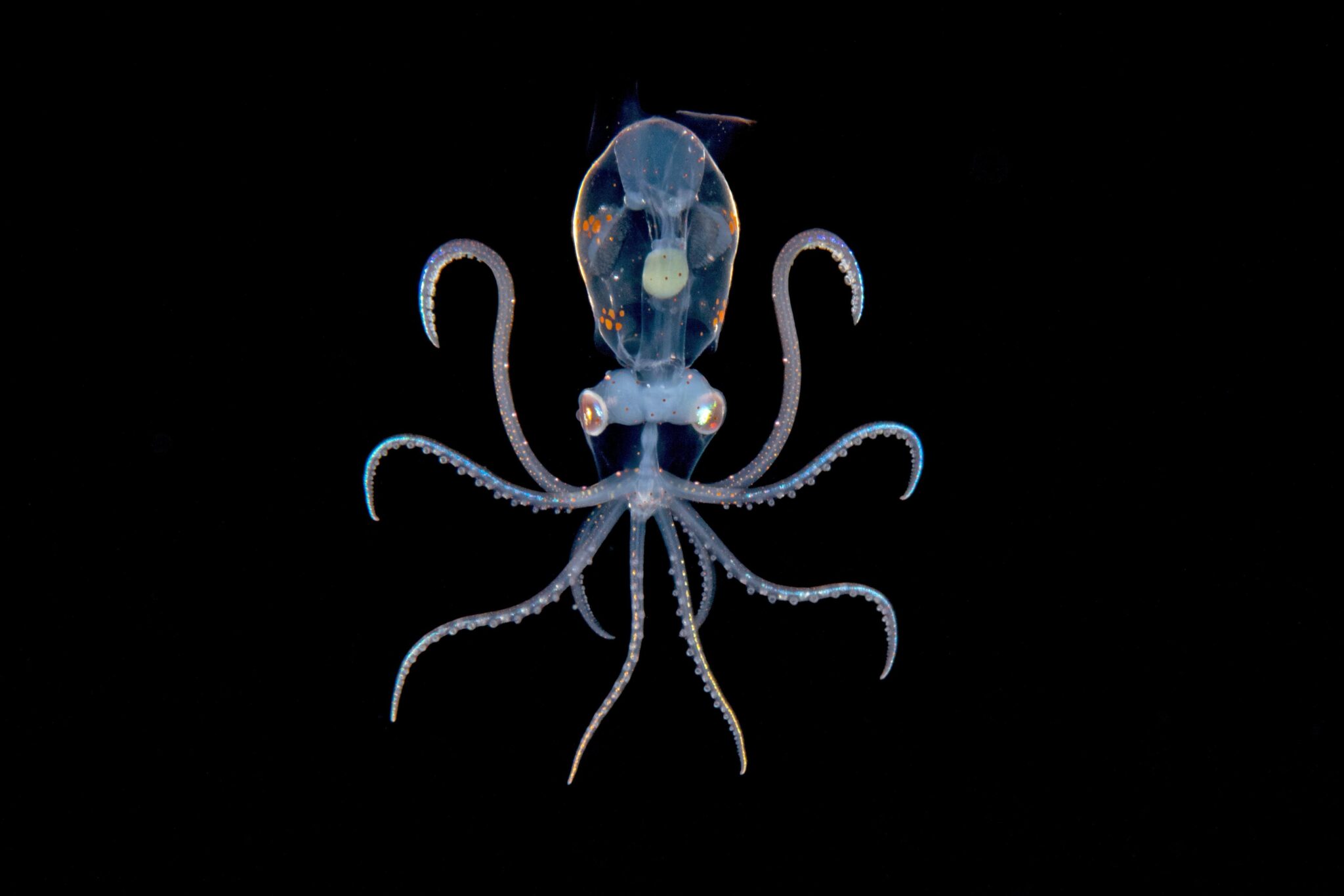
Last year, I cited a report of 800+ new species (terrestrial and marine) recorded in 2023. Noted last May, in just one year, scientists identified more than 1100 new marine species. These include a deep sea ghost shark species and the deep water “death ball” sponge, which catches prey with orbs on its tentacles (check out this photo).
It’s not all deep ocean life, though. A newly discovered shrimp species was found off of Marseille, France, in a cave. The shrimp’s habitat depth range is 15-35 meters/50-115 feet, demonstrating that there are discoveries still waiting at even recreational diving depths.
Wrecks and Archaeology
Not to exclude our cultural heritage, archaeologists have made significant shipwreck and other marine archaeological finds worth noting. Among them, an 18th century wreck off Norway (about 600 meters/2000 feet deep) was found with well preserved artifacts, including Chinese porcelain. Accessed by ROVs (Remotely Operated Vehicles), this wreck may be significant in helping us learn more about trade and economics in that era.
Reported this year regarding their 2020 to 2023 survey, Spanish archaeologists say they have identified more than 150 marine archaeological findings in the Bay of Gibraltar, located just inside the Strait of Gibraltar. Among these are 124 shipwrecks dating from 5 BC to World War II, including Roman, middle age and modern-era ships.
Someone once said, “The ocean holds more stories no book could ever tell.” That may be true, but scientists, Ocean Torchbearers and divers will never stop surfacing the ocean’s stories for the world to hear.
Seek adventure. Save the ocean.
Dr. Drew Richardson
PADI President & CEO