If you’re fascinated by the underwater world and the amazing creatures that live there, then a scuba certification (like the PADI Open Water Diver certification) is your ticket to extraordinary experiences that support healthy oceans.
What is a scuba certification? A scuba certification is your global passport to the underwater world. First and foremost, it is the formal recognition that you have mastered the essential skills and safety protocols needed to safely scuba dive and explore dive sites anywhere in the world with confidence. Once you have earned a scuba certification, you can also take on a special role as an ocean ambassador, helping to protect and advocate for the marine environments you love to explore.
This article includes everything you need to know about scuba diving lessons, getting your PADI Open Water Diver certification and answers to frequently asked questions, like “How much does it cost to get scuba certified?” and “How long does it take to get a scuba certification?“
The Open Water Diver Scuba Certification
The PADI Open Water Diver certification is the world’s most popular and widely recognized scuba diving certification. It is highly flexible in terms of duration. You can become a certified diver in as little as four days.
Why Get Scuba Certified?
Once you are certified to scuba dive, you can:
- Scuba dive with another certified partner, also called a “buddy” (without instructor supervision)
- Rent or purchase scuba diving gear
- Book excursions with dive boats and resorts
- Get air fills at local dive shops
- Enroll in advanced and specialty training courses
- Contribute to marine conservation and citizen science projects
- Call yourself a certified diver!
Many divers begin their certification because they want to see marine life or try something new on vacation. What often surprises them is how scuba diving changes the way they experience the world. Spending time underwater can foster confidence, curiosity and a deeper appreciation for nature. For many people, earning a scuba certification becomes the beginning of a lifelong passion rather than simply another item checked off a bucket list. It is a wonderful way to reconnect with the natural world.
What Makes PADI Certification Different?
PADI is the world’s largest diver training organization, issuing millions of certifications worldwide. A PADI Open Water Diver certification is recognized around the globe, making it easy to dive with operators, resorts and liveaboards in countless destinations.
PADI courses are performance-based, meaning you’ll practice and demonstrate skills until you can perform them confidently and safely. You’ll also gain knowledge about marine environments, responsible diving practices and how to protect the underwater world while exploring it.
Whether your goal is occasional vacation diving or becoming a dive professional, your PADI Open Water Diver certification is the first step in a lifetime of underwater adventures.
Scuba Diving Opens the Door to Lifelong Adventure
One of the biggest benefits of earning a scuba certification is the freedom it provides. Once certified, you’ll be able to explore dive sites around the world, from tropical coral reefs and kelp forests to freshwater lakes and historic shipwrecks.
Scuba diving can also become a lifelong hobby that grows with you. Many divers continue their education through PADI Specialty courses, underwater photography, conservation programs and advanced certifications. Every dive offers a chance to learn something new and experience the underwater world from a different perspective.
For many people, scuba diving also creates lasting friendships through local dive clubs, group trips, and shared underwater adventures.
A scuba certification course is much more than just learning how to explore the underwater world safely (of course, that’s covered). It’s a great way to reconnect with the natural world, recharge your blue health and #LiveUnfiltered away from the hustle and bustle of everyday life.
By the time you finish your PADI Open Water Diver course, you’ll understand our ocean planet in a new way. Read on, or watch the video below, to learn more about getting scuba certified.
Click to display the embedded YouTube video
What’s in the PADI Open Water Diver Course?
There are three parts or phases to the PADI Open Water Diver course: knowledge development, confined water dives and open water dives.
Phase 1: Knowledge Development
You must be at least 10 years old, able to swim and in good physical health to enroll in a PADI Open Water Diver course. In some countries, you may be required to have a medical evaluation by a physician (your PADI Dive Center or Resort will advise you if this is the case). If you meet these prerequisites, the first thing you’ll do is learn scuba diving fundamentals during phase one, “knowledge development”.
During knowledge development, you will:
- Learn all about scuba diving principles and equipment
- Familiarize yourself with scuba terminology
- Watch videos of diving skills
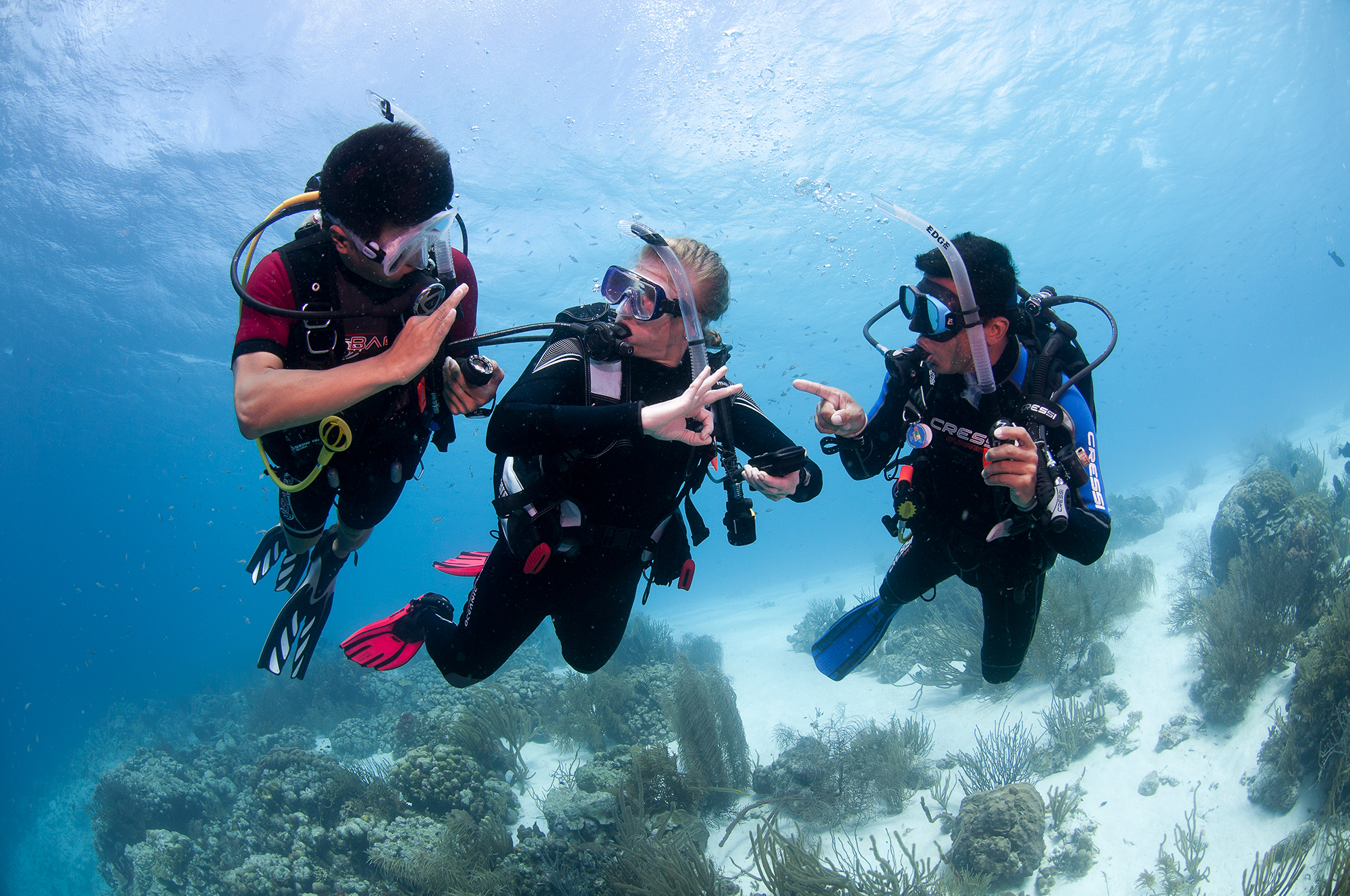
- Learn important hand signals – the secret language of divers!
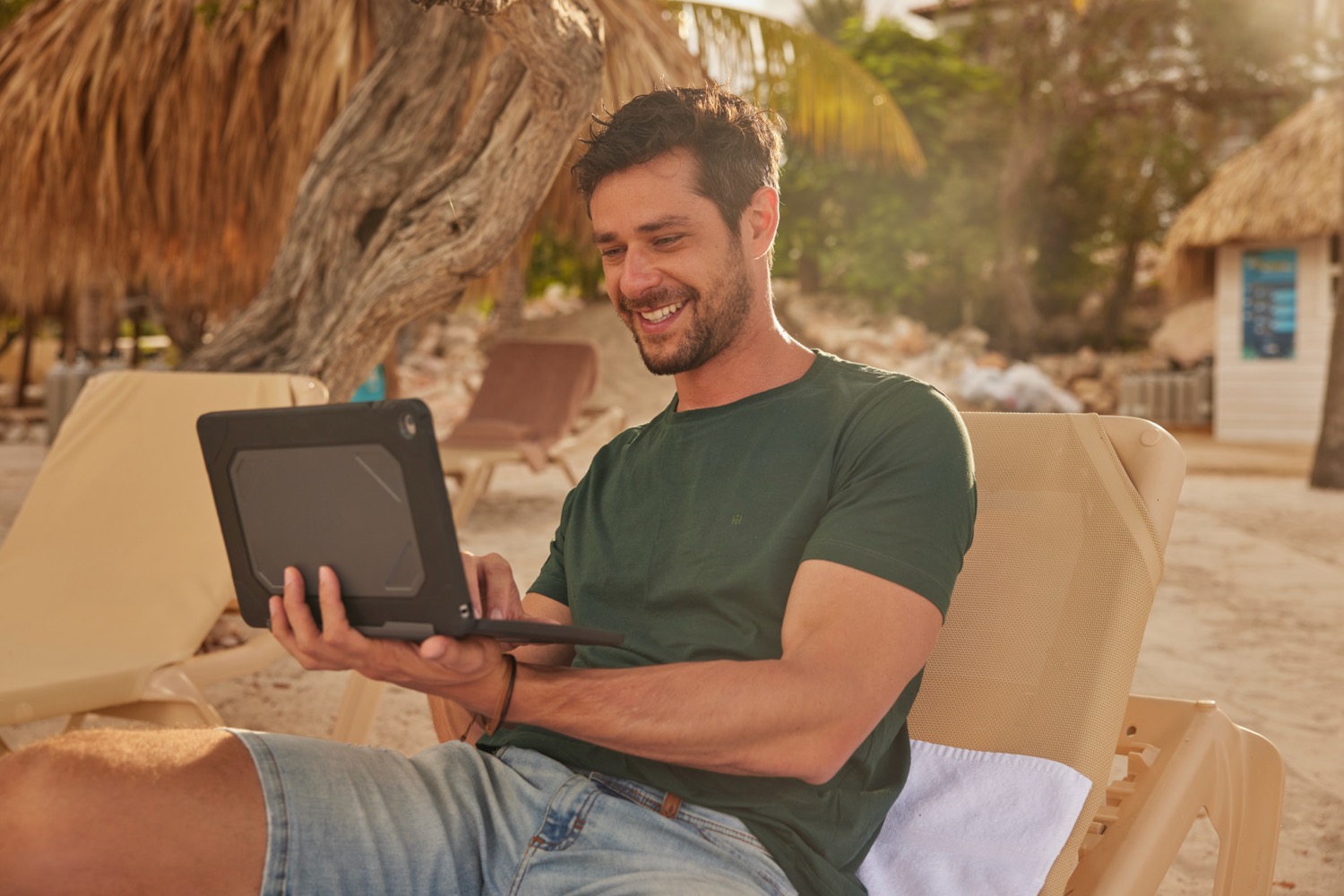
This phase involves self-study, so you control the time it takes for you to go through the material comfortably. Most people pace themselves and complete their knowledge development over a few weeks, but it can be completed in as little as a day or two.
You can complete your knowledge development online or offline. However, the most popular choice is PADI eLearning®, an independent study option where you read, watch videos and take quizzes using your computer or mobile device. Complete your scuba studies whenever, wherever it is convenient. On average, the PADI Open Water Diver eLearning requires eight hours to complete.
At the end of the knowledge development phase, you’ll take a final exam to ensure you have a thorough understanding of scuba diving essentials. Your PADI Instructor will review the material with you and answer any questions you may have along the way, which will ensure you are ready to continue.
Phase 2: Confined Water Dives
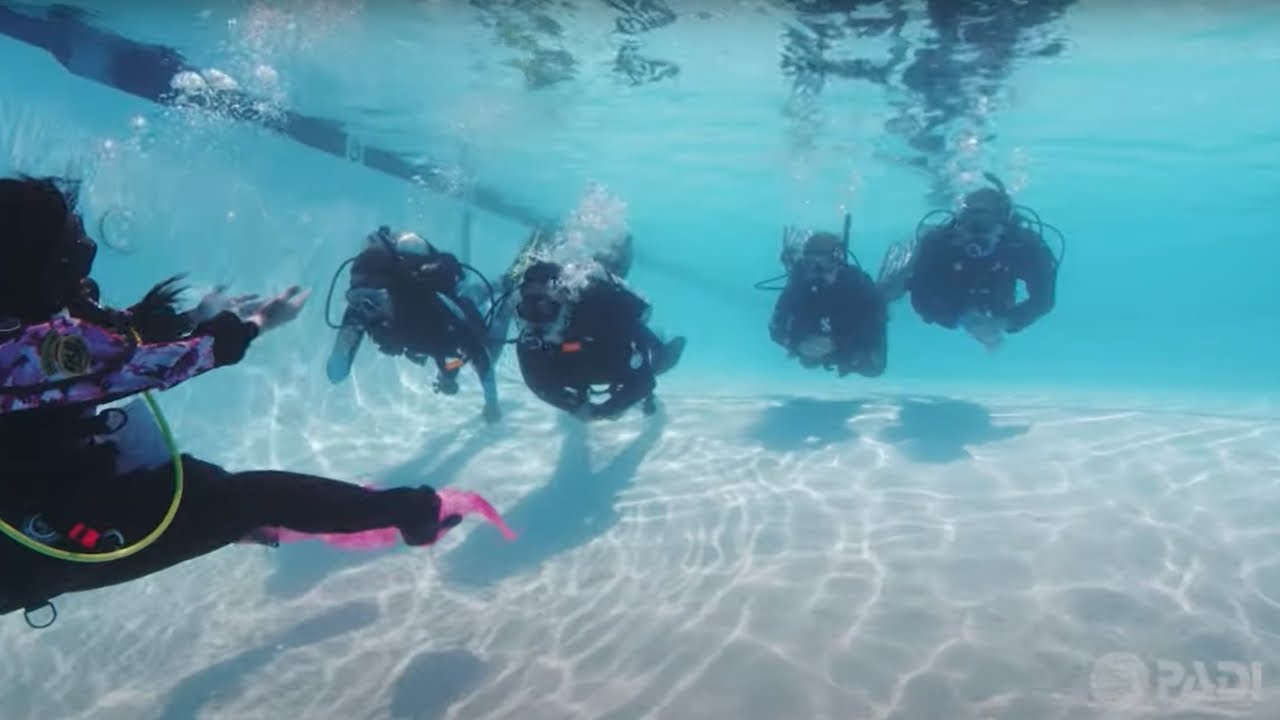
During this phase, you’ll take your first breath underwater in a calm environment, such as a swimming pool or open water site with swimming pool-like conditions. You’ll practice basic diving skills, such as:
- Setting up your scuba gear
- Ascending and descending
- Buoyancy control
- Clearing water from your mask
- Using scuba hand signals
Your instructor will demonstrate and review these and other skills with you until you’re comfortable performing them on your own. When you have mastered the confined water skills and feel ready, you’ll move on to the final phase: open water diving!
Phase 3: Open Water Dives
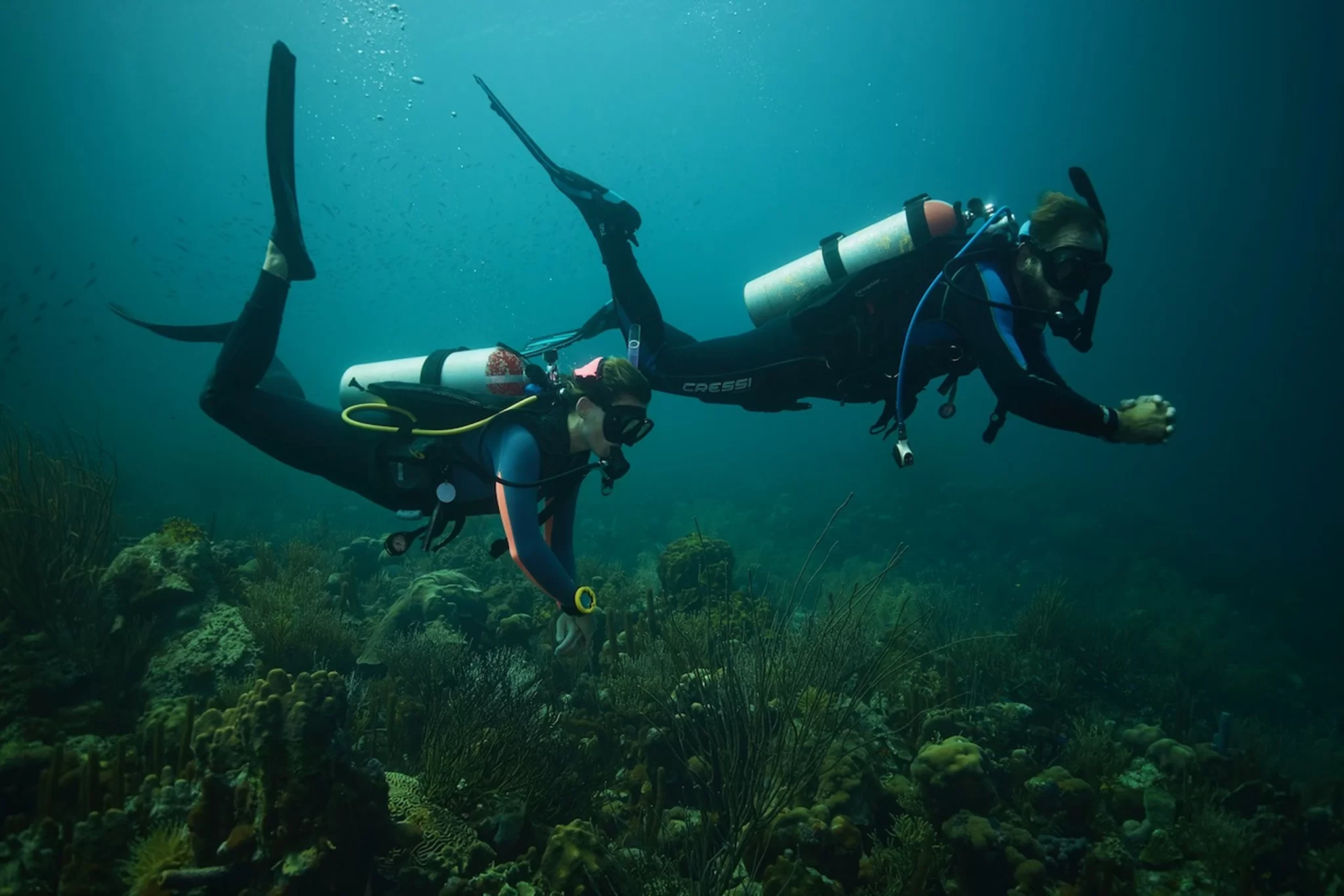
You’ll go scuba diving for the first time in open water, learning to dive to a maximum depth of 18 meters (60 feet). The PADI Open Water Diver course includes four open water dives, usually completed over two days. With your instructor by your side, you’ll demonstrate the skills you learned in confined water and then explore the aquatic world.
Many student divers complete their dives close to home – in the ocean, a local lake, quarry or other body of water. You can also complete your four open water dives while on vacation; ask your PADI Instructor about an Open Water Diver referral, which allows you to take the knowledge development and confined water sessions in one place and complete your open water dives in another.
After completing four open water dives and all other course requirements, you’ll become a certified PADI diver – a title that lasts a lifetime. Now you are free to explore the other two-thirds of our ocean planet.
What Can I Do with a Scuba Certification?
Getting your scuba certification means you’ll be able to enjoy a range of underwater adventures – safely and confidently. You’ll be ready to go scuba diving around the world!
As a PADI Open Water Diver, you’ll also have access to many exciting PADI courses that help you reach your diving goals – whether your goal is exploration, ocean conservation, underwater photography, wreck diving or your other favorite interests. You might even consider scuba diving as a job, such as becoming a scuba instructor, marine biologist or a Hollywood stunt double!
Popular Adventures for New Divers
After earning your scuba certification, a whole new world of experiences becomes available. Certified divers can:
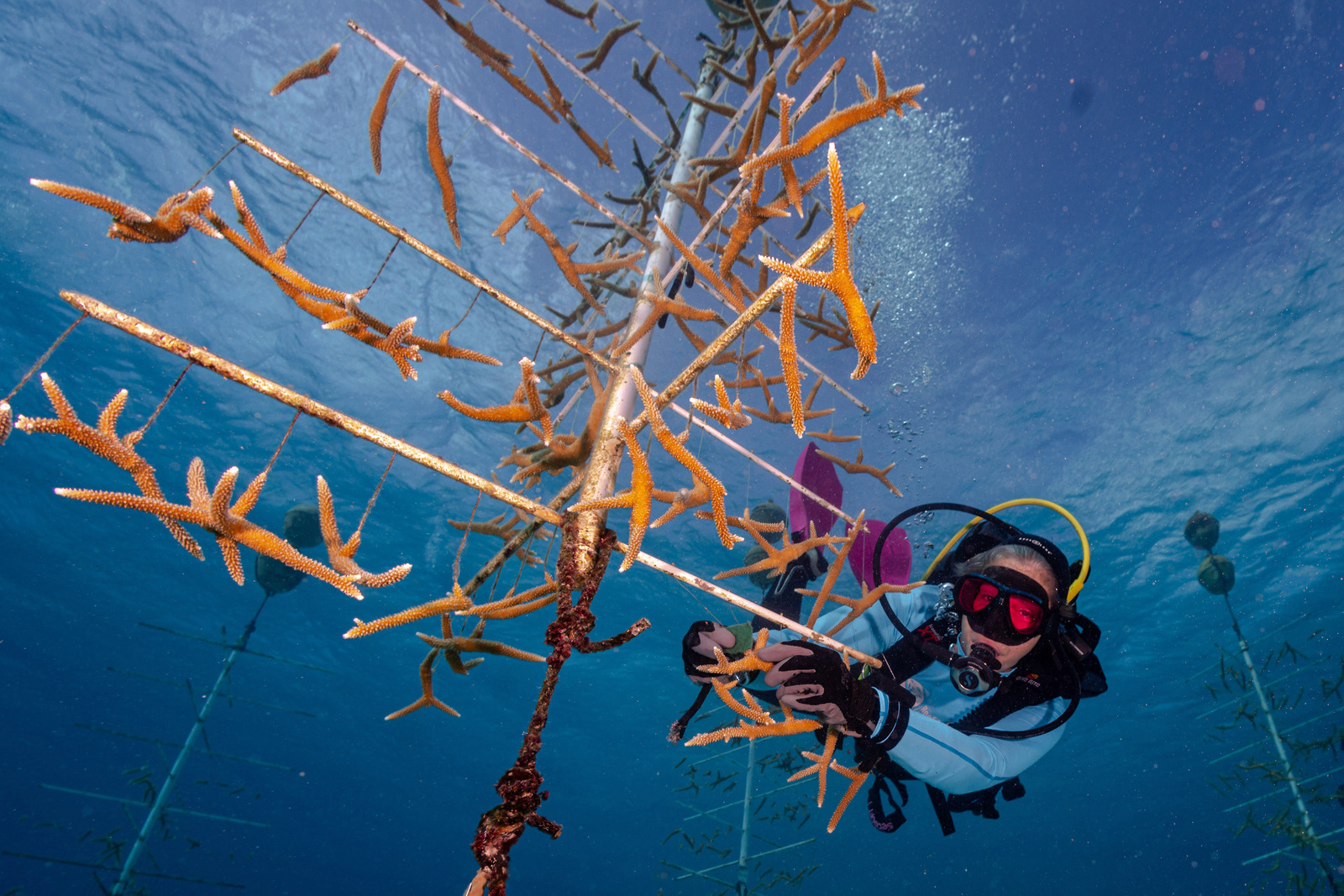
- Explore coral reefs and marine parks
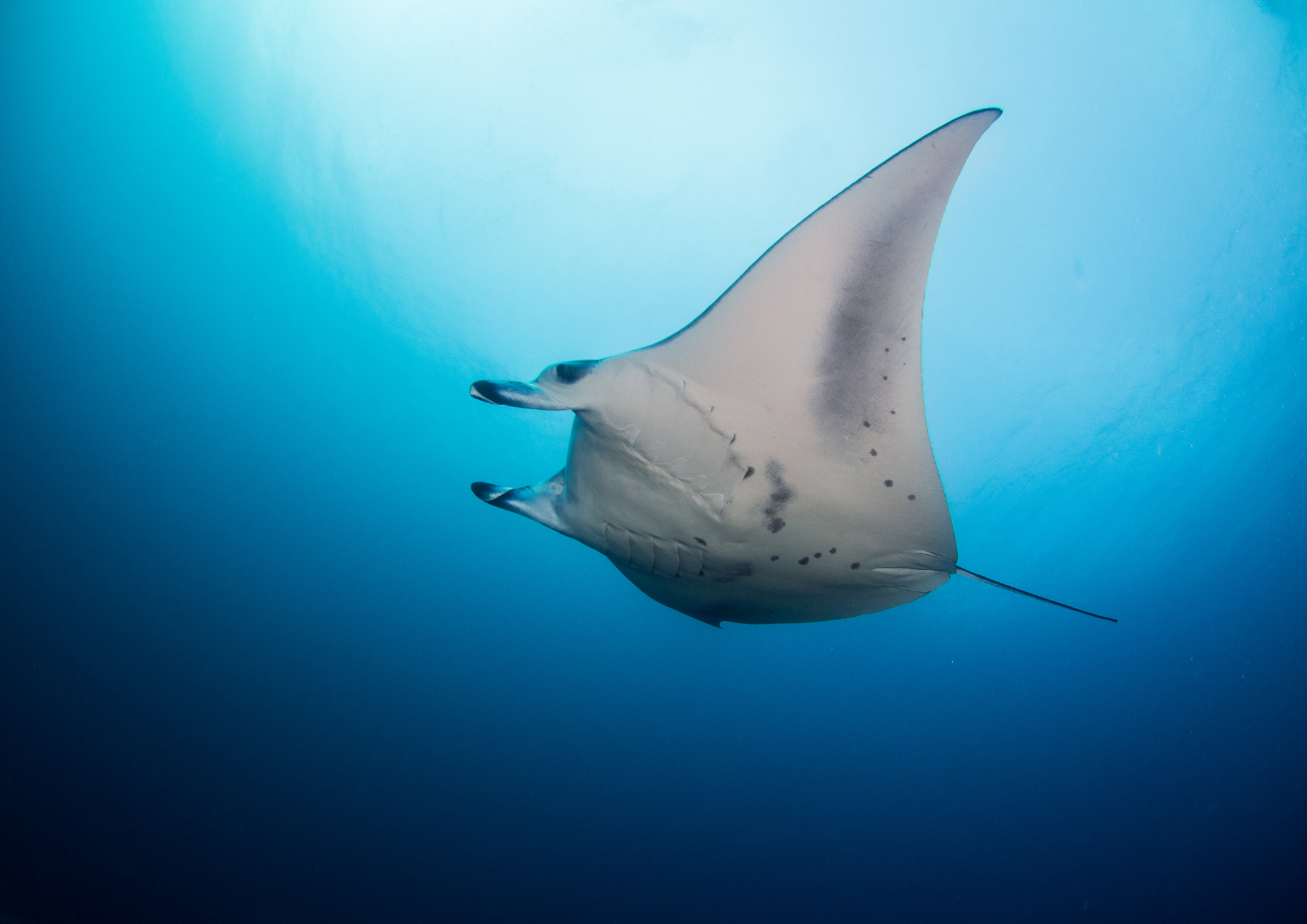
- Dive with sharks, manta rays, turtles and other marine life
- Visit wrecks and underwater museums
- Participate in citizen science and conservation projects
- Capture underwater photos and videos
- Travel to some of the world’s most famous dive destinations
Many divers discover that scuba certification becomes the starting point for a lifetime of travel, exploration and ocean advocacy.
Read more about the next steps you can take after getting your first PADI dive certification.
Click to display the embedded YouTube video
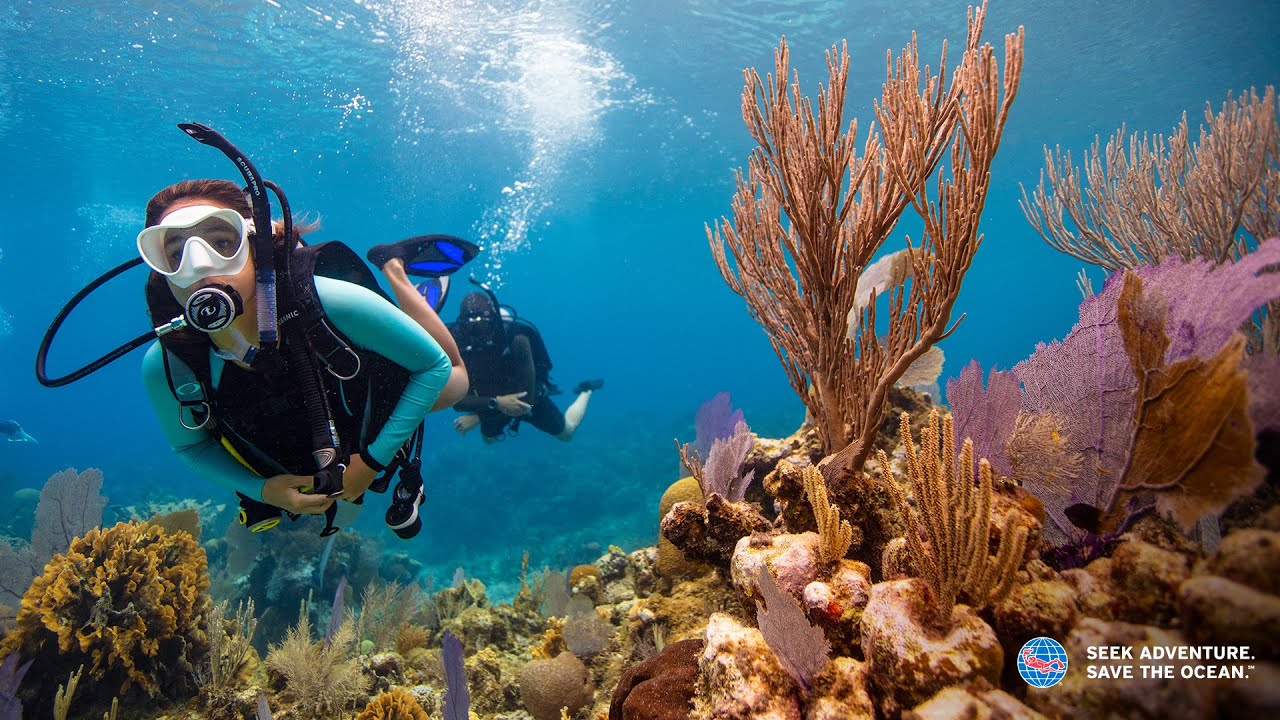
How Long Does It Take To Get Scuba Certified?
One of the most common questions new divers ask is how long it takes to earn a scuba certification.
The answer depends on your schedule and learning preferences. Some student divers complete their PADI Open Water Diver course in as little as four days, while others spread their training over several weeks or months.
Because the knowledge development portion can be completed through PADI eLearning, many people begin their scuba education at home before traveling to complete their in-water training. This flexibility makes it easier than ever to fit scuba certification into a busy schedule.
Your local PADI Dive Center or Resort can help you create a training plan that works for your goals and availability.
How Much Does a Scuba Certification Cost?
Scuba lessons cost about as much as a full day of surfing lessons, three hours of private golf lessons or one amazing night out. Learning to scuba dive is great value, because you’ll earn a certification that lasts a lifetime.
Other Costs and Equipment
The PADI Open Water Diver course requires both knowledge development and in-water training for certification. When you purchase a PADI eLearning course on PADI.com, the price includes the knowledge development portion only.
There will be an additional cost to complete your training dives with a PADI Instructor. This cost will depend on factors, such as class size, location and whether or not you need to rent equipment.
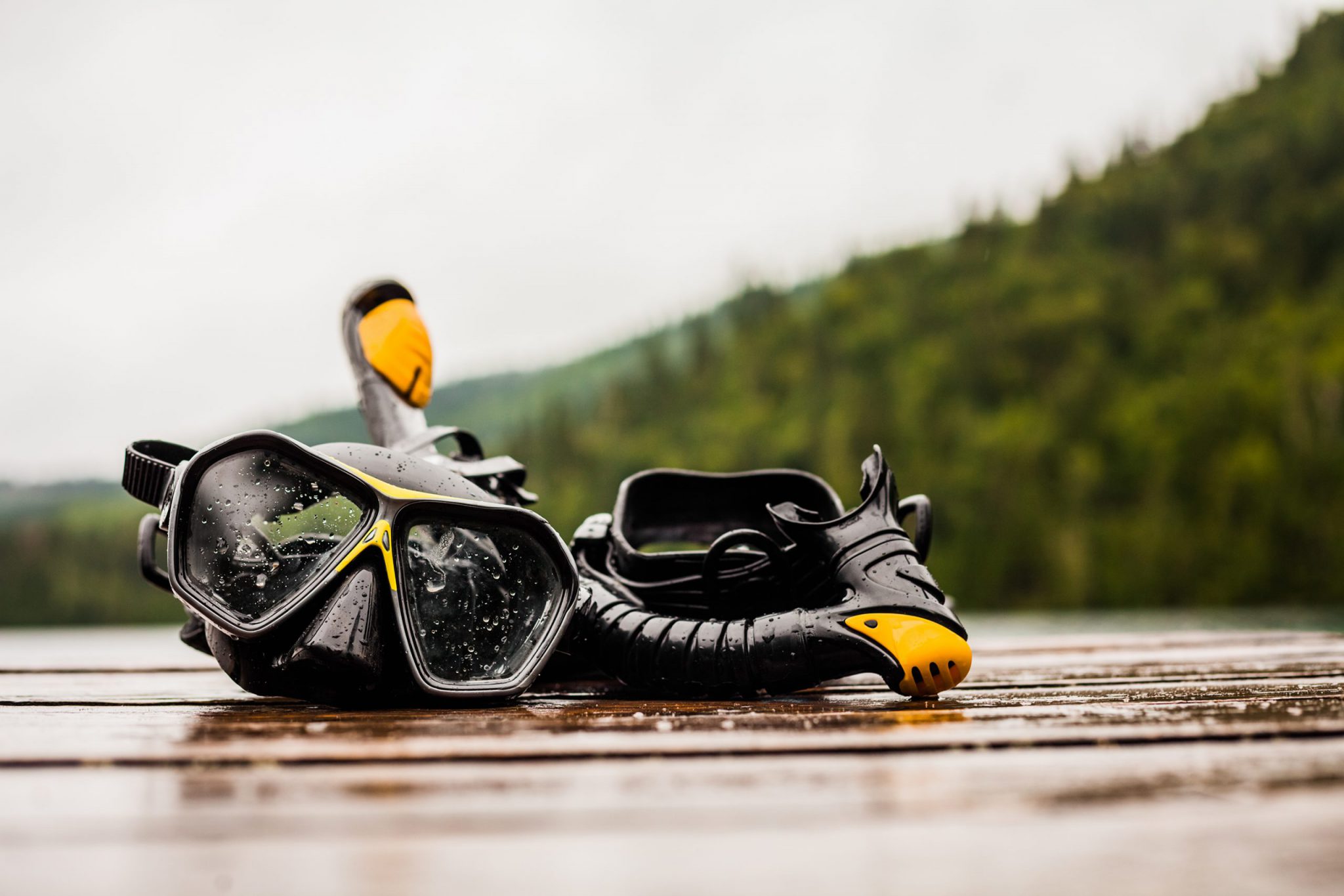
- Most dive shops require students to provide their own mask, fins and snorkel. If you already own a mask, snorkel and/or fins, we recommend bringing them to your instructor before your first confined water session. Some snorkeling masks and fins are not suitable for scuba diving.
- Basic scuba gear, including a regulator, buoyancy control device (BCD), dive computer and cylinder, may or may not be included with the in-water training cost.
- You may also need to buy or rent exposure protection (a wetsuit or drysuit), depending on the diving environment.
If you see an advertised price for your PADI diving course that’s drastically lower than all the others, ask what it includes. Some dive shops include everything for one price, while others charge separately for in-water training, online course tuition, scuba equipment and so on.
Contact your local PADI Dive Center or Resort for more information and pricing. You can also find great deals by combining a resort stay with a PADI scuba diving certification. Visit PADI Travel® to connect with more than 500 resorts worldwide.
What Is a PADI Certification Card?
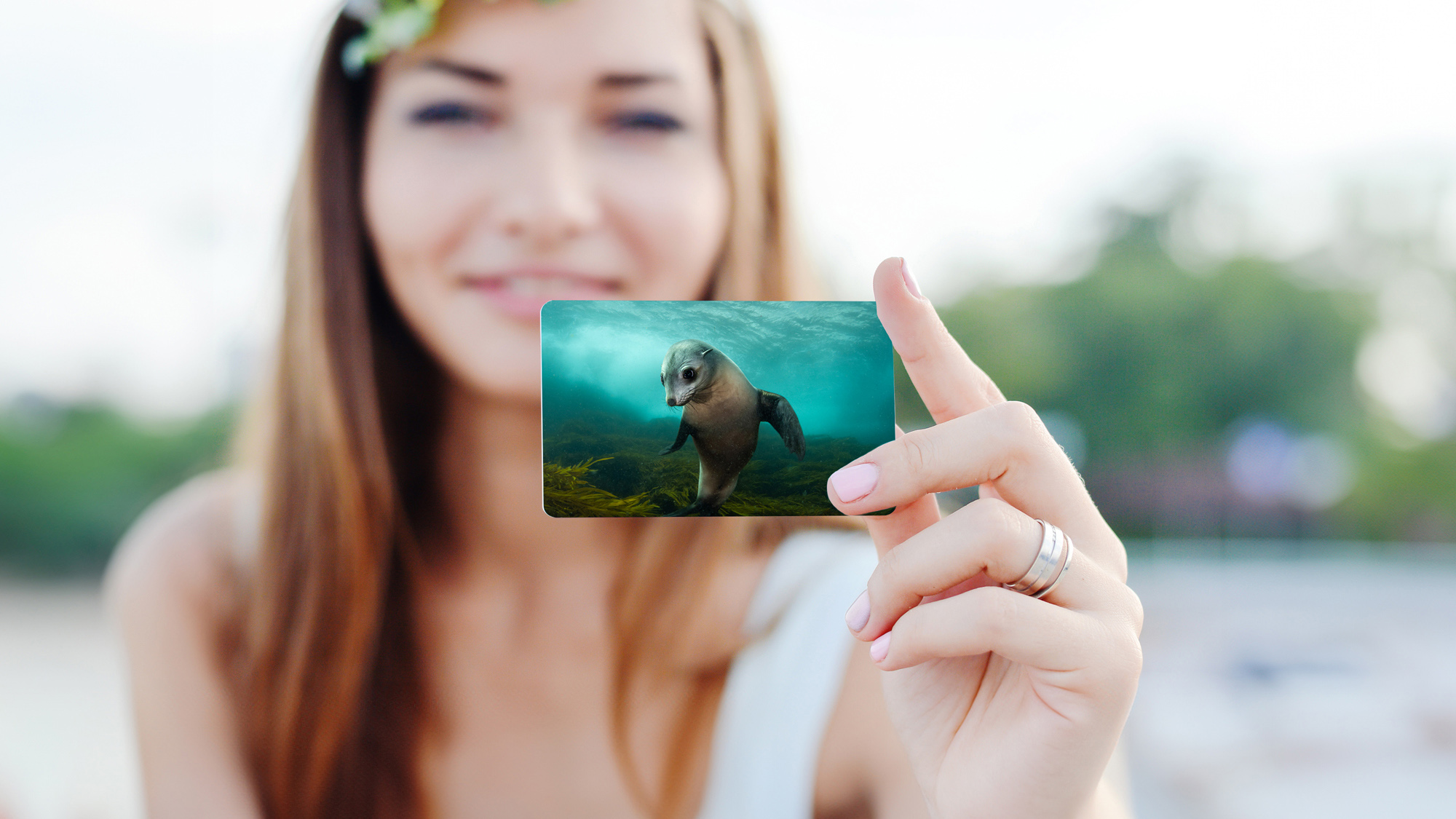
Once you finish your PADI Open Water Diver course, you’ll receive an electronic certification card (PADI eCard™), which can be accessed via the free PADI App™ and PADI.com. It displays information that proves you’ve completed your PADI training. You can also choose to purchase additional Limited Edition PADI eCard designs, as well as physical certification cards.
Will My PADI Scuba Certification Expire?
Your PADI certification and PADI card will never expire. However, if it’s been a while since your last dive, a scuba refresher program such as PADI ReActivate™ is recommended. It will help you refresh your skills and knowledge, so you’ll be ready to dive into your next PADI dive course or vacation with confidence.
Even though your certification never expires, regular diving helps keep your skills sharp and your confidence high. If you haven’t been diving for an extended period, completing a PADI ReActivate program is a great way to review important skills and refresh your knowledge before your next underwater adventure. Some dive centers require an orientation or ‘check-out’ dive before joining open water or boat dives to ensure the diver can dive safely and has the adequate skills.
Many divers also choose to continue their education through additional PADI courses, which helps them stay active in the sport while building new skills and confidence.
How Can I Prepare for My Diving Course?
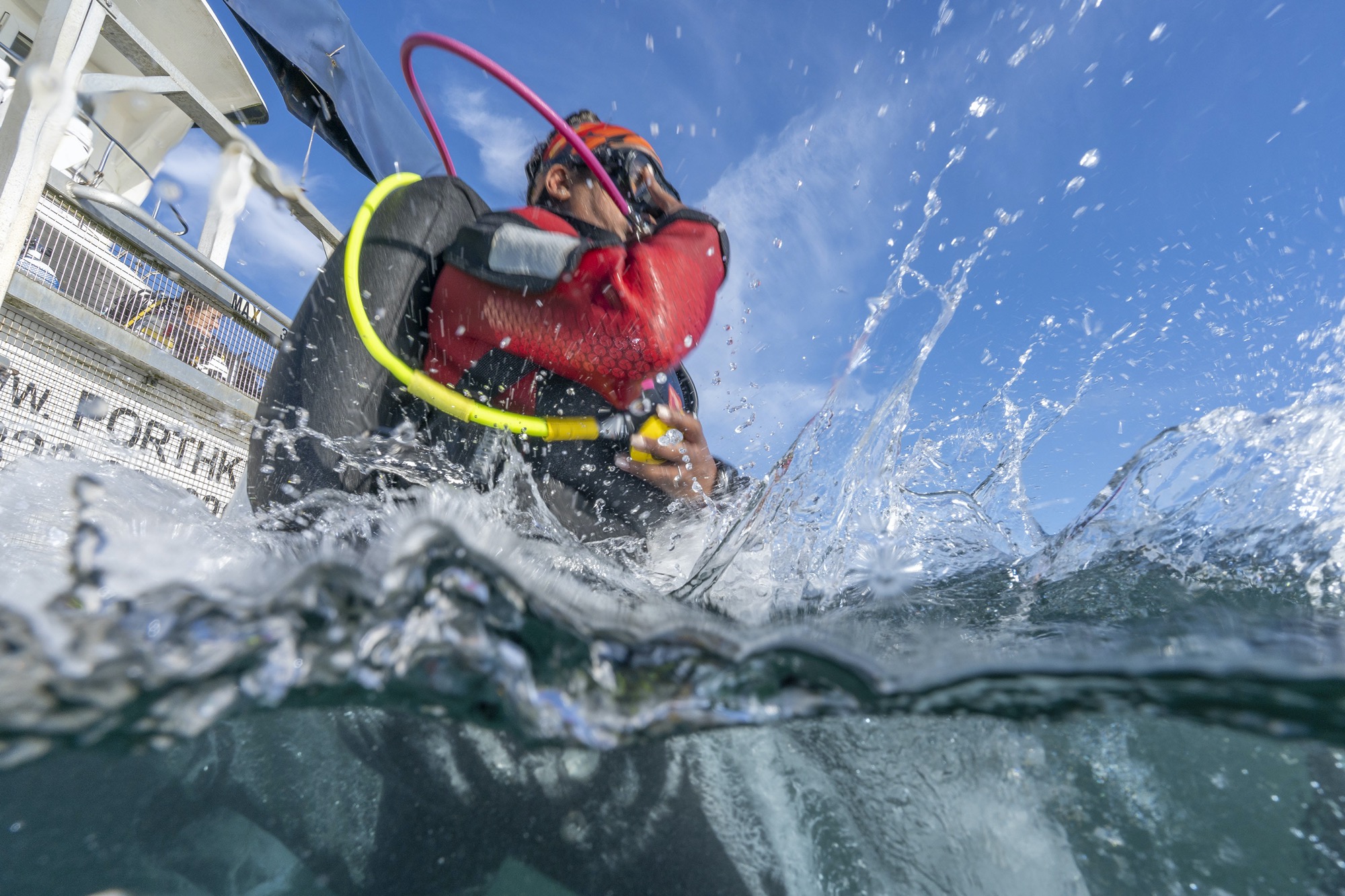
To prepare for your diving course, it is important to remember that you do not need to be an Olympic swimmer! You do, however, need to be comfortable in the water and capable of swimming on the surface of confined water. You can prepare for your diving course by doing simple activities, like snorkeling or swimming laps in a pool. This will sharpen your water confidence, which allows you to focus on learning dive skills while in the course, rather than feeling overwhelmed by the environment. Physically, you can also focus on light core-strengthening exercises or yoga. This will help you manage your gear with ease both on land and while navigating a rocking boat.
To prep mentally, you can practice deep, rhythmic and slow breaths while on land. Mastering this calm, continuous breathing habit is one of the most essential skills you will need once submerged under water. It also helps to cultivate a relaxed mindset by visualizing your underwater experience as a meditative and peaceful exploration.
You might consider visiting a local dive center to get professionally fitted for your own mask. Having a mask that fits your face perfectly provides a significant boost to your overall comfort and confidence.
By combining these simple physical habits with proactive mental focus, you will arrive at your first session feeling balanced and fully ready to enjoy the underwater world. Remember to get plenty of rest, stay hydrated and show up on time. Ask questions, do your homework, but most importantly, relax and enjoy yourself! If you’re feeling a little nervous, then consider these tips for overcoming predive anxiety.
Tips From the Pros
- Fitting a PADI Open Water Diver course into a short vacation can be a lot of pressure. If a relaxed, go-at-your-own-pace learning environment is important to you, choose online learning and start your in-water training at a local dive shop. This will prevent you from feeling time-pressured during your trip.
- If trying something new in a large group makes you uncomfortable, consider a private or semi-private class.
- Invest in your own mask and snorkel: While your dive shop will provide high-quality rental equipment, nothing beats the comfort of a mask that fits your face perfectly. Having your own gear ensures a better seal, reduces the chance of leaks and allows you to get comfortable with your mask long before you even enter the water.
- Not sure if scuba diving is for you? Ask your local dive shop about a Discover Scuba® Diving experience. You’ll get to try on scuba gear and test your comfort level in a pool or other calm, shallow water environment with a PADI Professional.
Click to display the embedded YouTube video
Start Your Scuba Certification Today
If you’re ready to seek adventure and save the ocean, then take the first step by earning your scuba certification.
Becoming a PADI diver offers you the chance to get away from the pressures of daily life, access an amazing world beneath the waves and affect positive ocean change. Sign up for the PADI Open Water Diver eLearning course online today or contact your local PADI Dive Center or Resort to find out how to become a certified scuba diver.