
One of the golden rules you’ll always remember from the Open Water Diver course is simple but crucial: always dive with a buddy.
All the same, as you gain confidence underwater, you might wonder, “Do you have to dive with a buddy?” – especially when the conditions are perfect and you don’t have a scuba companion readily at hand.
However, while diving has an impressive safety record, there are still risks, and unexpected situations can arise. Whether you’re recently certified or a seasoned diver, having a buddy by your side is more than just a rule – it’s a fundamental part of safe and enjoyable diving.
The benefits of the buddy system include:
- Safety
- Increased awareness
- Mutual support
- Shared adventures
- Teamwork
- Learning opportunities
Keep reading to learn why it’s important to always dive with a buddy and where you can find one.
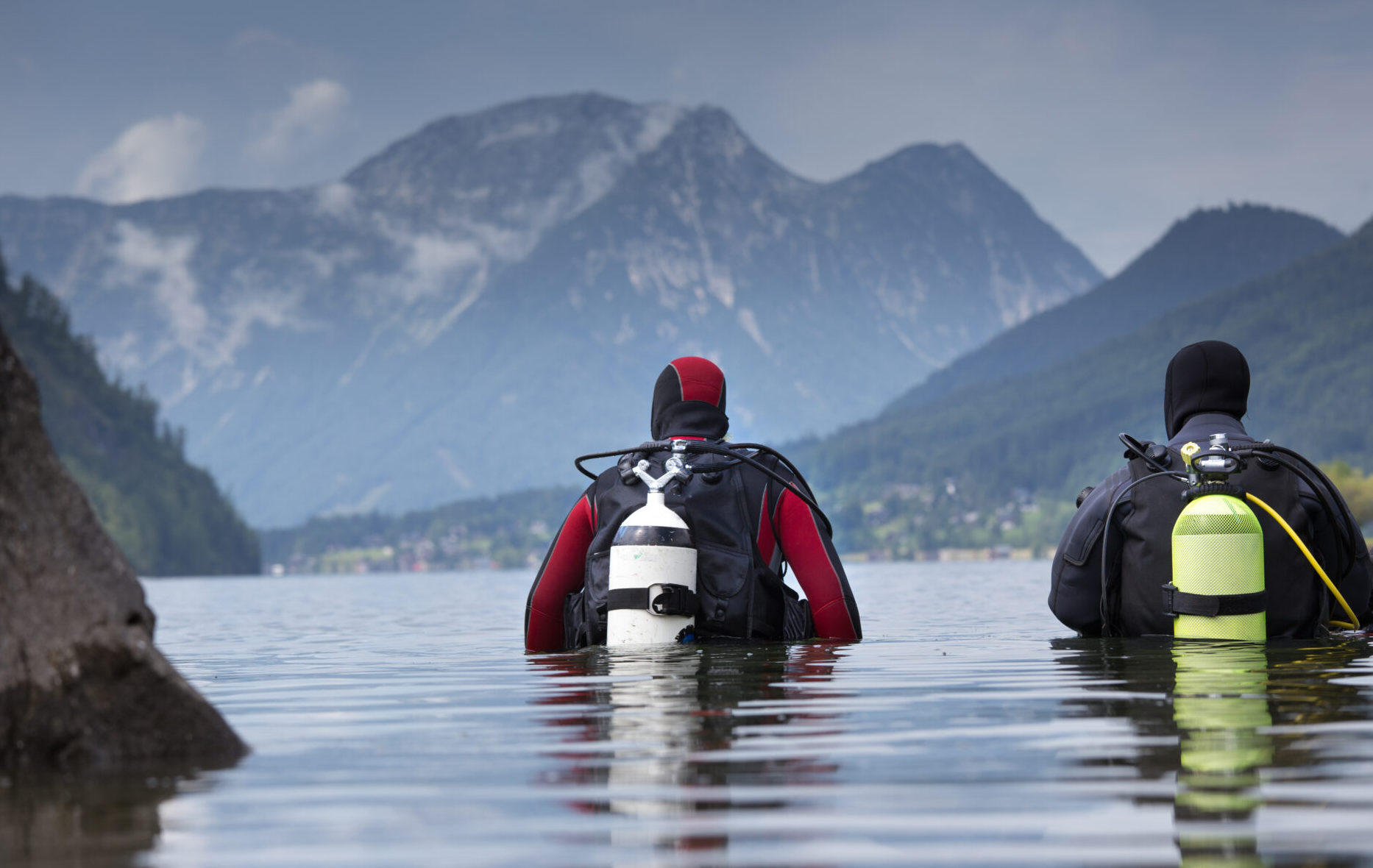
What Is a Dive Buddy?
A dive buddy is a fellow diver with whom you “buddy up.” Together, you’ll plan incredible dives, look out for each other (above and below the surface), assist if needed and create unforgettable memories.
The idea to always dive with a buddy has existed almost as long as scuba itself – although the term “buddy system” actually dates back to WWII, when military personnel paired up for mutual protection. Today, it’s also a frequent feature in workplaces and other adventure sports.
Your scuba buddy could be a friend, family member, another student diver or even a stranger you’ve been teamed up with during a solo vacation. Whoever your buddy is, the key is clear communication and a shared responsibility for each other’s safety and fun.
Two or Three Scuba Buddies?
Diving in pairs is usually considered best practice for recreational divers. Keeping track of each other in groups of three or more can become more difficult (especially during low-low-visibility dives) and may increase the chances of separation. However, you might see larger teams in specialist fields, such as professional, technical and cave diving.
Can You Scuba Dive Without a Buddy?
In some circumstances, experienced divers can undertake solo diving with the right equipment and training, such as the PADI Self-Reliant Diver Specialty course. Even so, for most divers, the safest (and more rewarding) choice is to always dive with a buddy.
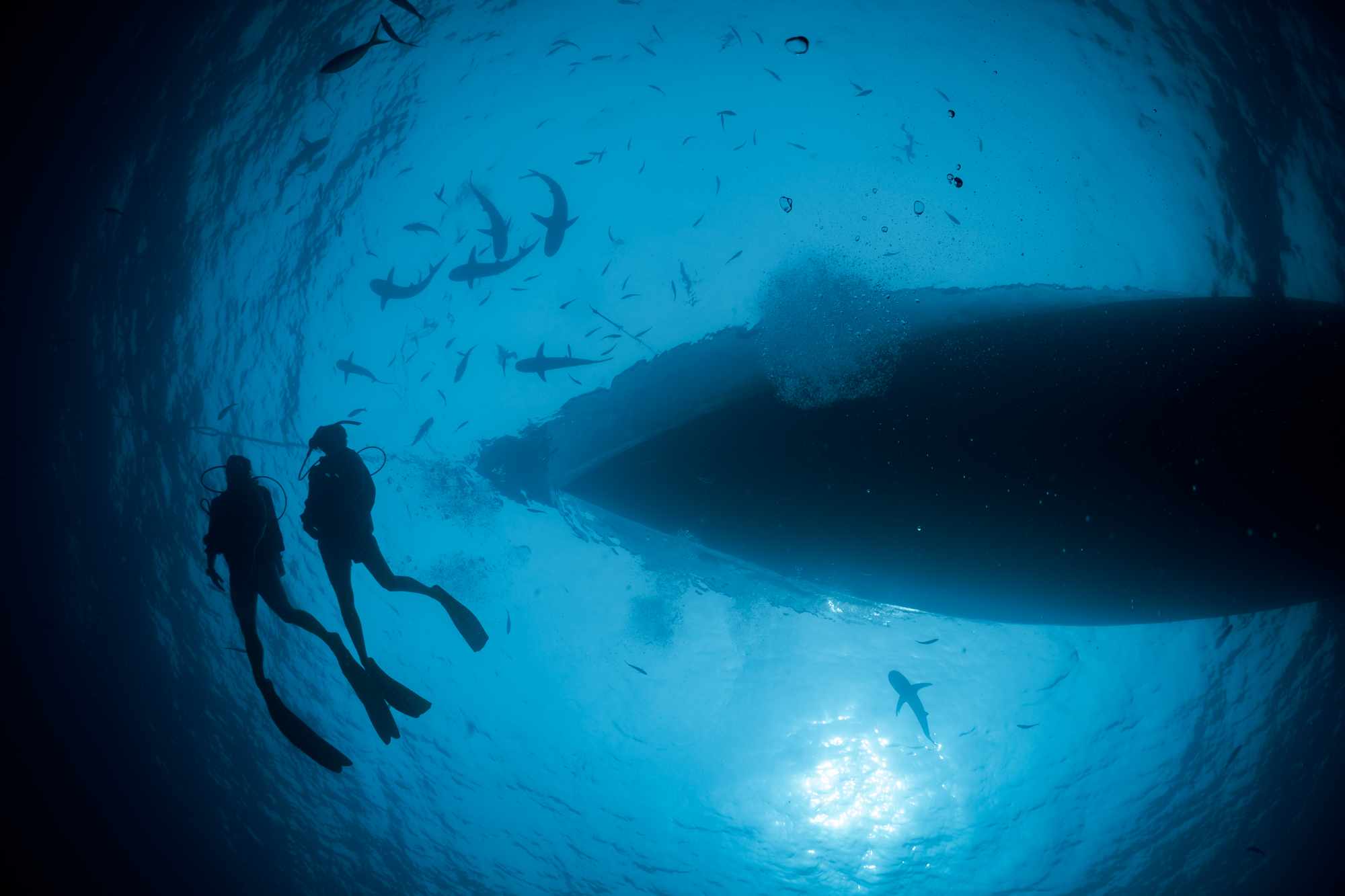
Why Do You Need a Dive Buddy?
Whether it’s staying safe, spotting marine life or sharing your adventures, here are the six main reasons to always dive with a buddy.
1. Safety First
From your predive checks to the end of your dive, your buddy can help catch potential mishaps before they become a problem. Moreover, if something does go wrong – such as a cramp, entanglement or an out-of-air situation – the dive buddy system can be a lifesaver.
2. Double Awareness
Two sets of eyes are better than one for spotting marine life and navigating the reef. Buddy diving also means there are two of you monitoring each other’s depth, time and gas, which can be useful if a playful dolphin tries to distract you from your dive plan!
3. Support
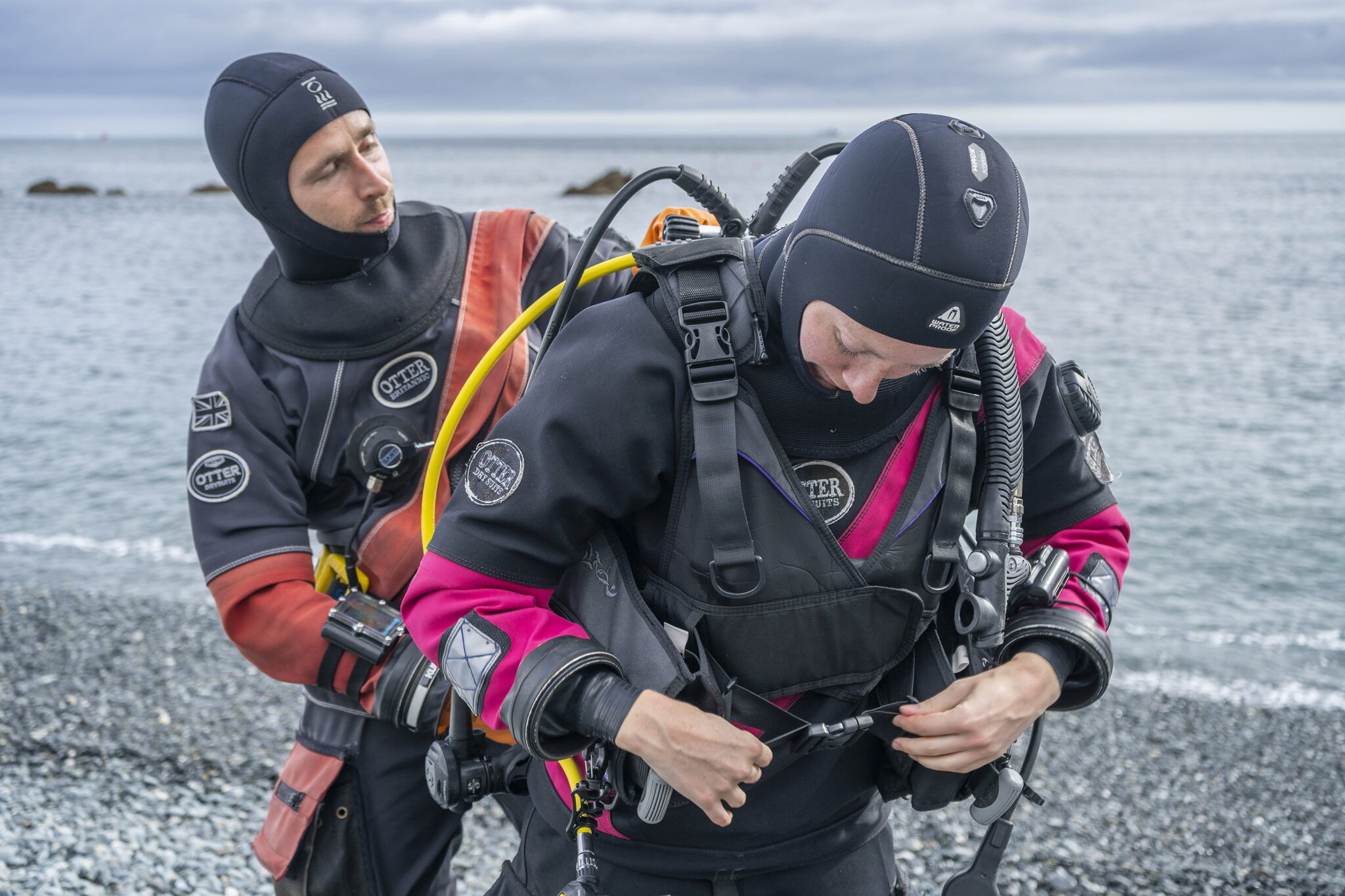
Scuba diving can be physically and mentally demanding, particularly while learning new skills. From kitting up with heavy tanks to overcoming nerves during a new challenge, things are much easier with the support and reassurance of a good buddy.
4. Shared Adventures
Whether it’s nailing your hover or magnificent mantas gliding past, the best moments below the waves are undoubtedly better when they’re shared. As well as witnessing (and even capturing on camera) your once-in-a-lifetime encounters, your buddy can relive them with you time and again.
5. Teamwork
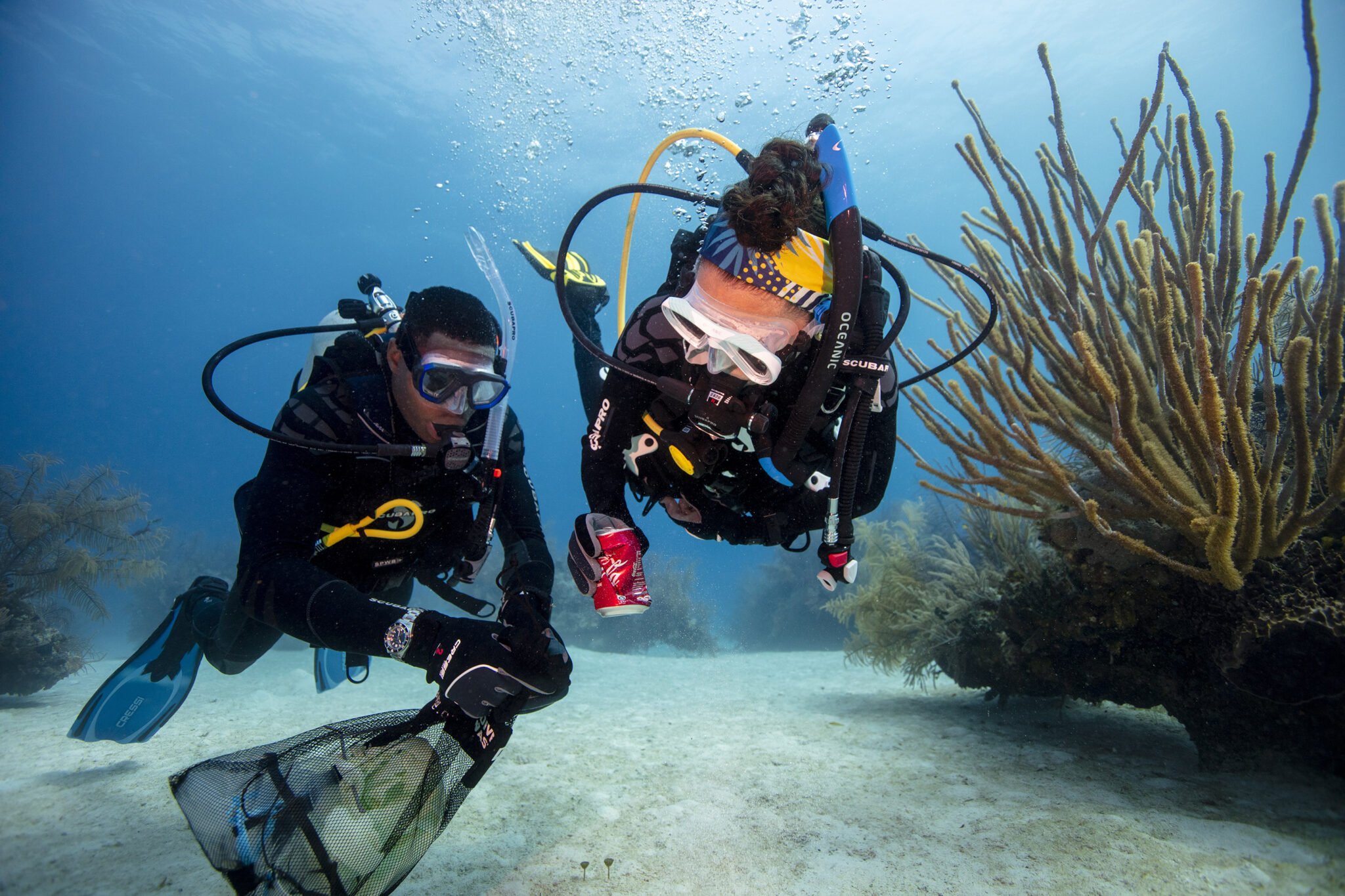
Unlike our octopus friends, we only have two arms. Fortunately, scuba diving buddies can assist with a variety of underwater tasks, such as opening your bag while collecting marine debris or lifting objects during a search and recovery mission.
6. Growth and Learning
Observing more experienced buddies might help you improve your own techniques – from buoyancy and gear skills to photography or fish identification. On the flip side, diving with someone less experienced can build your confidence as a leader. Either way, you’ll always be learning when you have a buddy.
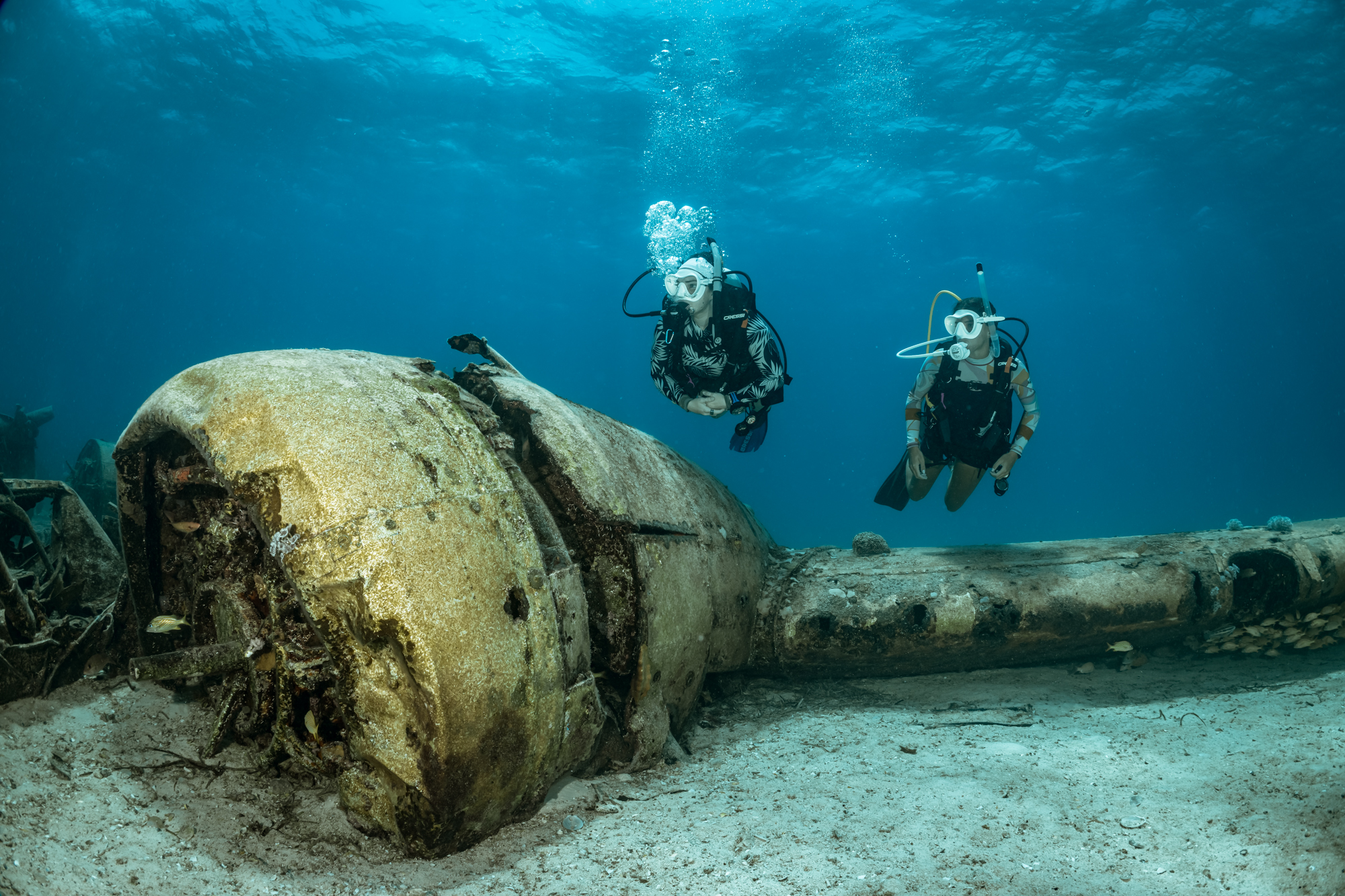
How To Be a Good Dive Buddy
Good buddies are responsible, capable and willing to help each other. Generally, you’ll also get more from your dives if you share similar interests, whether that’s shark diving, wreck exploration or teaming up as Ocean Torchbearers™.
A “good dive buddy” checklist might also include:
- Communicating clearly and checking hand signals before diving
- Staying close to your buddy (but not too close)
- Sticking to the dive plan and limits
- Arriving on time, prepared and fit for the dive
- Respecting your buddy’s experience and comfort level
- Making sure your equipment works properly
- Learning to be a PADI Rescue Diver
Here are a few more tips on being an excellent scuba dive buddy (and some things not to do).

How To Find a Scuba Diving Buddy
There are plenty of ways you can meet like-minded ocean adventurers, so you can always dive with a buddy:
- Your local dive shop may organize dive trips or conservation events during which you might discover your future dive partner.
- PADI Club™ is the world’s largest community of ocean lovers where you can connect with others passionate about living their best life both above and beneath the surface.
- Taking a PADI Specialty course is a great way to find a dive buddy who’ll match up with your interests.
- PADI Travel® offers unmissable deals on tailor-made scuba vacations for solo travelers.
Seek Adventure. Save the Ocean. Together.
Sometimes, the best dive buddy for life is someone you already know! Invite your friends and family to get certified, and they’ll get 20% off their Open Water Diver eLearning. As a thank you, you’ll also receive 20% off most PADI eLearning courses.
