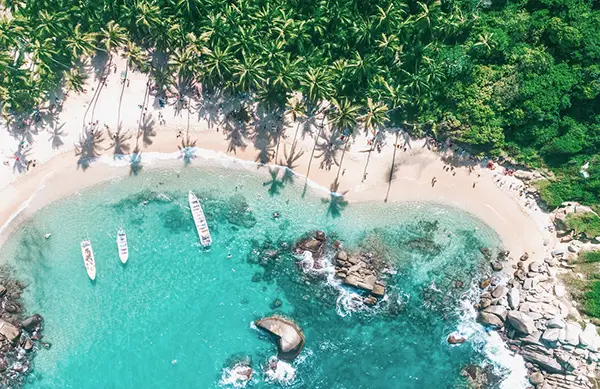
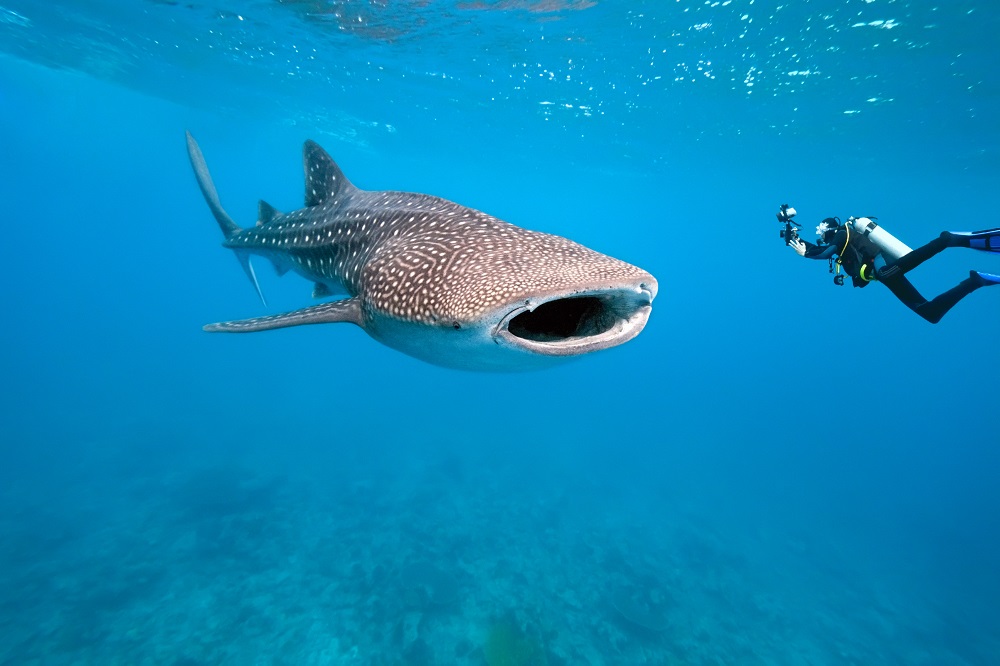
Swimming or diving with a whale shark is the kind of underwater encounter that stays with you forever. Despite their enormous size, these gentle giants glide calmly through the ocean, feeding on plankton and often allowing divers and snorkelers to observe them up close in crystal-clear blue water.
The irony for divers, of course, is that you’re more likely to encounter a whale shark near the water’s surface with a snorkel clenched between your molars than you are with a regulator. But this doesn’t make the experience any less sensational.
In this article, we’ll cover everything you need to know about the top destinations around the world for whale shark diving and snorkeling. You will find out when to visit for the best chance of an encounter and how to make the most of the experience diving and swimming with whale sharks — both for you and them.
Keep in mind, not all whale shark destinations offer the same experience. Some places are famous for reliable seasonal aggregations, while others are better suited for experienced divers looking for pelagic action beneath the surface. And then there are the lesser-known destinations where you can spot a whale shark without the crowds.
Table of Contents
- Most Reliable Places To Dive and Swim With Whale Sharks
- Best Places for Scuba Divers To Encounter Whale Sharks
- Best Off-the-Beaten-Path Places To See Whale Sharks
- Protecting Future Whale Shark Sightings
- Common Questions About Whale Sharks
- Other Ocean Giants You Can Swim With
- Swimming With Whale Wharks – Start Your Adventure
- Credit
Most Reliable Places To Dive and Swim With Whale Sharks
If seeing a whale shark is high on your bucket list, these destinations offer some of the best odds for an encounter. Seasonal aggregations, plankton-rich waters and long-established marine tourism operations make these locations especially reliable for both snorkelers and divers hoping to swim alongside whale sharks.
Mexico
Easily accessible from both the United States and Europe, Mexico is one of the lucky locations to be graced by whale sharks. Many claim that Mexico sees more whale sharks at a given time than any other country in the world. In fact, some operators offer a “money-back guarantee”, because they are so confident you will see a whale shark during your tour.
So, where can you swim with whale sharks in Mexico? Head to Cancún or Baja California.
Whale Shark Season in Mexico: When to swim with whale sharks in Mexico depends on what part of the country you intend to visit. Near the Yucatán Peninsula, whale shark season ranges from June to September, while the whale shark season in Mexico’s Baja Peninsula occurs from winter to early spring.
Cancún
Isla Holbox, Isla Contoy and Isla Mujeres – these three beautiful islands lie in the eastern part of Mexico, not far from Cancún in the Caribbean Sea. Here you’ll find beautiful landscapes and the charm of Latin culture, as well as the possibility of excellent snorkeling with whale sharks. In the past, the majority of the whale shark sightings were near Isla Holbox, but in recent years, the whale sharks seem to have moved mainly between Isla Contoy and Isla Mujeres. Thinking about swimming with dolphins in Cancún? Skip that excursion to swim with whale sharks instead!
Whale Shark Season in Cancún: The official whale shark season in Cancún is from mid-May to mid-September. Outside of this period, whale shark trips are illegal. The peak of the season falls during July and August. During this season, you can see 30 to 40 specimens in one excursion near Isla Mujeres or Isla Holbox. It is now heavily regulated – to ensure the best experience for you as a snorkeler as well for the animals.
Baja California Sur
As well as great scuba diving, Baja California Sur offers fantastic opportunities for swimming with whale sharks. Unlike Cancún, where whale shark swims are highly regulated, and scuba diving is usually not allowed, scuba divers have a good chance of blowing bubbles with a whale shark in the Sea of Cortez and the Pacific Ocean. So, where can you scuba dive with whale sharks in Baja California Sur? The Socorro Islands, La Paz, Cabo San Lucas and Cabo Pulmo National Park all offer sites where you’ll have an elevated chance of diving with a whale shark. La Paz also offers amazing opportunities to snorkel with juvenile whale sharks during the regulated season inside the whale shark area, and Bahía de los Ángeles is another up-and-coming scuba diving destination where you can see whale sharks.
Whale Shark Season in Baja California Sur: Divers may happen across one of these graceful creatures during the winter and the early spring months in Baja California Sur. To give a rough timeline, November to May are generally the best months to see whale sharks off Baja California. The season for whale shark snorkeling tours in La Paz varies every year, depending on the number of whale sharks present in the whale shark viewing area. In general, it opens in November and closes in March or April.
Tanzania
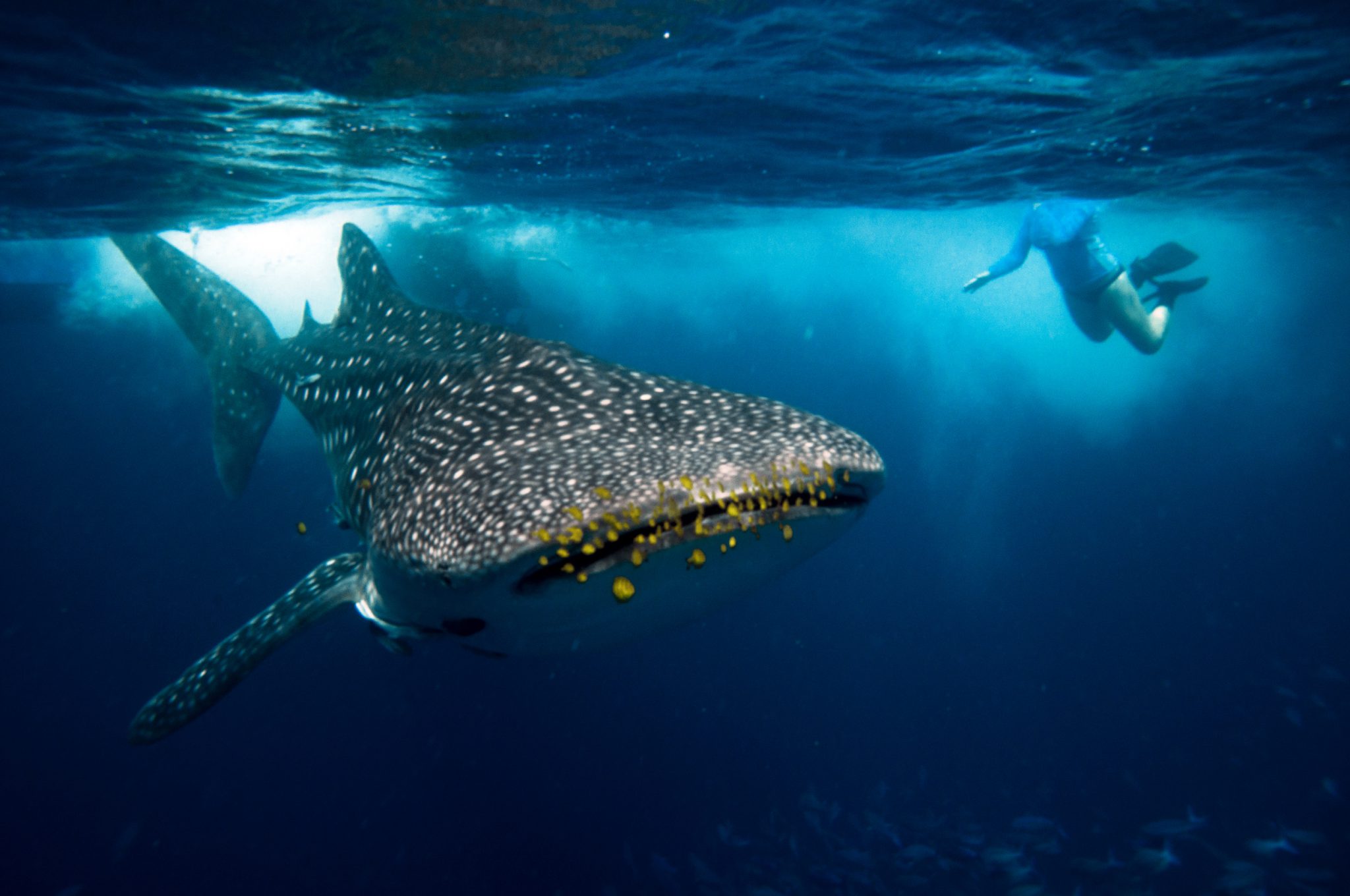
Mafia (aka Chole Shamba) is an island in the Indian Ocean that belongs to Tanzania. The warm waters and typical tropical surroundings create pleasant moments. Moreover, this African tourist destination is still relatively unknown to the average traveler, making it more attractive. To make a trip to Mafia even more unforgettable, marine life lovers should sign up for a whale shark excursion. These graceful giants can be regularly spotted and approached close to shore.
Whale Shark Season in Tanzania: Whale shark swims are possible near Mafia Island between October and March.
Djibouti
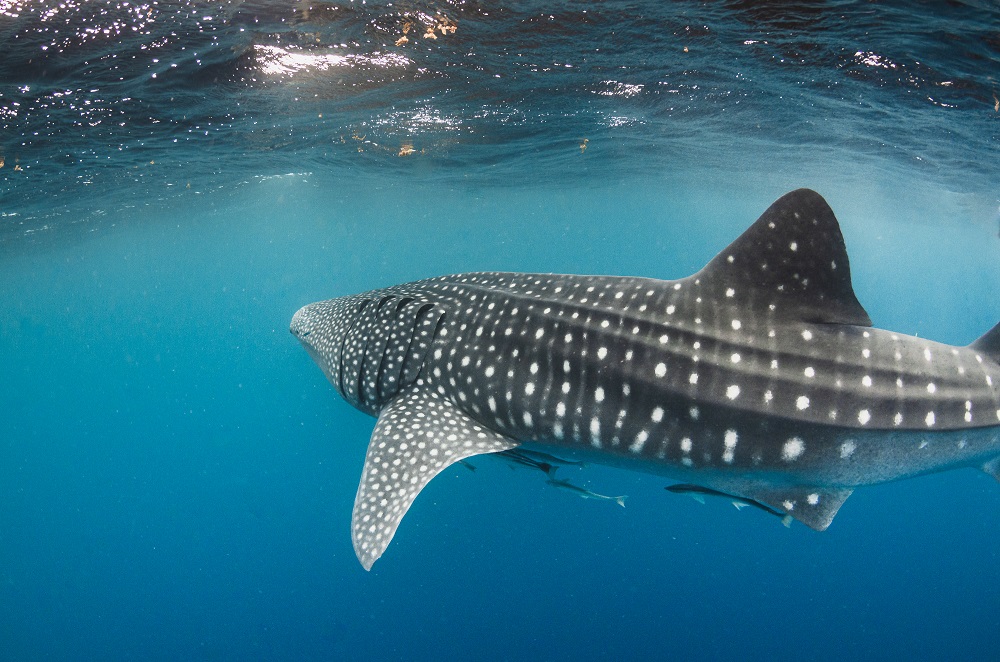
Tourism is only just emerging in this East African secret between Ethiopia, Somalia and Eritrea. African, Arabic and French influences, as well as intense-yet-isolated landscapes shaped by volcanoes and salt lakes, provide an experience like no other. Underwater, at The Crack, earthquakes and shifting topography literally mean no two dives are the same. The reefs are some of the planet’s healthiest, with over 200 coral species, while strong Indian Ocean currents mean excellent visibility and attract dolphins, manta rays and whales. When it comes to whale sharks, Djibouti‘s like a kindergarten, with congregations of juveniles in the Gulf of Tadjoura that measure as little as 2 meters (6 feet) long.
Whale Shark Season in Djibouti: November through February is the peak season for swimming with whale sharks in Djibouti. During this time, seasonal plankton blooms attract younger individuals.
The Maldives
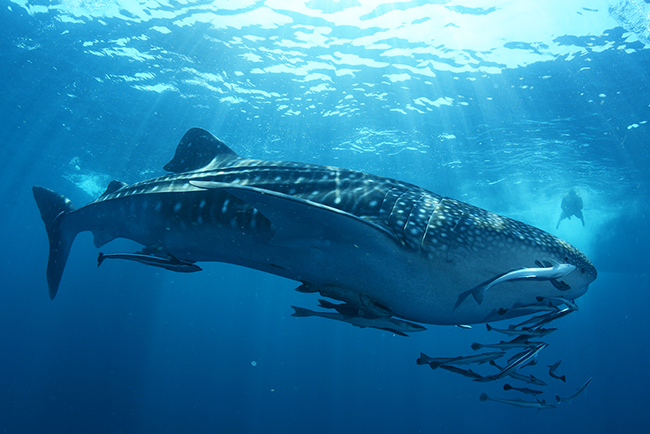
Imagine you’re lost in the middle of the Indian Ocean on a desert island that you can explore by foot in just a few minutes. Inside the island, there is a tropical forest full of palm trees that provide you with shade. White coral sand and turquoise seas stretch out before your eyes. Underwater there’s a marine paradise, rich in everything imaginable, such as turtles, colorful schools of fish, manta rays, dolphins and whale sharks. These are the Maldives; 1,192 coral islands divided into 26 atolls.
Along the southern edge of the South Ari Atoll, “small” whale sharks (from 3-8m/10-26ft) come to feed and grow, staying about two months on average. These warm, tropical waters allow them to find lots of food and an environment without predators. In the decade up to January 2022, the team of researchers at the Maldives Whale Shark Research Programme discovered and identified 571 whale sharks and recorded at least 8,000 different encounters.
Whale Shark Season in the Maldives: Whale sharks are present in equal numbers all year round. The wet season lasts from early May until late September, a period of sustained southwesterly winds which may sometimes lead to periods of poor weather. The proximity to the Equator means temperatures rarely venture below 82°F (28°C).
Australia
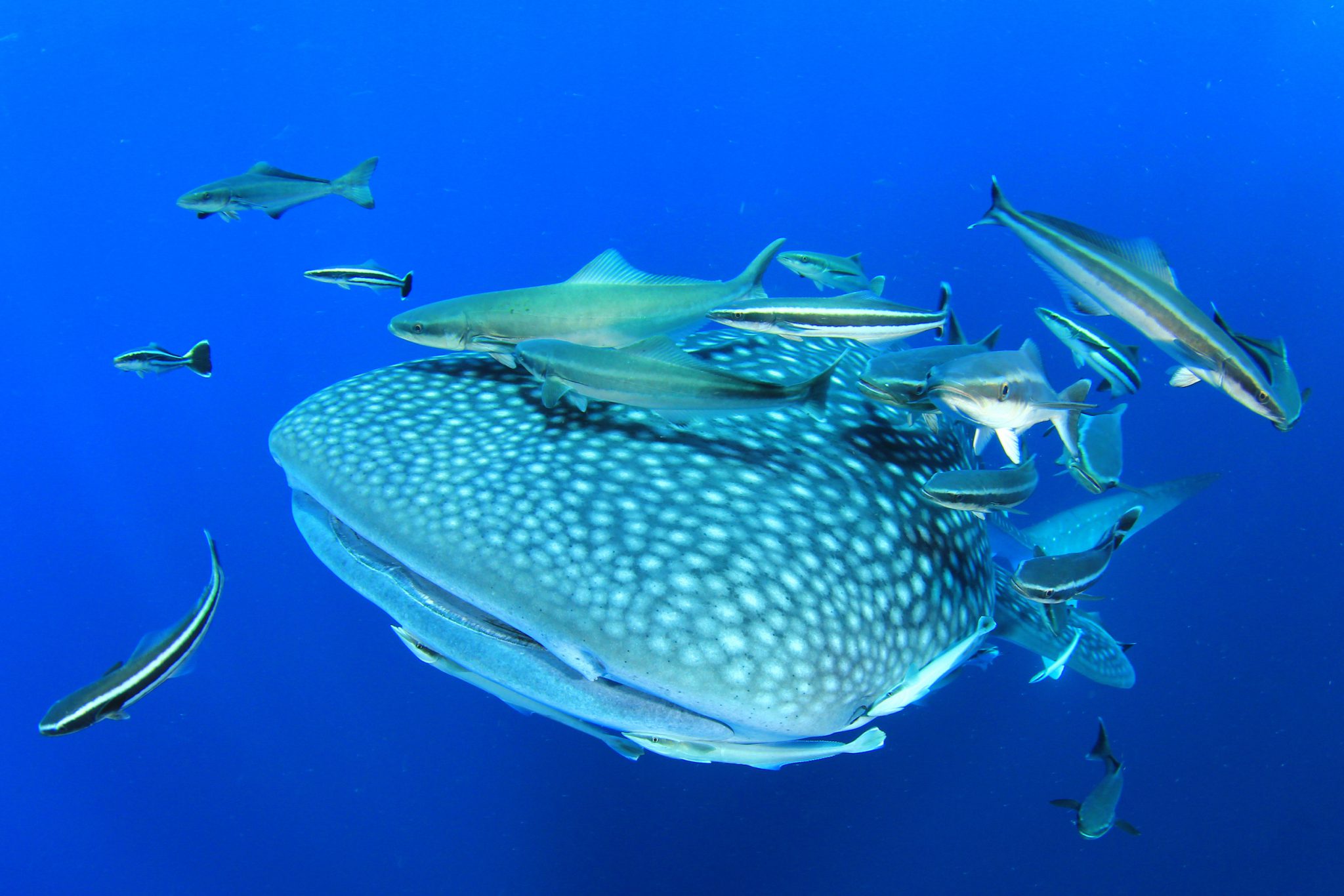
Ningaloo Reef extends for 160 miles (260km) along the west coast of Australia. This stunning reef is home to a plethora of fish (500 species), corals (300 species), mollusks (600 species) and many other marine invertebrates. During the winter, you may encounter migratory animals, such as dolphins, manta rays and humpback whales. Along the beaches, different species of sea turtles lay their eggs. In addition to this wonderful variety of marine life, scuba divers often encounter whale sharks in the region. Where is the best place to dive with whale sharks in Australia? Head to Ningaloo Reef!
Whale Shark Season in Australia: The best time for scuba diving with whale sharks in Australia is during the Australian autumn months, from March to June each year.
The Philippines
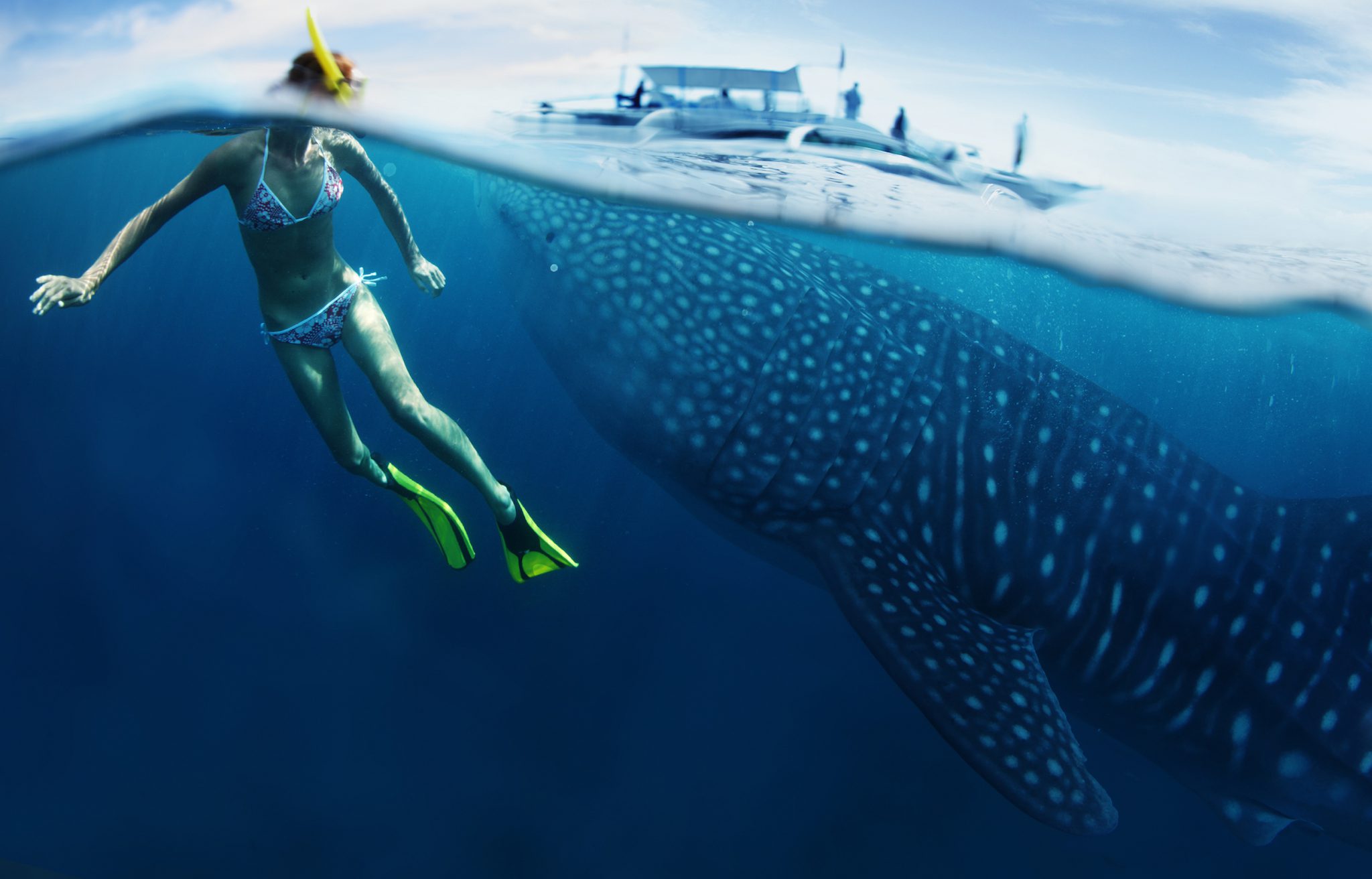
Long famous for its scuba diving, the Philippines is also home to some of the best whale shark encounters. If you want a more natural experience, then visit Donsol Bay, where whale shark tours are highly regulated. Noteworthy are also Sogod Bay, Southern Leyte, Puerto Princesa, Palawan and Tubbataha Reefs Natural Park. The latest research has identified over 1,600 individual whale sharks in Philippine waters – making it the world’s second-largest population after Mexico.
Donsol Bay
There are over 7,500 islands in the Philippines. Donsol is a small town in the Province of Sorsogon on Luzon Island, which has become very famous for its whale shark encounters. In Donsol Bay, it’s forbidden to dive with these animals, but whale shark snorkeling is allowed. For diving with these sharks, it is possible to move to a nearby location instead. Overall, Donsol Bay is one of the best places for swimming with whale sharks in the Philippines.
Honda Bay
Everyone already knows about Donsol to the north, but for a different kind of whale shark encounter, head to Palawan’s Puerto Princesa. Dive boats scout for whale sharks between dives or on custom trips to see the animals. You can go through a dive shop to “schedule” an encounter, and local guides – often fishermen – also take visitors to sea in traditional outrigger bangkas to spot whale sharks.
Whale Shark Season in the Philippines: The best time to see whale sharks in the Philippines is from December to May. During these months, you can swim with whale sharks on their natural migration routes. February to April is peak season and locally called butanding.
Best Places for Scuba Diving With Whale Sharks
While many whale shark encounters happen at the surface, some destinations are particularly rewarding for scuba divers. These places combine whale shark sightings with thrilling drift dives, offshore pinnacles, deep reefs and encounters with other pelagic species making the overall diving experience just as memorable as the whale sharks themselves.
Honduras
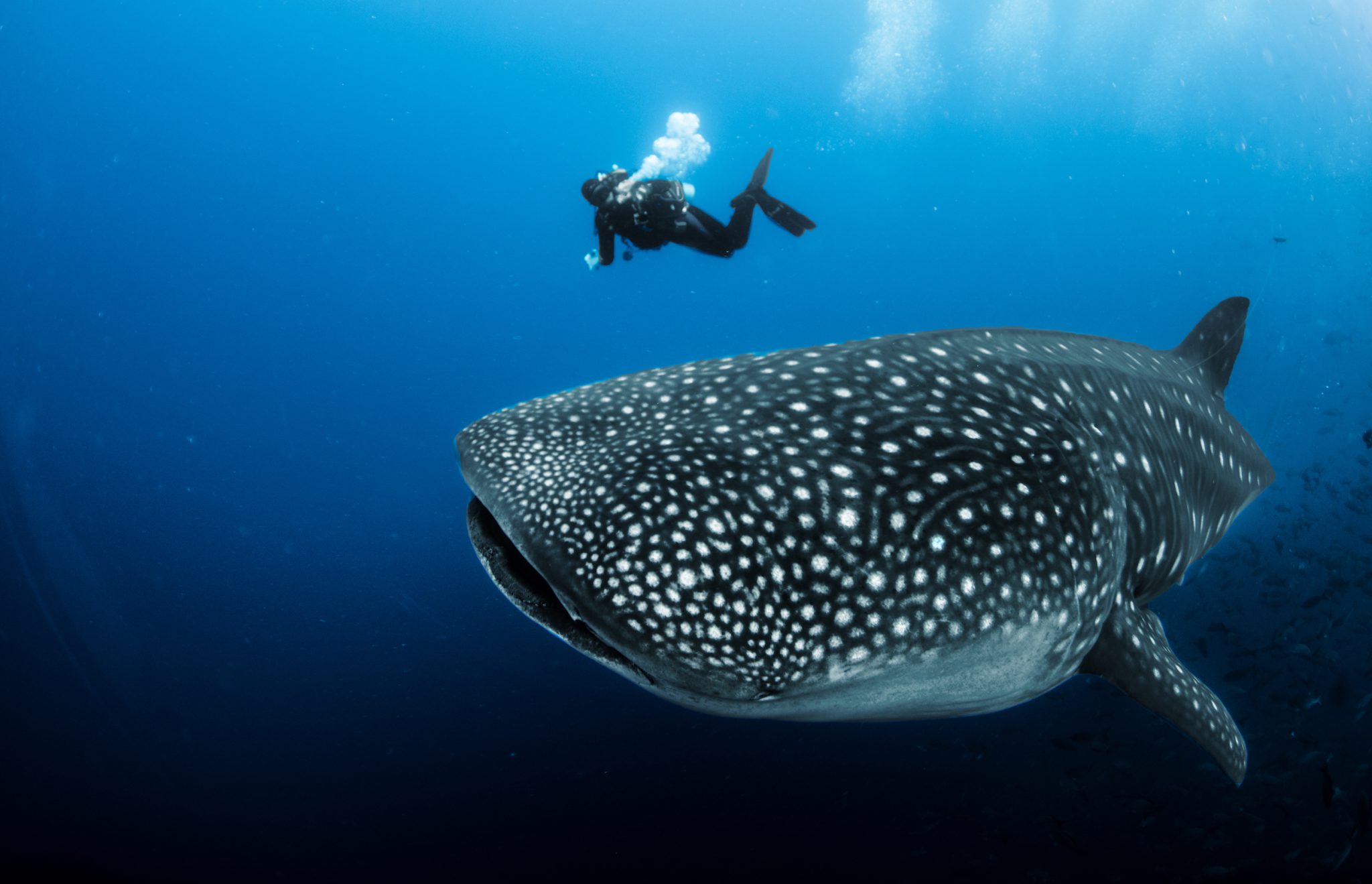
Not too far off the coast of this Central American paradise lies Utila, the smallest of Honduras’ three major Bay Islands and part of the Mesoamerican Barrier Reef. Blending colorful culture with charming beaches, Utila is nicknamed the Whale Shark Capital of the Caribbean, and with good reason. Whale shark diving encounters are common along the north side of the island, where shallow reefs extend into open seas. And, Utila is also home to the Whale Shark and Oceanic Research Center, whose whale shark guidelines were even adopted into Honduran law.
Whale Shark Season in Honduras: While there are year-round whale shark sightings, the best time to look for whale sharks is March to April, when the highest concentrations of these magnificent pelagics come to visit.
Thailand
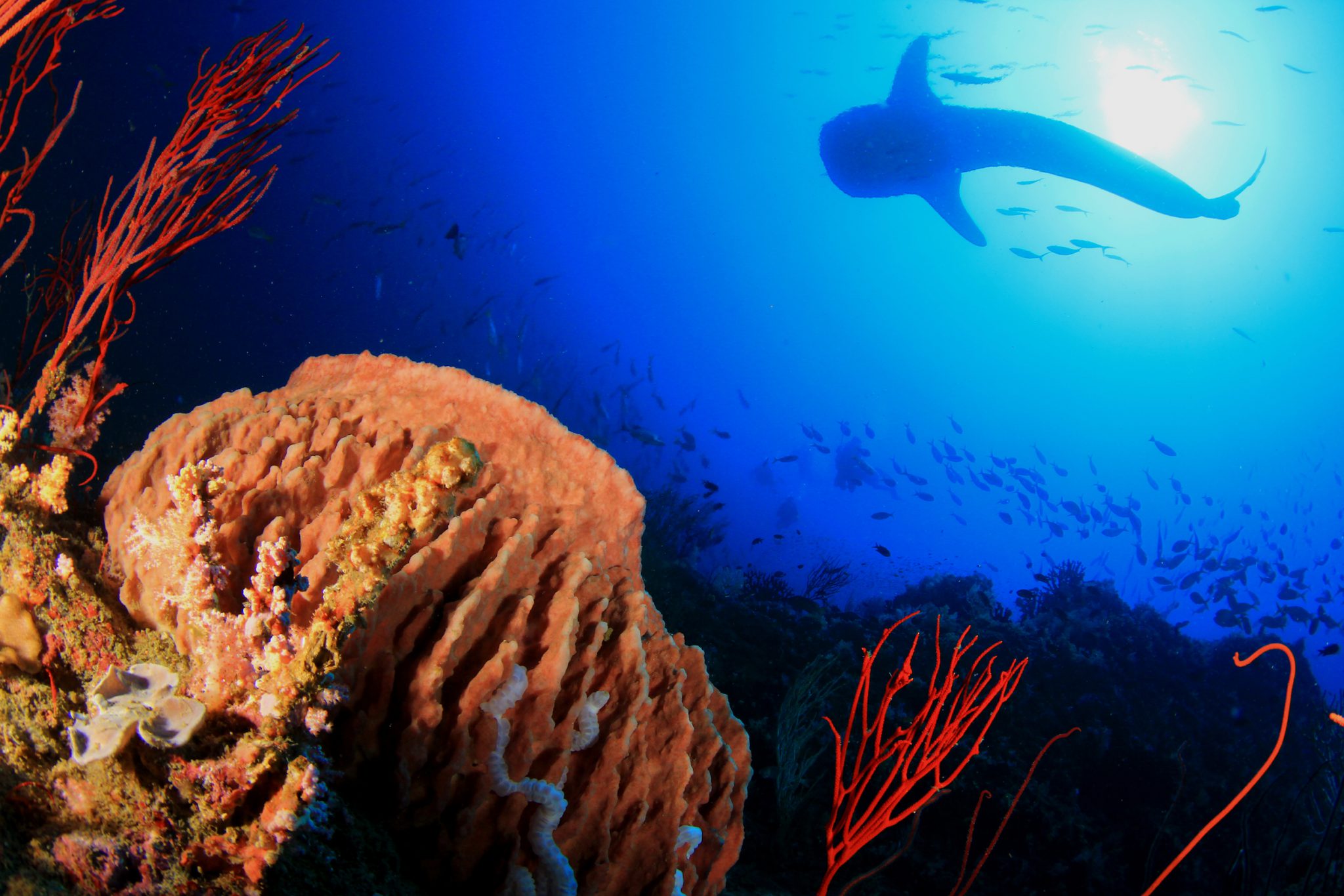
Thailand offers a lot to tourists, including gorgeous landscapes and temples, the bustling capital of Bangkok and the southern islands. Among these, Koh Tao is undeniably one of the most beautiful and is famous for diving. In addition to all the marine beauties you will meet along this tropical coral reef, you can also dive with whale sharks. The best places to see these graceful creatures are Southwest Pinnacle and Chumphon Pinnacle, located approximately a 45-minute boat ride away from Koh Tao. Two other popular points are Shark Island and Hin Wong Pinnacle. Even if you don’t see a whale shark, you are likely to see one of the many sea turtles dwelling at these sites.
Whale Shark Season in Thailand: Scuba divers have the best chance of diving with whale sharks in Koh Tao from March to May and September to October.
Indonesia
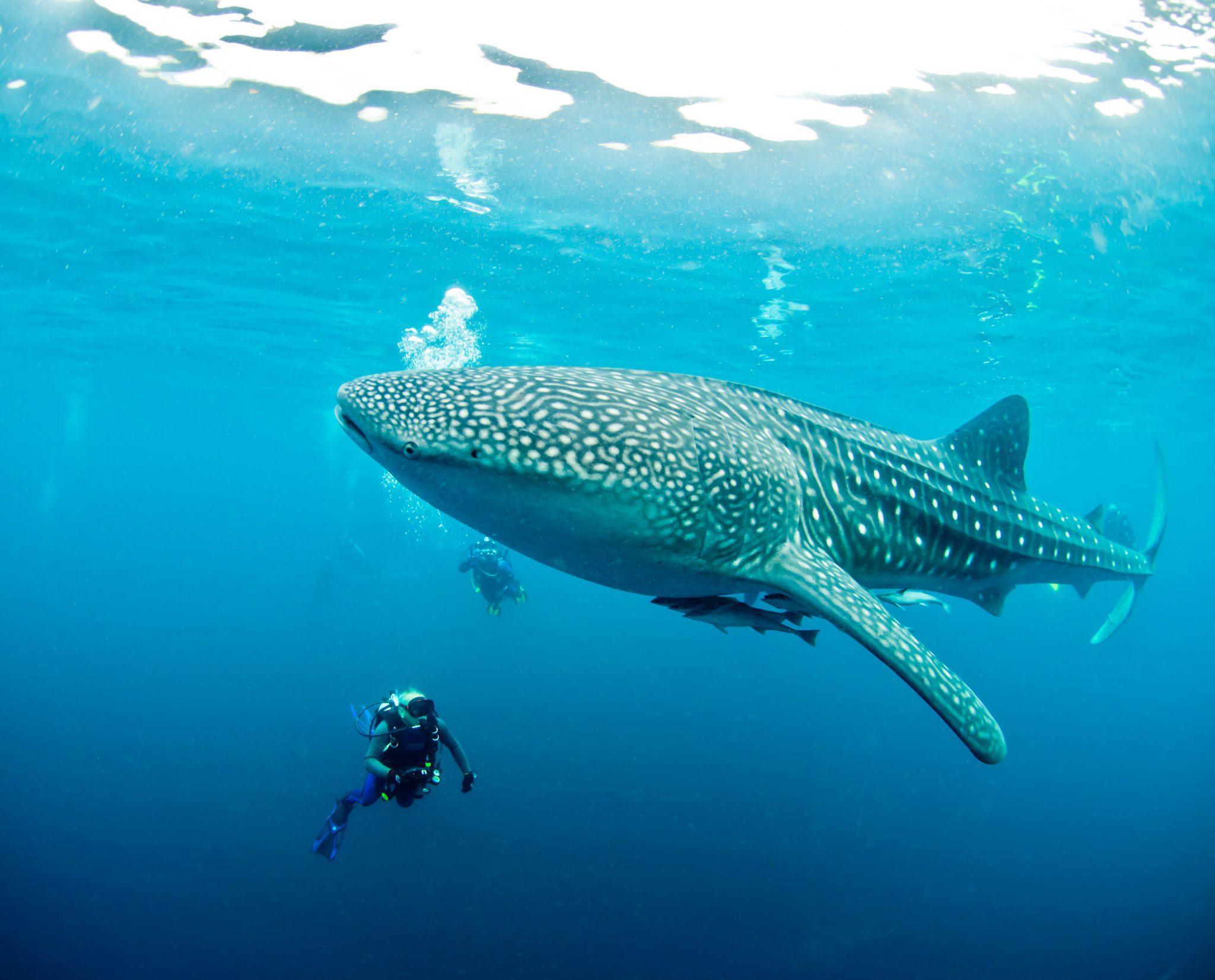
Cenderawasih Bay is a large, sheltered bay in West Papua, which is a part of Indonesia. Gorgeous reefs and shipwrecks from World War II lie in these warm, tropical waters. Moreover, this tourist destination is still being explored by scuba divers, meaning you may be one of the first people to dive at any given site. To make a trip to Cenderawasih Bay even more memorable, scuba divers should ensure at least one whale shark dive.
These graceful giants exhibit a rare feeding pattern in this part of Indonesia. They suck on the bottom of fishing nets, extracting the delicious small fish. Because this pattern is known, seeing whale sharks in Cenderawasih Bay is nearly guaranteed.
Whale Shark Season in Indonesia: You can see whale sharks in Cenderawasih Bay year-round. However, most liveaboards visit the area from August to October, making this peak season for swimming with whale sharks.
Egypt
From dream liveaboard trips to relaxed shore diving, the Red Sea indulges beginners through to technical divers. Egypt‘s clear and calm waters are brimming with stunning corals, tropical fish and world-class shipwrecks.
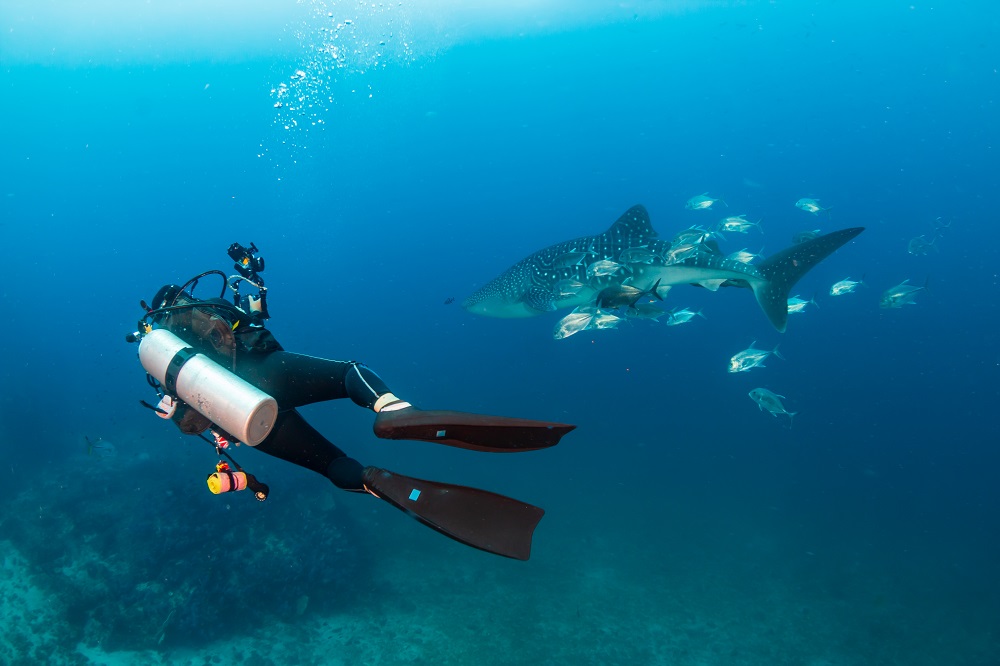
Whale sharks can be found throughout the Red Sea — and increasingly so in recent years. In fact, these gentle giants have even been spotted close to beaches at tourist hotspots like Hurghada, Sharm-el-Sheikh and Marsa Alam. If you’re diving offshore sites such as The Brothers, Daedalus and Elphinstone or southern reefs from Fury Shoal to St. John’s, remember to keep your eyes on the blue for lucky encounters.
Whale Shark Season in Egypt: Although whale shark sightings are possible throughout the year in Egypt, the main season falls between May and August.
Belize
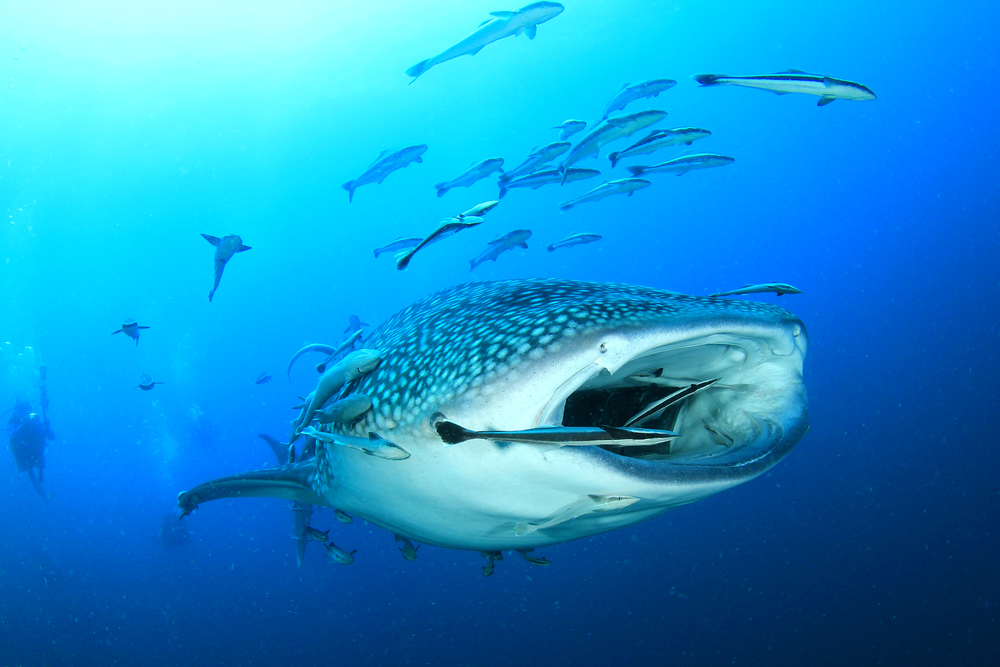
Gladden Spit in Belize is another of the best places to dive with whale sharks. With about 26,000 acres (10,510 hectares) and 22 miles (36km) of coastline, Gladden Spit and Silk Cayes are part of a protected marine area (GSSCMR). Thanks to this protection, Gladden Spit is rich in marine life, such as sea turtles, coral reefs and colorful fish. And because of its natural biodiversity, this part of Belize offers excellent sightings of whale sharks. So, if you are ready for the best whale shark diving adventure in Belize, head to Gladden Spit.
Whale Shark Season in Belize: The best time for diving and swimming with whale sharks in Belize and Gladden Spit falls from March to June. In fact, this corresponds with the reproduction cycle of two fish, namely the mutton snapper and grouper, whose eggs are a delight for the whale sharks.
The Galápagos Islands, Ecuador
The Galapágos Islands are a volcanic archipelago in the Pacific Ocean, not far from mainland Ecuador. Made famous by Charles Darwin, these islands boast the presence of numerous endemic species, such as penguins, Galápagos tortoises and marine iguanas, which you can see while scuba diving in the area. There’s also a wide variety of corals and sharks. Because of the sheer biodiversity of the area, whale sharks are among the wealth of species you might encounter while scuba diving.
Whale Shark Season in the Galápagos Islands: The best time to swim with whale sharks in the Galapagos is during the dry season, which takes place between June and December.
Off-the-Beaten-Path Places To See Whale Sharks
For travelers and divers looking beyond the most famous whale shark hotspots, these destinations offer a more adventurous experience. Remote(r) islands, fewer crowds and less-commercialized encounters make these locations especially appealing for divers and ocean lovers who prefer exploring somewhere a little different.
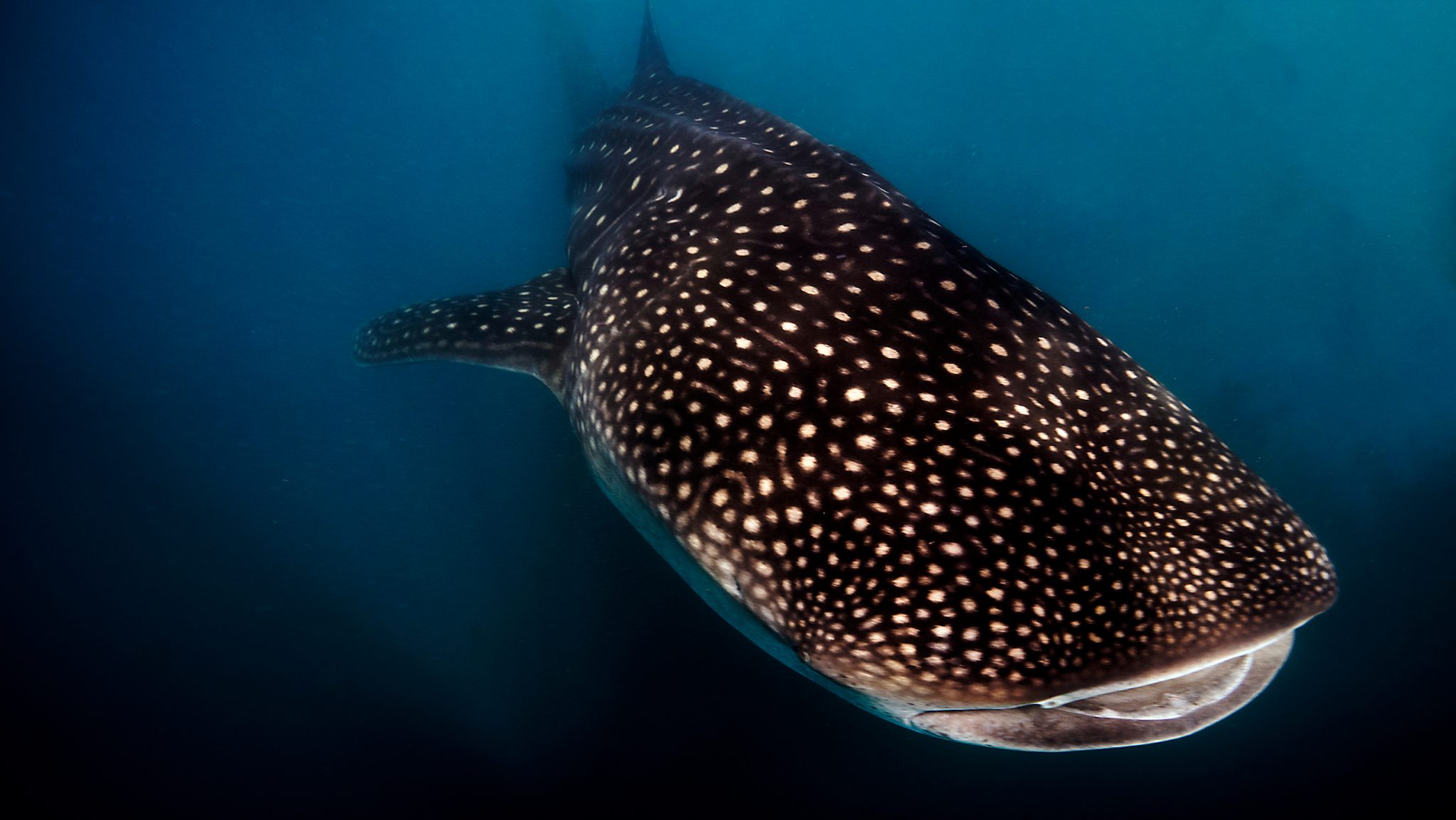
Mozambique
Are you looking for a location filled with marine megafauna but less crowded? Mozambique might be the perfect destination for you.
The country has a long coastline renowned for its coral reefs, beautiful beaches and crystal-clear water. The deep channel that runs between Mozambique and Madagascar has warm, nutrient-rich waters. This makes it an ideal spot for large marine life encounters, including manta rays, dolphins, sea turtles, humpback whales and, of course, whale sharks.
The most popular spot to see these majestic creatures is in Tofo Beach, on the Barra Beach peninsula in the south of the country. Because of its uncontaminated nature and steep walls, Tofo Beach is an exciting place to dive, with deep dive sites where the sightings of whale sharks are regular.
Whale sharks can also be spotted in Ponta D’Ouro, just south of the capital and not too far from the border with South Africa. Although sightings here are less frequent than in Tofo Beach, divers visit this area for the abundance of other shark species, such as tiger sharks, oceanic whitetips, bull sharks and hammerheads.
Alternatively, Cabo San Sebastian is one of those swoon-worthy, off-the-beaten-path destinations that wins you serious bragging rights among your buddies. Most encounters with the whale sharks here happen when the animals are feeding on plankton and krill near the surface.
If you’re ready to venture off the well-trodden tourist trail, be sure to plan your whale shark adventure in Mozambique.
Whale Shark Season in Mozambique: Whale sharks can be spotted around the coast for most of the year. But if you want the highest chance of seeing them, visit Tofo Beach between October and March.
The Bahamas
When it comes to picture-perfect paradise islands, the Bahamas is hard to beat. Dreamy, white sand beaches and turquoise waters are the hallmarks of this archipelago, easily accessible from Florida’s east coast.
But more than just a playground for holidaymakers, the Bahamas is home to some of the most spectacular dive sites in the Caribbean. The islands host a wide variety of marine ecosystems, from coral gardens to mangroves, deep walls to iconic wrecks, so there’s something for every diver. And there are plenty of sharks, too!
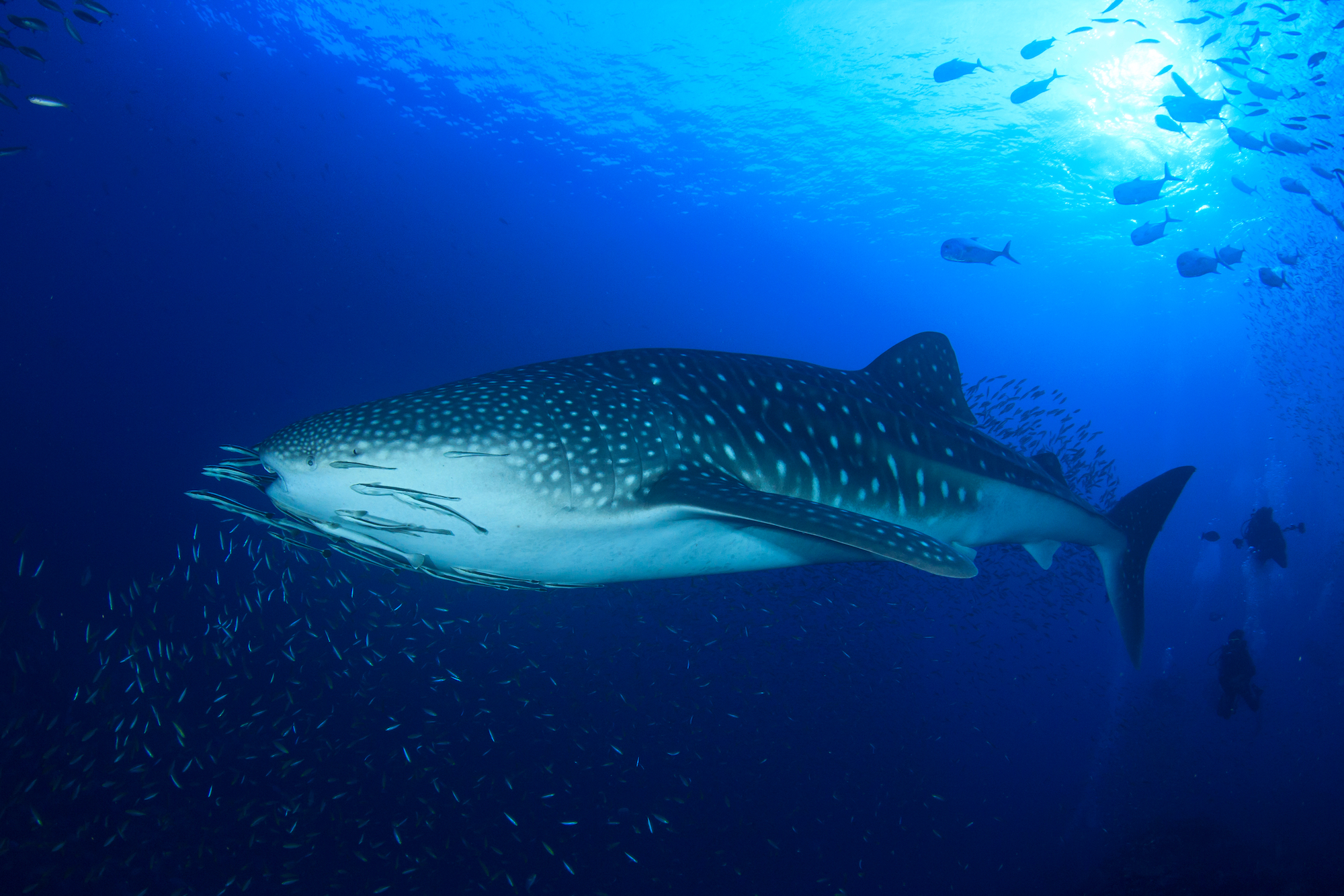
Look out for whale sharks in particular near Eleuthera, Andros and Bimini, where the Great Bahama Bank meets the deep waters of the gulf stream, attracting a variety of large pelagic species.
Whale Shark Season in the Bahamas: Whale sharks are seen seasonally in the Bahamas, generally from December to early March. Sea conditions and temperature are pretty consistent in the islands for most of the year, but December to March is the dry season when visibility can be particularly good.
Costa Rica
This Central American wonderland has something for everyone. Costa Rica‘s Caribbean coastline offers sheltered encounters with colorful reef inhabitants and is ideal for mixing sunbathing with easy diving.
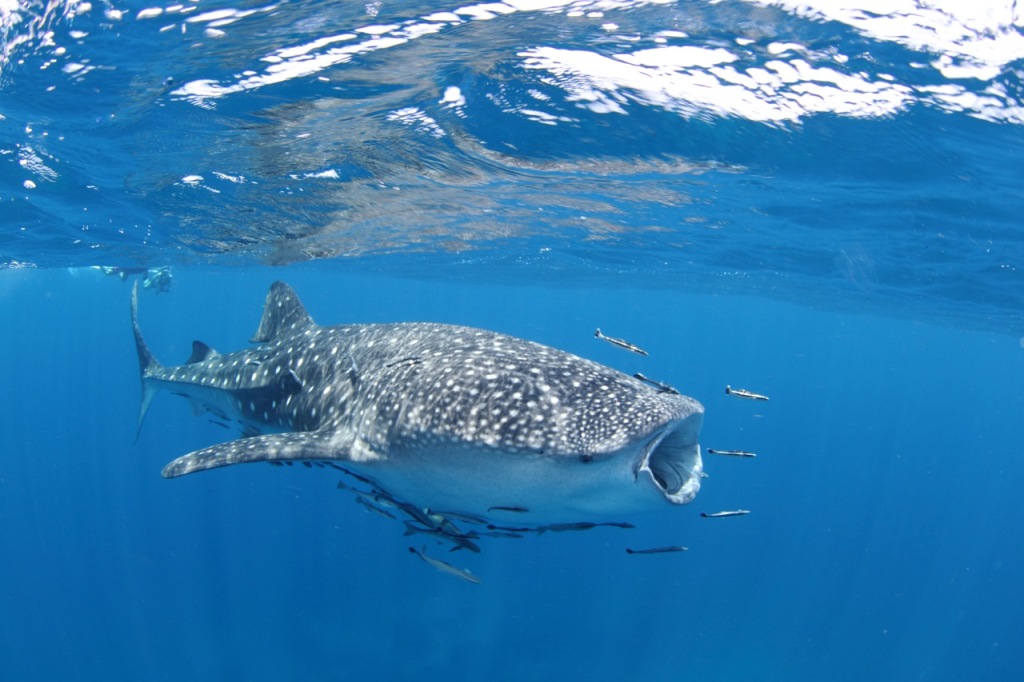
Meanwhile, on the Pacific side, you’ll step into a world full of mighty pelagics. At Guanacaste, volcanic topography is dotted with offshore islands, like Catalina and the Bat Islands, with seasonal sightings of bull sharks, devil rays, dolphins, turtles and giant whale sharks.
For experienced divers, the 36-hour liveaboard journey to remote Cocos Island is worth the travel. These nutrient-rich waters and strong currents are particularly famed for their hundreds of schooling hammerheads — as well as marlin, sailfish, rays, whale sharks and much more.
Whale Shark Season in Costa Rica: Costa Rica is a year-round destination, but it’s during the wet season that plankton blooms attract pelagic species. So, visit between June and November for the best whale shark swims.
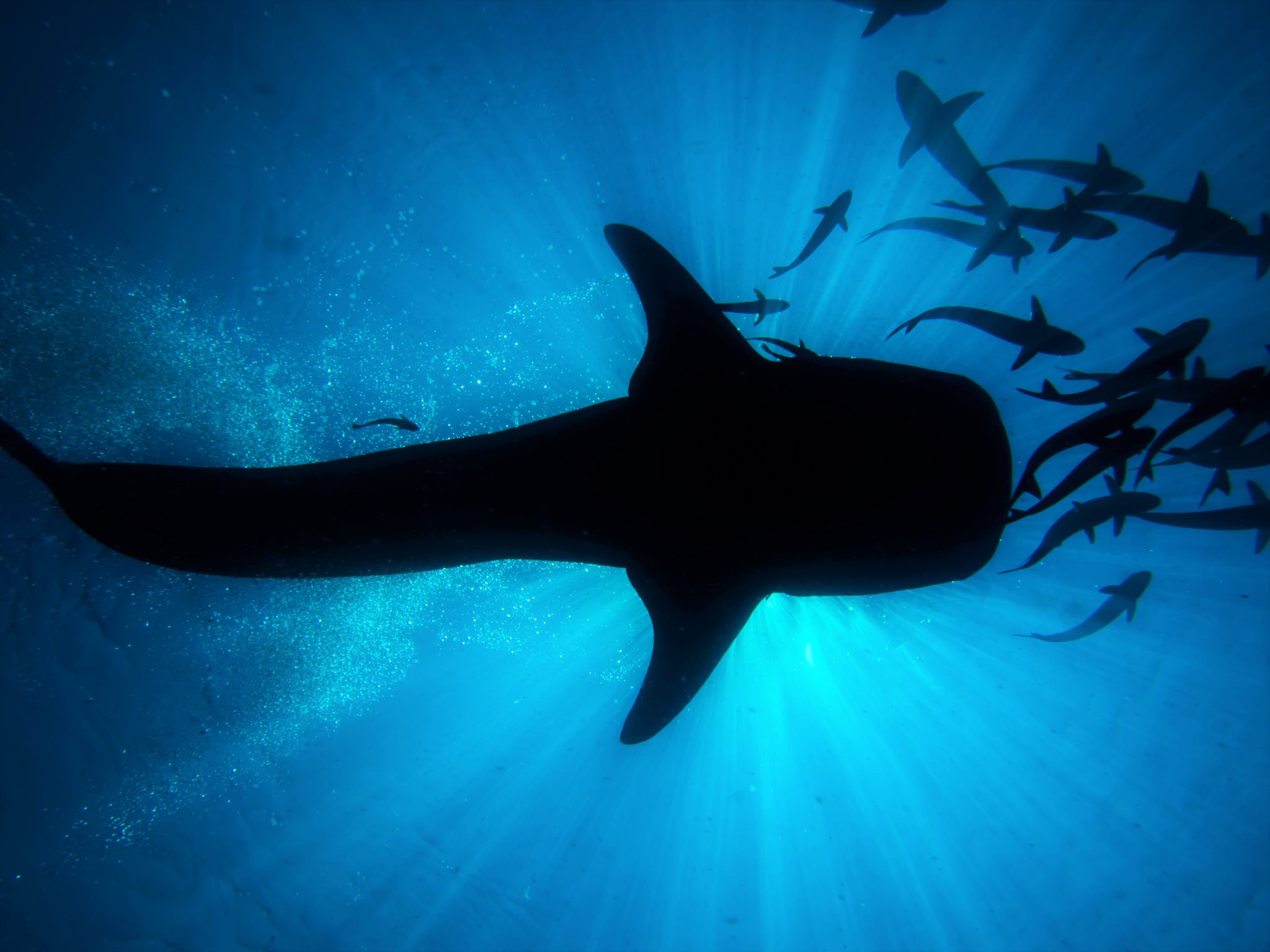
Turks & Caicos
Just southeast of the Bahamas, we find Turks and Caicos. This British Overseas Territory consists of about 40 islands and cays. Contrary to popular belief, these remote islands are not actually located in the Caribbean Sea but rather on the Atlantic Ocean side of the region. They’re surrounded by deep blue waters, which bring in big fish and large pelagic species.
The diving combines vast coral gardens with walls that drop into the depths, allowing you to observe migrating species of turtles, whales and fish, like the majestic whale shark.
Whale Shark Season in Turks & Caicos: You can dive in the Turks and Caicos islands all year round. However, the end of summer is hurricane season, so many divers avoid these months. Whale shark sightings tend to happen in two periods. The first, from January to February, coincides with the humpback whale migration. This gives you an excellent opportunity to interact with these two giants on one trip. And the second period, from June to July, also lets you spot manta rays.
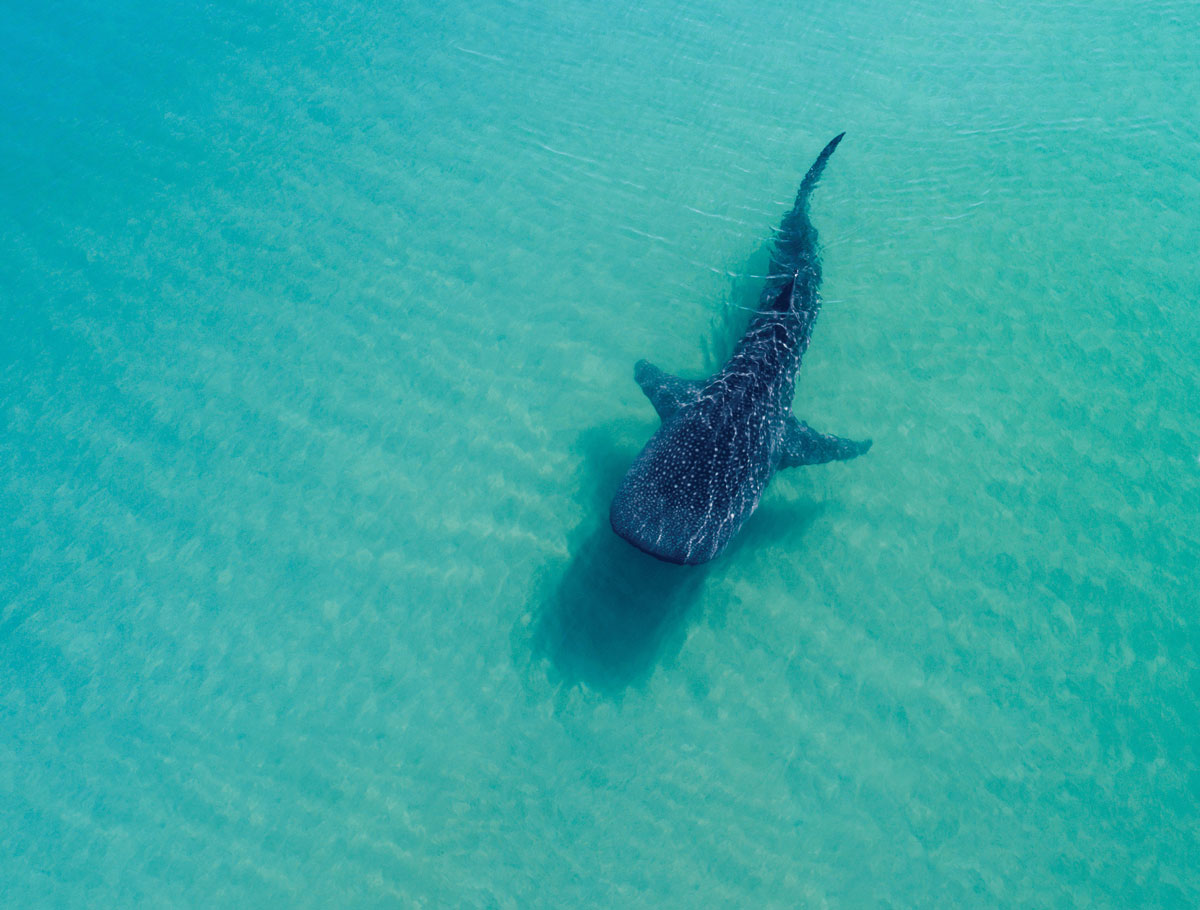
The Seychelles
The remote location of this 115-island archipelago – 500 miles (800km) from Madagascar and in the middle of the Indian Ocean – promises a peaceful retreat for honeymooners and ocean explorers alike. In the Seychelles, unspoiled vistas are brimming with lush forests, giant mountains, pristine beaches, impressive granite topography and buzzing coral reefs. The waters around the islands protect around 1,000 fish species, manta rays, turtles and, of course, whale sharks. Mahé, the largest island and home to the nation’s capital, Victoria, is the best destination for diving with whale sharks.
Whale Shark Season in the Seychelles: Whale sharks migrate through the islands from August to November. Try heading to the island of Mahé in October for the best chance of swimming with a whale shark.
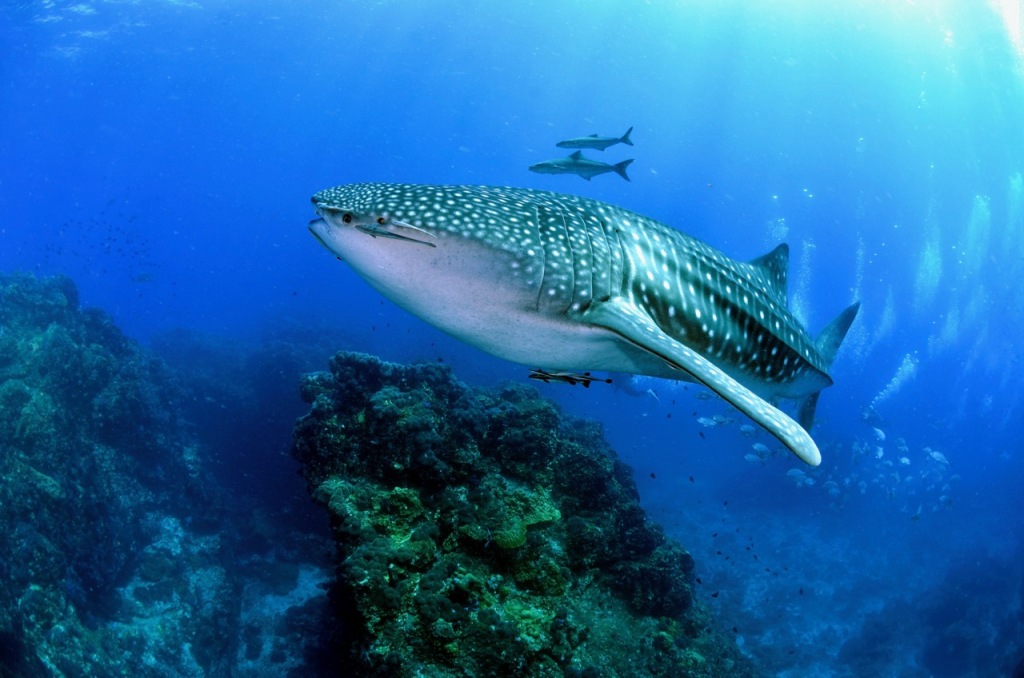
Sodwana Bay, South Africa
South Africa is celebrated for topside safaris and ‘The Big 5’ – but it’s just as captivating underwater. Visitors will find an abundance of vibrant corals and creatures living along its coastline.
While nearby Mozambique is better known for swimming with whale sharks, Sodwana Bay still offers a high chance of sightings during warmer months. It’s also easier to access, with a busier, more modern vibe. As one of the world’s best shark diving destinations, you can also expect to meet several other species, including thresher, bull, hammerhead and hundreds of ragged-tooth sharks.
Heading to South Africa’s east coast also provides access to southern reefs, such as Aliwal Shoal and Protea Banks, where challenging sea conditions are matched by equally impressive marine life and thrills.
Whale Shark Season in Sodwana Bay: Whale shark swims are generally possible between November and April at Sodwana Bay. But for the highest chance of sightings, visit between December and February.
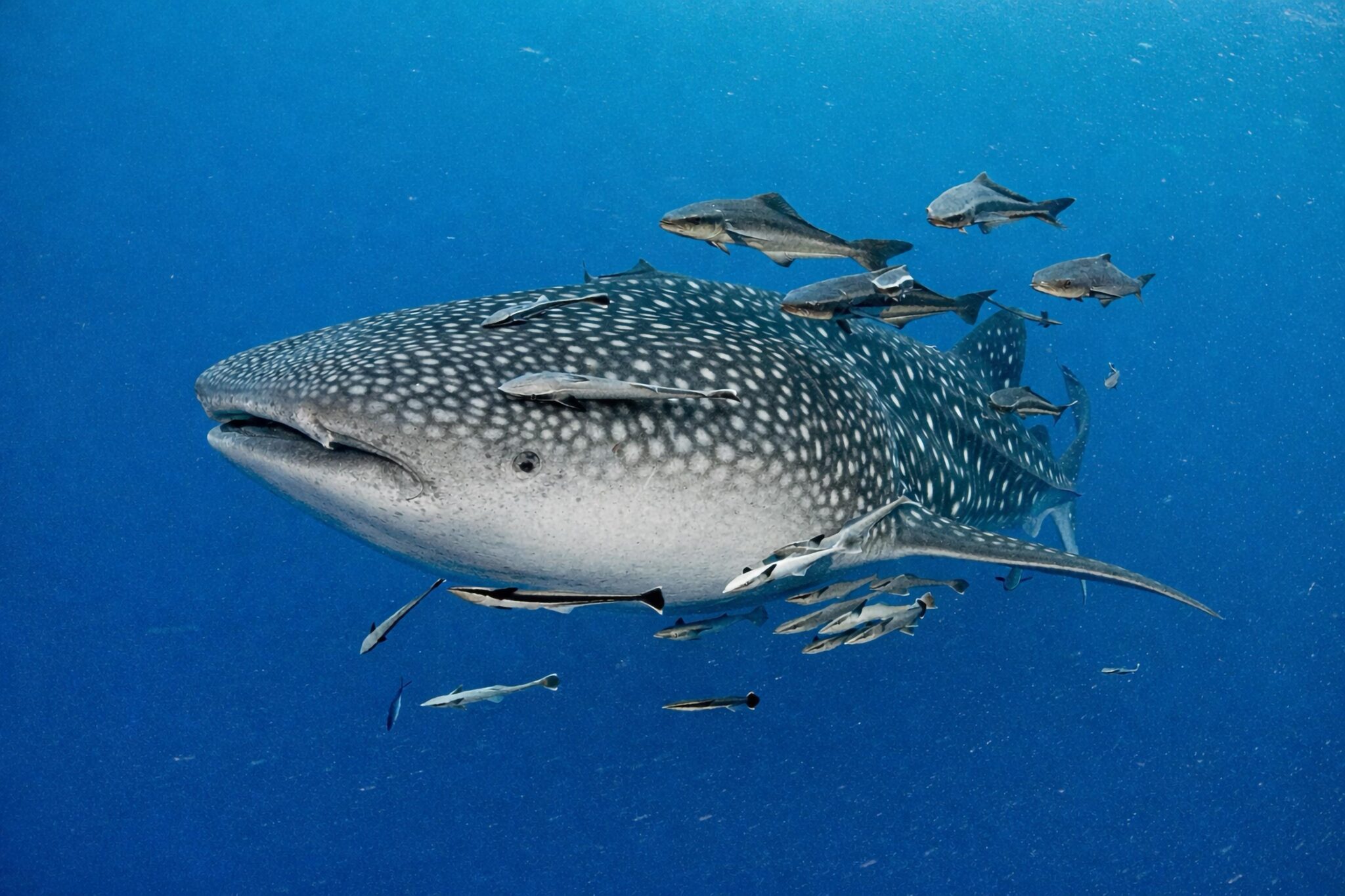
Panama
Panama is one of the best-kept secrets for seeing whale sharks in the eastern Pacific. Most sightings of the gentle giants occur within the boundaries of Coiba National Park, which is a UNESCO World Heritage Site. And, unlike other places where snorkeling is more common, Panama is ideal for scuba divers. Exploring the remote reefs of Coiba can also result in encounters with schooling fish, reef sharks, manta rays and humpback whales.
Whale Shark Season in Coiba: The best time to travel to Panama is from December to April if you want to witness whale sharks. However, there is always a chance of sighting them throughout the year.
Saudi Arabia
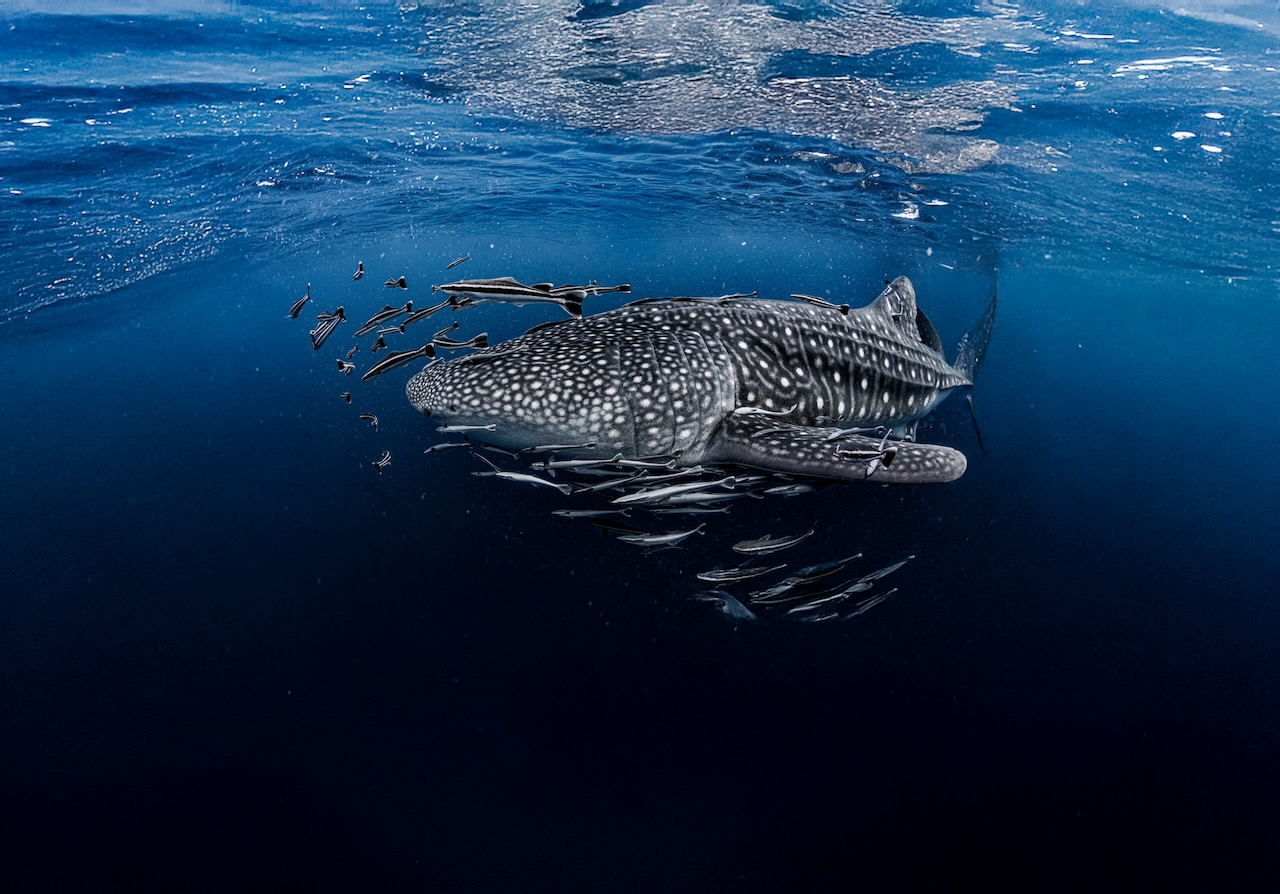
Saudi Arabia has become one of the most fascinating diving spots in the Red Sea. One reason behind the diving boom in the country is the chance to see whale sharks. In Saudi Arabia’s Farasan Banks and Al Lith region, divers can find themselves swimming among the corals and offshore pinnacles, as well as diving into the blue-water drops that attract whale sharks due to an abundance of plankton. The area is also decidedly uncrowded.
Whale Shark Season in Farasan Banks: The best time to see whale sharks in the Farasan Banks is generally between March and June, when plankton blooms attract them to the area. During these months, divers and snorkelers have the highest chance of encountering whale sharks around Al Lith and the offshore reefs of the Saudi Red Sea.
Protecting Future Whale Shark Sightings
Whale sharks are some of the most beautiful and captivating creatures in our oceans. Despite their enormous size, these gentle giants are harmless filter feeders that play an essential role in marine ecosystems. However, like many other species of shark, whale sharks face numerous threats from both human action and environmental pressure. They are fished for their fins and meat, and they can become entangled in fishing nets, ending up as unintentional bycatch. As they feed close to the surface, whale sharks can suffer from boat strikes and are vulnerable to declining food sources, as well as pollution, plastic and other forms of habitat degradation.
That’s why the whale shark is listed in the IUCN Red List as endangered throughout the world.
If we want to continue enjoying whale shark sightings for generations to come, we must work together to protect their future. This means supporting conservation efforts worldwide, from reducing plastic waste and pollution to responsibly fishing our oceans and protecting important habitats where whale sharks live.
Divers should also make sure they follow good diving etiquette when encountering whale sharks or any other marine life in their natural habitats.
Boat operators and whale shark snorkeling tours should always follow responsible tourism practices when they encounter a whale shark in the wild. It’s essential to adhere to guidelines, such as maintaining a safe distance and never touching them or disturbing them while feeding.
If you’d like to learn more about these obstacles or find out how you can help, check out our article on tips for whale shark conservation.
Common Questions About Whale Sharks
Want to learn more fun whale shark facts? Here are answers to some of the most commonly asked questions about the ocean’s biggest fish.
How Big Is a Whale Shark?
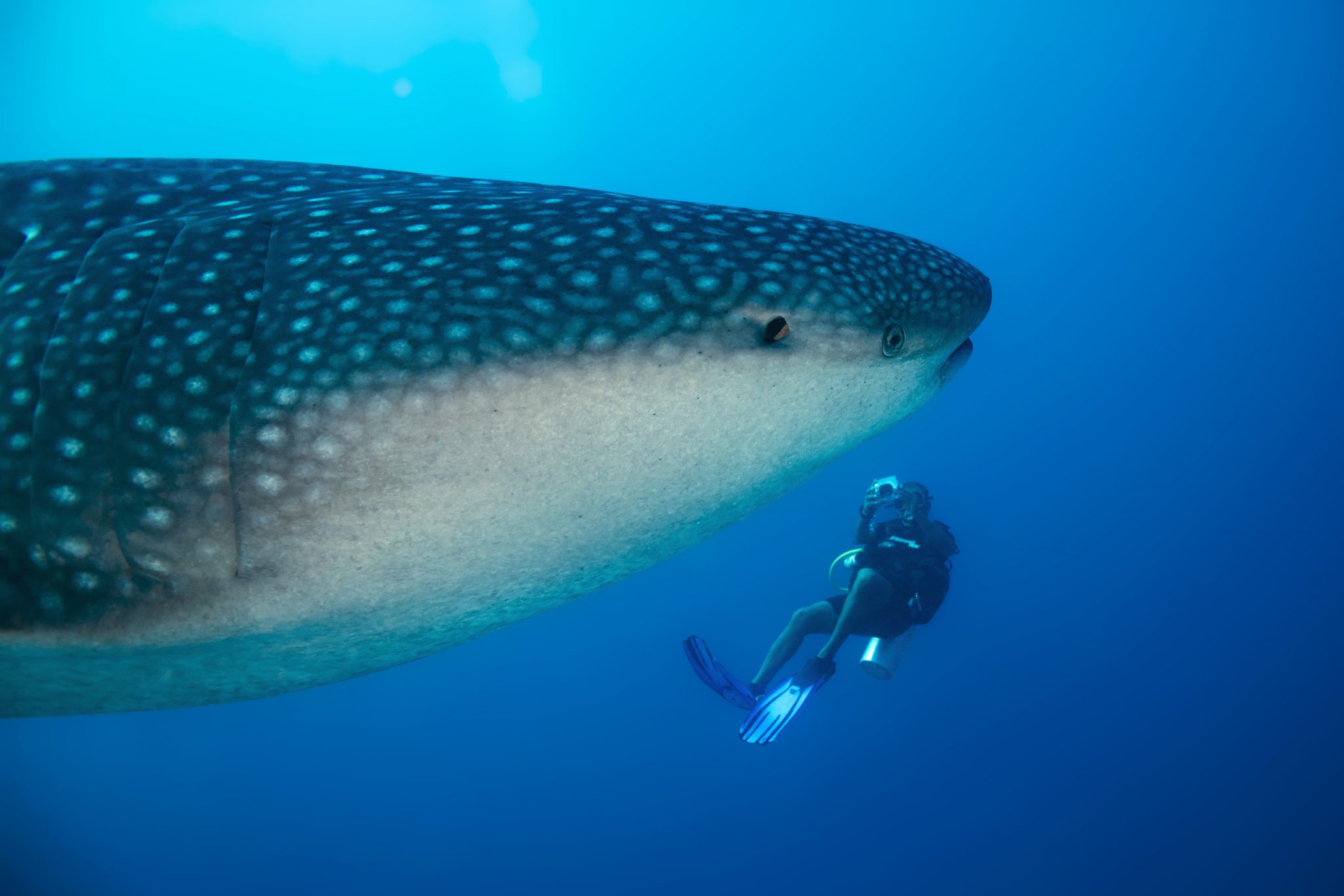
The largest whale shark ever recorded measured an impressive 62 feet (19 meters) in length. However, the average size for mature whale sharks is about 28 feet (8.5 meters) for males and 48 feet (14.5 meters) for females. Whale sharks are the biggest fish in the sea.
Why Are Whale Sharks Called Whale Sharks?
Whale sharks are called whale sharks because of their comparable, whale-like size and similar (to some whale species) feeding habits.
However, even though the “whale” part in the name and their impressive size may lead to confusion, whale sharks are definitely sharks and are not closely related to whales at all.
How Fast Can Whale Sharks Swim?
On average, a whale shark swims at a speed of 3 miles per hour (4 kilometers per hour). However, when threatened, whale sharks can temporarily increase their speed.
How Long Do Whale Sharks Live?
While the exact lifespan of a whale shark remains unknown, current estimates suggest whale sharks live between 60 and 100 years.
What Do Whale Sharks Eat?
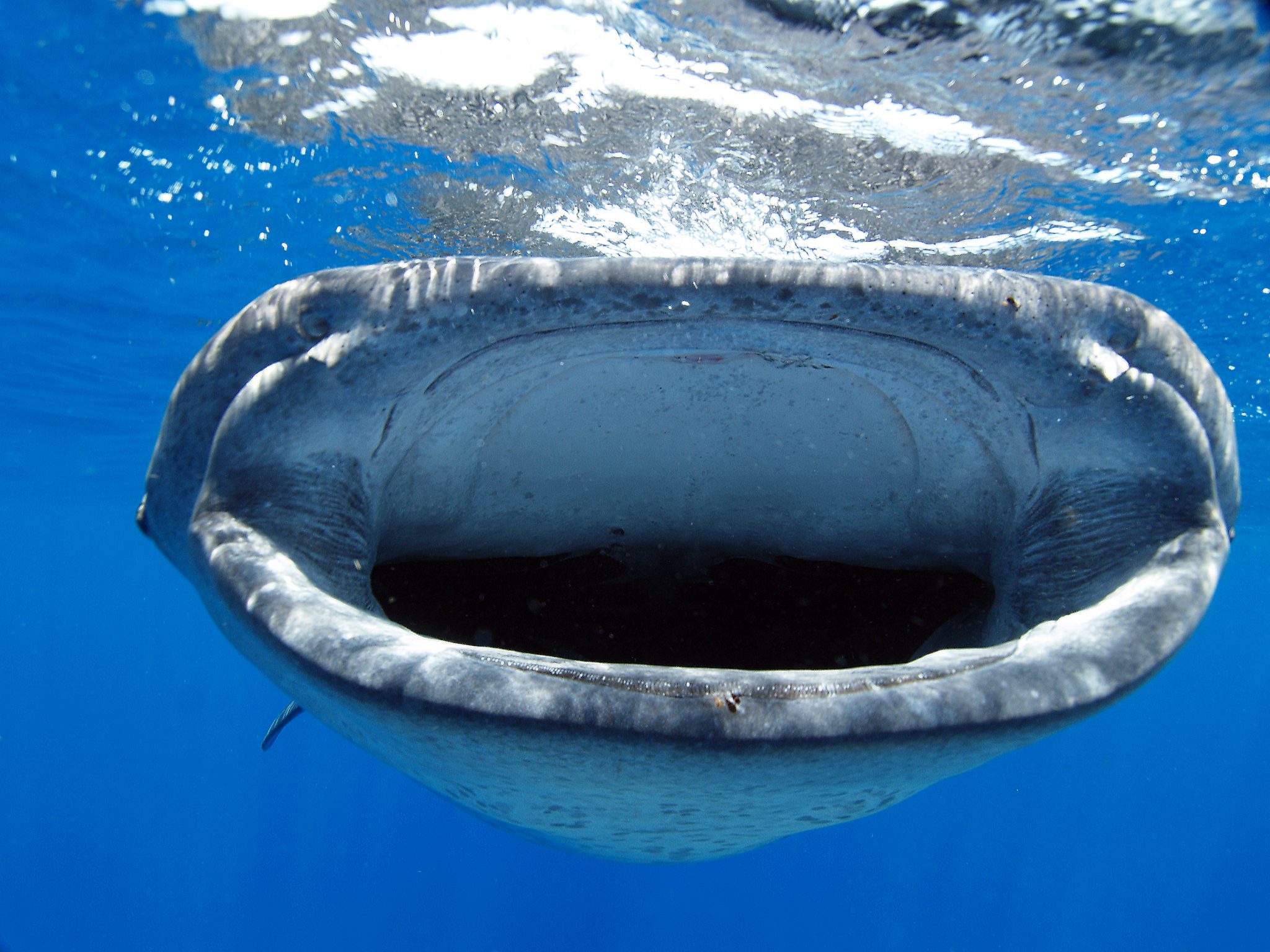
Whale sharks are filter feeders, primarily sieving and consuming plankton as they move gently through the water. This is made easier by the whale shark’s mammoth-sized mouth, which may be capable of opening to more than a meter wide (around three feet). In addition, whale sharks lack the ability to bite or chew.
Are Whale Sharks Endangered?
Whale sharks are currently rated as Endangered by the IUCN. Their population is decreasing, with commercial fishing, vessel strikes and bycatch losses cited as reasons for the decline.
Love Whale Sharks? Here Are Some Other Marine Whoppers You Can Swim With
If you love the best places to swim with whale sharks, you’ll be happy to know whale sharks aren’t the only ocean giant you can swim or dive alongside. Here are some other pelagic marine species you can get in the water with.
Blue Whales
Want to swim with all the biggest animals in the ocean? Nothing ranks bigger than the blue whale. While not a common opportunity, there are some places in the world where (during the right season) you can swim with the largest creature to ever exist on Earth.
Oceanic Manta Rays
Yes, reef manta rays are definitely fun to swim with, but if you’re into super-sized animals, you need to see their even bigger relatives, oceanic manta rays. With a maximum wingspan of 23 feet (7 meters), these mammoth mantas cast an impressively large shadow as they cruise the open ocean. Check out this list of the best places to swim and dive with manta rays.
Basking Sharks
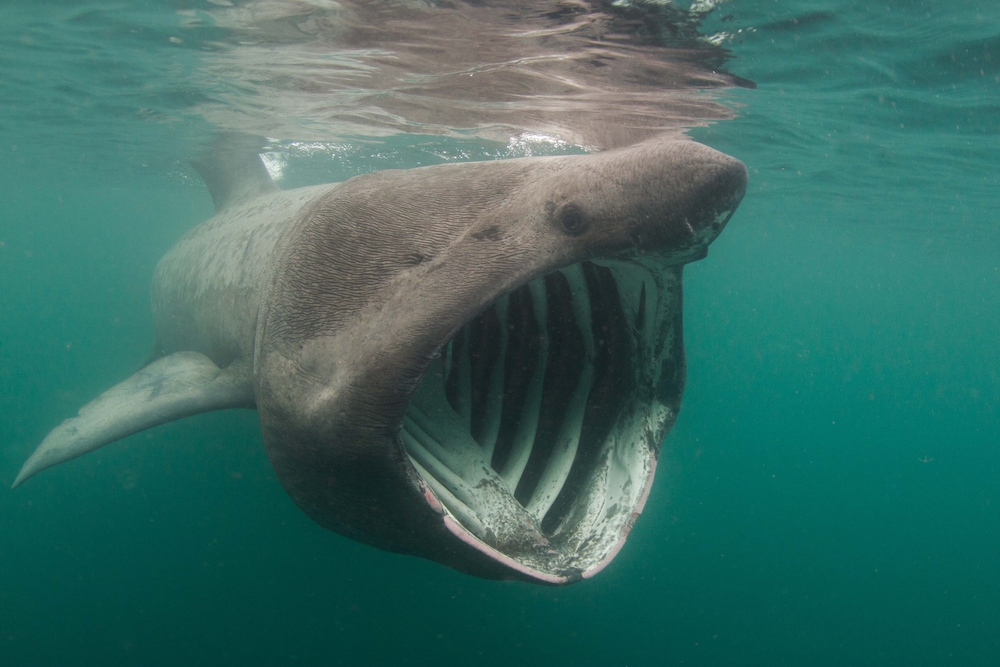
In terms of the largest fish in the sea, the basking shark is second only to the whale shark. With a maximum size of 49.8 feet (15.2 meters) and a mouth that can open more than one meter (three feet) wide, swimming alongside one of these highly migratory ocean giants is an experience you won’t forget any time soon.
Mola Mola
Why not add a dose of the unusual to your ocean giant experience? Seek out a mola mola. Not only are these fish massive, averaging 11 feet (3.3m) in length and 2,200 lbs (997 kgs) in weight, they’re truly unique looking, too.
Humpback Whales
Although they max out at half the size of the blue whale, swimming with humpback whales still offers a thrilling experience. Whether they’re diving, breaching, singing or simply floating on the water’s surface, any meeting with a humpback whale is a memorable one. An adult humpback whale can have a body length between 48 and 62.5 feet (14.6 and 19 meters).
Swimming With Whale Sharks – Start Your Adventure
Are you ready to swim alongside the world’s biggest fish? Then it’s time to book the whale shark adventure of your dreams. Contact PADI Travel via email, chat or by phone to organize your whale shark diving trip.
Credit
This article and the opinions expressed within were written by Mario Passoni. Mario is a marine biologist involved in several projects concerning ocean conservation and education. Special thanks to Richard Rees from the Maldives Whale Shark Research Programme, Alex Watts / Dr. Simon Pierce at the Marine Megafauna Foundation for their local scientific knowledge in Mozambique and Tanzania, Arnel “AA” Yaptinchay from the Marine Wildlife Watch of the Philippines and Luca Saponari.